Frank Hindriks – Författare
Visar alla böcker från författaren Frank Hindriks. Handla med fri frakt och snabb leverans.
2 produkter
2 produkter
1 173 kr
Skickas inom 5-8 vardagar
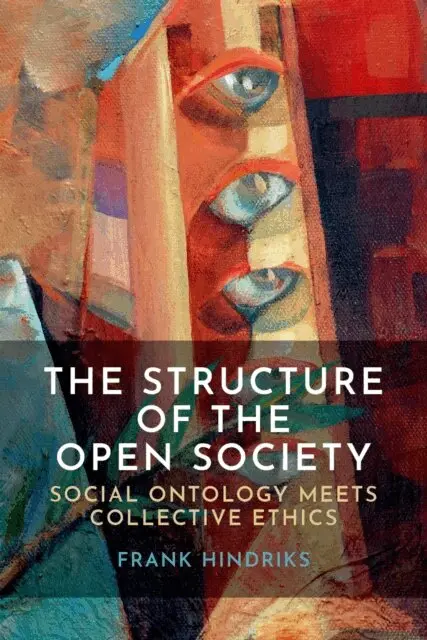
How are we to live together in a diverse society? In a time of polarization, fragmentation, and inequality, the liberal answer to this question requires a new defense. Democratic institutions are under threat. Identity groups seeking recognition often encounter resistance. In response, The Structure of the Open Society defends the significance of institutions that foster freedom, equality, and autonomy. And he argues that this age of identity calls for an inclusive and open mentality.Famously, Karl Popper identified holism as the enemy of the open society. It leads to tribal communities with credulous and close-minded members. But the holist ontology defended here reveals how irreducibly social structures can support the basic rights that lie at the heart of liberal democracy. Crucially, they need not impair, but can in fact enhance critical reflection, toleration and epistemic modesty, which are vital for the resilience of a liberal democracy. To defend these ideals, Hindriks proposes that a society is a cluster of social structures. Their two building blocks are equilibria, which reflect the incentives people have, and rules, which give meaning to and govern their actions. In principle, social structures enable them to interact in mutually beneficial ways. Yet, they also constrain their behavior. To secure basic rights, an appropriate mix of constraints and enablements must be supported by a culture that recognizes their significance for a sustainable society.
1 269 kr
Skickas inom 5-8 vardagar
Many of the things we do, we do together with other people. Think of carpooling and playing tennis. In the past two or three decades it has become increasingly popular to analyze such collective actions in terms of collective intentions. This volume brings together ten new philosophical essays that address issues such as how individuals succeed in maintaining coordination throughout the performance of a collective action, whether groups can actually believe propositions or whether they merely accept them, and what kind of evidence, if any, disciplines such as cognitive science and semantics provide in support of irreducibly collective states. The theories of the Big Four of collective intentionality - Michael Bratman, Raimo Tuomela, John Searle, and Margaret Gilbert - and the Big Five of Social Ontology - which in addition to the Big Four includes Philip Pettit - play a central role in almost all of these essays. Drawing on insights from a wide range of disciplines including dynamical systems theory, economics, and psychology, the contributors develop existing theories, criticize them, or provide alternatives to them. Several essays challenge the idea that there is a straightforward dichotomy between individual and collective level rationality, and explore the interplay between these levels in order to shed new light on the alleged discontinuities between them. These contributions make abundantly clear that it is no longer an option simply to juxtapose analyses of individual and collective level phenomena and maintain that there is a discrepancy. Some go as far as arguing that on closer inspection the alleged discontinuities dissolve