• Fri frakt över 249 kr
  • •
  • Snabba leveranser
  • •
  • Billiga böcker
Kundservice

Du är på sajten för privatpersoner.

Företag, bibliotek eller offentlig verksamhet?

Du handlar på classic.bokus.com, där alla dina funktioner finns intakta.
Till classic.bokus.com
Bokus logotyp. Gå till startsidan.
  • Erbjudanden
  • Nyheter
  • Student
  • Topplistor
  • Barn & ungdom
  • Bokus Play
  • E-böcker
  • Pocketböcker
  • Spel & pussel

10% rabatt på allt med kod: NYSTART10 →

Sidfot

Mina sidor

    Hjälp

    • Kundservice
    • Vanliga frågor och svar
    • Frakt och leverans
    • Retur vid ångerrätt
    • Reklamera vara
    • Betalning
    • Köpvillkor
    • Allmänna villkor
    • Information om webbplatsens tillgänglighet

    Om Bokus

    • Om oss
    • Pressrum
    • För studenter
    • För företag
    • För bibliotek och offentlig verksamhet
    • För leverantörer
    • Hållbarhet

    Populärt

    • Aktuella erbjudanden
    • Presentkort
    • Studentlitteratur
    • Nya böcker
    • Topplistor
    • Signerade böcker
    • Engelska böcker

    Inspiration

    • Boktips
    • BookTok
    • Populära bokserier
    • Barnbokskaraktärer
    • Populära författare
    Logotyp för Bokus
    Följ oss på Facebook (extern länk)Följ oss på Instagram (extern länk)Följ oss på YouTube (extern länk)Följ oss på TikTok (extern länk)
    bokus @ CookiesAnpassa cookiesIntegritetspolicyKöpvillkor
    Till Citymail hemsida (extern länk)Till Budbee hemsida (extern länk)Till Postnord hemsida (extern länk)Till Schenker hemsida (extern länk)Till Early Bird hemsida (extern länk)Till Walleys hemsida (extern länk)
    1. Filosofi och religion
    2. Filosofi
    3. Filosofiska discipliner

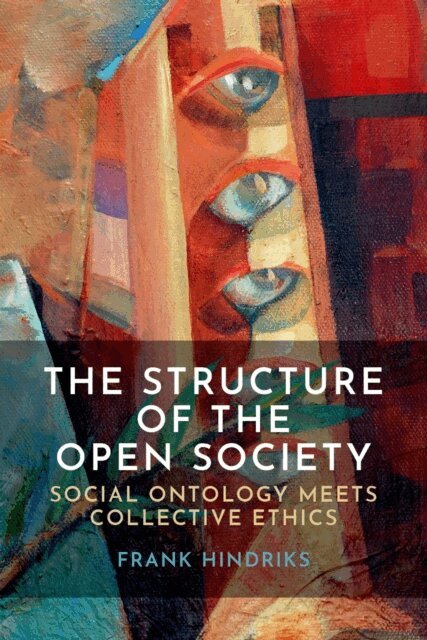
    The Structure of the Open Society

    Social Ontology Meets Collective Ethics

    AvFrank Hindriks

    Inbunden, Engelska, 2026

    1 194 kr

    Beställningsvara. Skickas inom 5-8 vardagar. Fri frakt över 249 kr.

    Beskrivning

    How are we to live together in a diverse society? In a time of polarization, fragmentation, and inequality, the liberal answer to this question requires a new defense. Democratic institutions are under threat. Identity groups seeking recognition often encounter resistance. In response, The Structure of the Open Society defends the significance of institutions that foster freedom, equality, and autonomy. And he argues that this age of identity calls for an inclusive and open mentality.Famously, Karl Popper identified holism as the enemy of the open society. It leads to tribal communities with credulous and close-minded members. But the holist ontology defended here reveals how irreducibly social structures can support the basic rights that lie at the heart of liberal democracy. Crucially, they need not impair, but can in fact enhance critical reflection, toleration and epistemic modesty, which are vital for the resilience of a liberal democracy. To defend these ideals, Hindriks proposes that a society is a cluster of social structures. Their two building blocks are equilibria, which reflect the incentives people have, and rules, which give meaning to and govern their actions. In principle, social structures enable them to interact in mutually beneficial ways. Yet, they also constrain their behavior. To secure basic rights, an appropriate mix of constraints and enablements must be supported by a culture that recognizes their significance for a sustainable society.

    Produktinformation

    • Utgivningsdatum:2026-01-12
    • Mått:168 x 241 x 28 mm
    • Vikt:644 g
    • Format:Inbunden
    • Språk:Engelska
    • Antal sidor:342
    • Förlag:OUP USA
    • ISBN:9780197815151

    Utforska kategorier

    • Filosofiska discipliner inom Filosofi och religion
    • Sociala och etiska frågor inom Samhälle och politik
    • Statsskick och politiska processer inom Samhälle och politik

    Mer om författaren

    Frank Hindriks is a philosopher with a background in economics. He is head of the department of Ethics, Social and Political Philosophy at the Faculty of Philosophy of the University of Groningen. Hindriks is a founding member of the International Social Ontology Society (ISOS) and a founding editor of the Journal of Social Ontology (JSO). He collaborates with psychologists and sociologists within the interdisciplinary and interuniversity research programs Sustainable Cooperation (SCOOP) and Social Cohesion (SOCION). Since 2020, Hindriks is a member of the Royal Holland Society of Sciences and Humanities.

    Recensioner i media

    Are social structures a threat to individual freedom? In this bold and wide-ranging book, Frank Hindriks compellingly argues that they need not be. Combining ontological holism with normative individualism, Hindriks offers an new and innovative framework for understanding social practices, social institutions, and collective agents -- while providing robust guidance for ensuring that these social phenomena do not undermine individual rights. This book is essential for anyone concerned with the nature of social reality or the foundations of political life.

    Innehållsförteckning

    • 1: Introduction 2: Social Practices 3: Individual Autonomy, Identity, and Group Rights 4: Social Institutions 5: Collective Responsibility for Just Institutions 6: Collective Agents 7: Corporate Responsibilities and Rights 8: Conclusion