Frank W. Stahnisch – författare
Visar alla böcker från författaren Frank W. Stahnisch. Handla med fri frakt och snabb leverans.
7 produkter
7 produkter
Del 66 - McGill-Queen's/AMS Healthcare Studies in the History of Medicine, Health, and Society
Great Minds in Despair
The Forced Migration of German-Speaking Neuroscientists to North America, 1933 to 1989
Inbunden, Engelska, 2025
798 kr
Skickas inom 7-10 vardagar
The twentieth century witnessed two devastating world wars that led to the exodus of millions of people. Counted among them were hundreds of neuroscientists and biological psychiatrists from Nazi Germany and its surrounding countries who were forced to emigrate in the 1930s and 1940s. Many of them settled in North America, where they profoundly influenced the development of the biomedical sciences.Focusing on the years between 1933 and 1989, Great Minds in Despair examines the long-term effects of this forced migration on scientific and medical cultures in North America and on the researchers themselves. Frank Stahnisch traces the lives and careers of approximately four hundred German-speaking doctors, scientists, and researchers over two generations. Placed in unfamiliar research settings in Canada and the United States, they helped to build the fields of neuroscience, psychiatry, clinical psychology, and the cognitive sciences, even as they rebuilt their own lives amid myriad challenges including cultural adaption and the complications of relicensing. Stahnisch explores how generational factors, gender, international networking, refugee organizations, and national funding agencies shaped their experiences and affected postwar remigration.Great Minds in Despair provides an important revision to the brain gain thesis in migration studies by turning attention to the working conditions and social acculturation of an influential academic refugee group in North America.
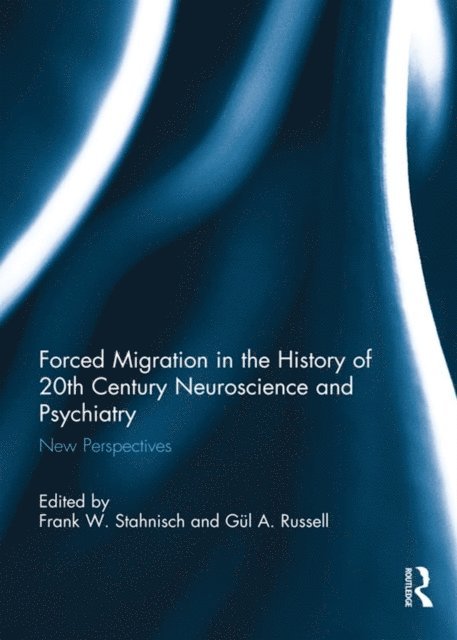
Forced Migration in the History of 20th Century Neuroscience and Psychiatry
New Perspectives
Häftad, Engelska, 2019
637 kr
Skickas inom 10-15 vardagar
The forced migration of neuroscientists, both during and after the Second World War, is of growing interest to international scholars. Of particular interest is how the long-term migration of scientists and physicians has affected both the academic migrants and their receiving environments. As well as the clash between two different traditions and systems, this migration forced scientists and physicians to confront foreign institutional, political, and cultural frameworks when trying to establish their own ways of knowledge generation, systems of logic, and cultural mentalities. The twentieth century has been called the century of war and forced-migration, since it witnessed two devastating world wars, prompting a massive exodus that included many neuroscientists and psychiatrists. Fascism in Italy and Spain beginning in the 1920s, Nazism in Germany and Austria between the 1930s and 1940s, and the impact of the Soviet occupation of Eastern Europe all forced more than two thousand researchers with prior education in neurology, psychiatry, and the basic brain research disciplines to leave their scientific and academic home institutions. This edited volume, comprising of eight chapters written by international specialists, reflects on the complex dimensions of intellectual migration in the neurosciences and illustrates them by using relevant case studies, biographies, and historical surveys. This book was originally published as a special issue of the Journal of the History of the Neurosciences.
Del 52 - McGill-Queen's/AMS Healthcare Studies in the History of Medicine, Health, and Society
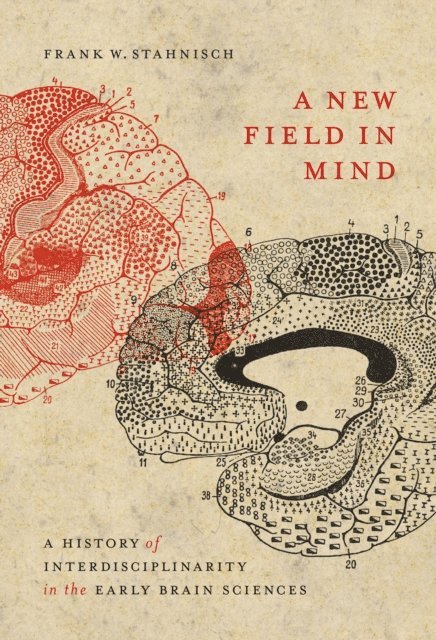
New Field in Mind
A History of Interdisciplinarity in the Early Brain Sciences
Inbunden, Engelska, 2020
733 kr
Skickas inom 11-20 vardagar
In recent decades, developments in research technologies and therapeutic advances have generated immense public recognition for neuroscience. However, its origins as a field, often linked to partnerships and projects at various brain-focused research centres in the United States during the 1960s, can be traced much further back in time. In A New Field in Mind Frank Stahnisch documents and analyzes the antecedents of the modern neurosciences as an interdisciplinary field. Although postwar American research centres, such as Francis O. Schmitt's Neuroscience Research Program at MIT, brought the modern field to prominence, Stahnisch reveals the pioneering collaborations in the early brain sciences at centres in Germany, Austria, and Switzerland in the first half of the twentieth century. One of these, Heinrich Obersteiner's institute in Vienna, began its work in the 1880s. Through case studies and collective biographies, Stahnisch investigates the evolving relationships between disciplines - anatomy, neurology, psychiatry, physiology, serology, and neurosurgery - which created new epistemological and social contexts for brain research. He also shows how changing political conditions in Central Europe affected the development of the neurosciences, ultimately leading to the expulsion of many physicians and researchers under the Nazi regime and their migration to North America. An in-depth and innovative study, A New Field in Mind tracks the emergence and evolution of neuroscientific research from the late nineteenth century to the postwar period.
Forced Migration in the History of 20th Century Neuroscience and Psychiatry
New Perspectives
Inbunden, Engelska, 2017
2 036 kr
Skickas inom 10-15 vardagar
The forced migration of neuroscientists, both during and after the Second World War, is of growing interest to international scholars. Of particular interest is how the long-term migration of scientists and physicians has affected both the academic migrants and their receiving environments. As well as the clash between two different traditions and systems, this migration forced scientists and physicians to confront foreign institutional, political, and cultural frameworks when trying to establish their own ways of knowledge generation, systems of logic, and cultural mentalities. The twentieth century has been called the century of war and forced-migration, since it witnessed two devastating world wars, prompting a massive exodus that included many neuroscientists and psychiatrists. Fascism in Italy and Spain beginning in the 1920s, Nazism in Germany and Austria between the 1930s and 1940s, and the impact of the Soviet occupation of Eastern Europe all forced more than two thousand researchers with prior education in neurology, psychiatry, and the basic brain research disciplines to leave their scientific and academic home institutions. This edited volume, comprising of thirteen chapters written by international specialists, reflects on the complex dimensions of intellectual migration in the neurosciences and illustrates them by using relevant case studies, biographies, and surveys. This book was originally published as a special issue of the Journal of the History of the Neurosciences.
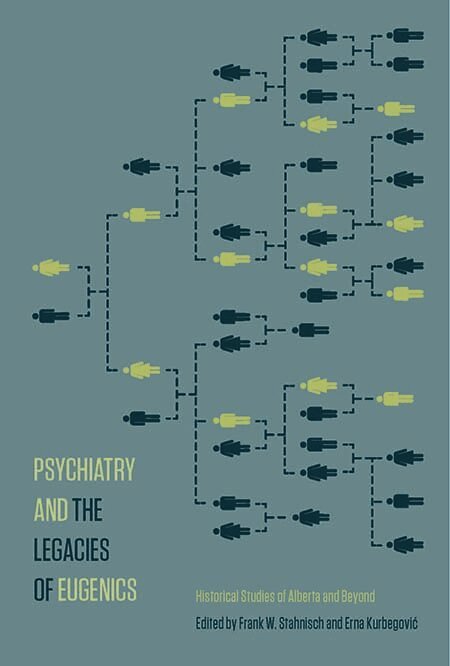
Psychiatry and the Legacies of Eugenics
Historical Studies of Alberta and Beyond
Häftad, Engelska, 2020
442 kr
Skickas inom 7-10 vardagar
From 1928 to 1972, the Alberta Sexual Sterilization Act, Canada's lengthiest eugenic policy, shaped social discourses and medical practice in the province. Sterilization programs – particularly involuntary sterilization programs – were responding both nationally and internationally to social anxieties produced by the perceived connection between mental degeneration and heredity. Psychiatry and the Legacy of Eugenics illustrates how the emerging field of psychiatry and its concerns about inheritable conditions was heavily influenced by eugenic thought and contributed to the longevity of sterilization practices in Western Canada. Using institutional case studies, biographical accounts, and media developments from Western Canada and Europe, contributors trace the impact of eugenics on nursing practices, politics, and social attitudes, while investigating the ways in which eugenics discourses persisted unexpectedly and remained mostly unexamined in psychiatric practice. This volume further extends historical analysis into considerations of contemporary policy and human rights issues through a discussion of disability studies as well as compensation claims for victims of sterilization. In impressive detail, contributors shed new light on the medical and political influences of eugenics on psychiatry at a key moment in the field's developmentWith contributions by Ashley Barlow, W. Mikkel Dack, Aleksandra Loewenau, Diana Mansell, Guel A. Russell, Celeste Tuong Vy Sharpe, Henderikus J. Stam, Douglas Wahlsten, Paul J. Weindling, Robert A. Wilson, Gregor Wolbring, and Marc Workman.
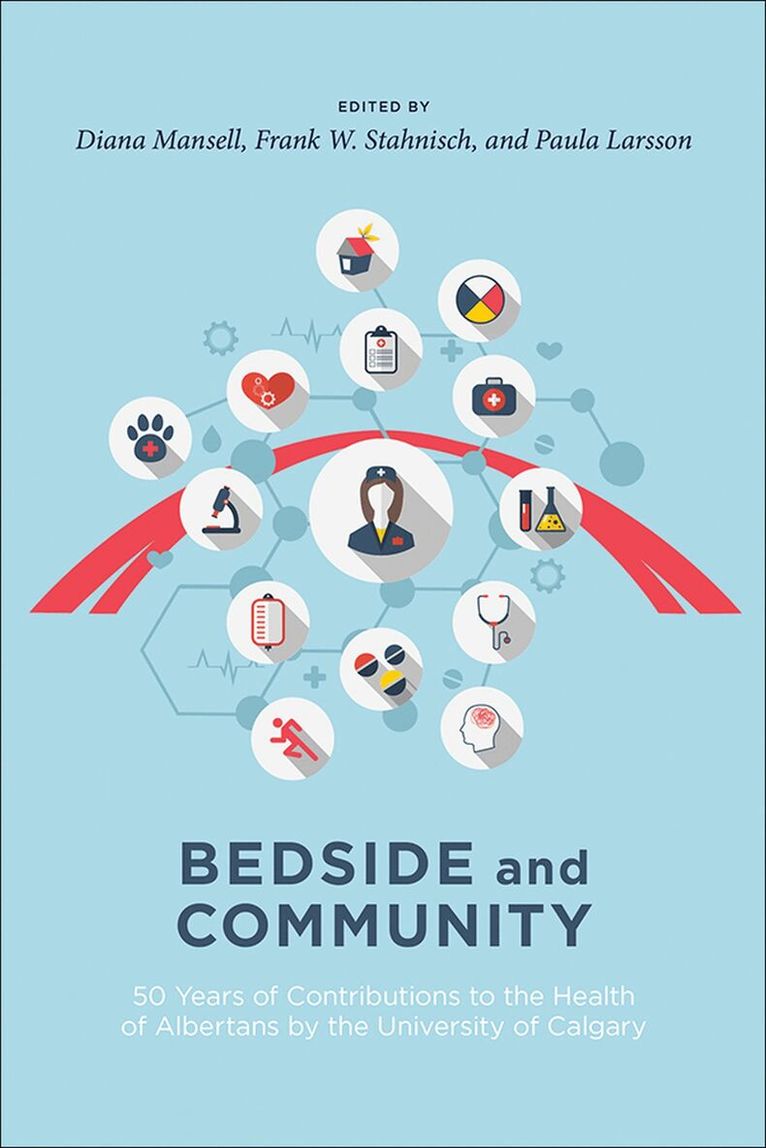
Bedside and Community
50 Years of Contributions to the Health of Albertans from the University of Calgary
Häftad, Engelska, 2020
379 kr
Skickas inom 10-15 vardagar
Bedside and Community is the inside story of fifty years of health care and health research at the University of Calgary. Drawing on the first - person accounts of researchers, administrators, faculty, and students along with archival research, and faculty histories. This collection celebrates the many significant contributions the University of Calgary has made to the health of Albertans. With contributions from the Cummings School of Medicine, the Faculty of Nursing, Faculty of Kinesiology, Faculty of Veterinary Medicine, Faculty of Environmental Design, Department of Psychology, and Indigenous Health Initiatives Bedside and Community is a truly collaborative history. Addressing the links between departments, the relationship between the university and the community, and evolving research and teaching methods, this book places the University of Calgary within a wider national context and shows how it has addressed the unique health needs of Southern Alberta.With a pioneering focus on primary care and commitment to interdisciplinary connections, the University of Calgary has made strides in heath research, health education, and community outreach. Bedside and Community tells the story of a tradition of excellence that will light the way to future outreach and discovery.
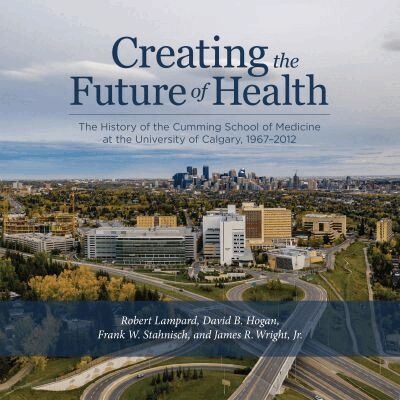
Creating the Future of Health
The History of the Cumming School of Medicine at the University of Calgary, 1967-2012
Häftad, Engelska, 2021
462 kr
Skickas inom 10-15 vardagar
Creating the Future of Health is the fascinating story of the first fifty years of the Cumming School of Medicine at the University of Calgary.Founded at the recommendation of the Royal Commission on Health Services in 1964 the Cumming School has, from the very beginning, focused on innovation and excellence in health education. With a pioneering focus on novel, responsive and systems-based approaches, it was one of the first sites to pilot multi-year training programs in family medicine and remains one of only two three-year medical schools in North America. Since the first class in 1973, over 5000 doctors have graduated from the Cumming School of Medicine. Centres of clinical excellences have been created at four affiliated teaching hospitals and the school now boasts seven medical research institutes at the Foothills/Alberta Children's Campus, the largest medical complex in the province. Drawing on interviews with key players and extensive research into documents and primary material, Creating the Future of Health traces the history of the school through the leadership of its Deans. This is a story of perseverance through fiscal turbulence, sweeping changes to health care and health care education, and changing ideas of what health services are and what they should do. It is a story of triumph, of innovation, and of the Calgary tenacious spirit that thrives to this day at the Cumming School of Medicine.