Fred J. Muehlbauer – författare
Visar alla böcker från författaren Fred J. Muehlbauer. Handla med fri frakt och snabb leverans.
5 produkter
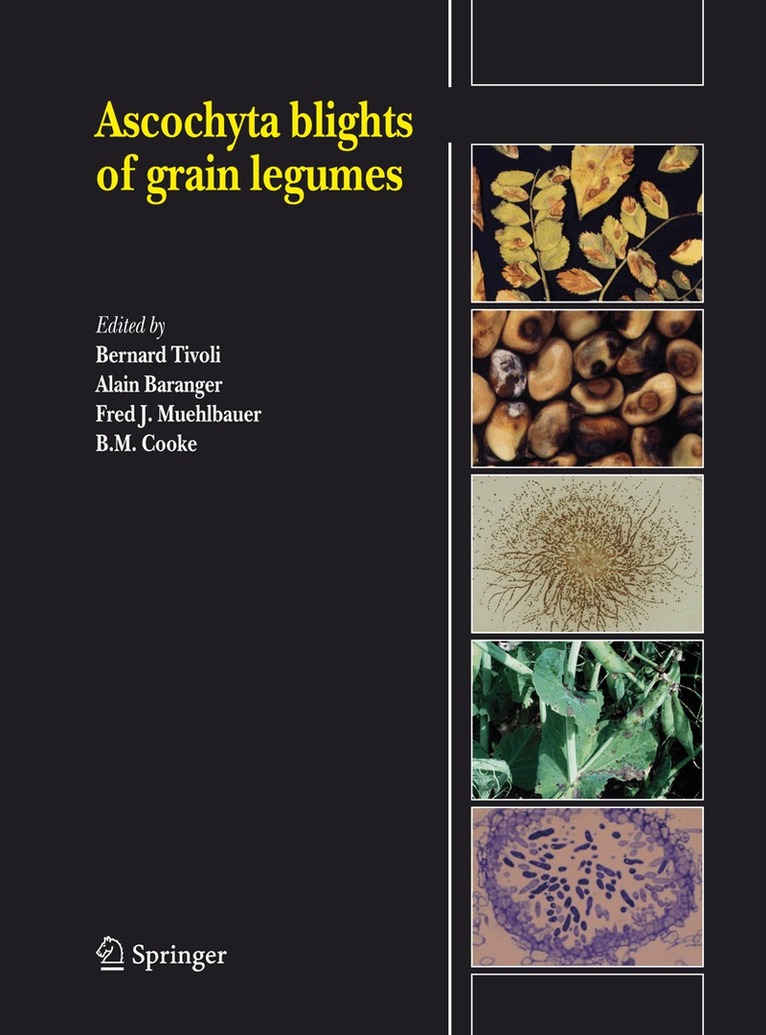
Ascochyta blights of grain legumes
Av Bernard Tivoli, Alain Baranger m. fl.
Inbunden, 2007
1096 kr
Lägg i varukorg
Ascochyta blights consistently affect large areas of grain legume production (pea, lentil, chickpea and faba bean) in all countries where they are cultivated. These diseases are capable of causing large yield losses under conducive environmental conditions. This book considers the state of the art …
Ascochyta blights of grain legumes
Av B.M. Cooke, Fred J. Muehlbauer m. fl.
E-bok, 2007
1459 kr
Lägg i varukorg
Ascochyta blights consistently affect large areas of grain legume production (pea, lentil, chickpea and faba bean) in all countries where they are cultivated. These diseases are capable of causing large yield losses under conducive environmental conditions. This book considers the state of the art …
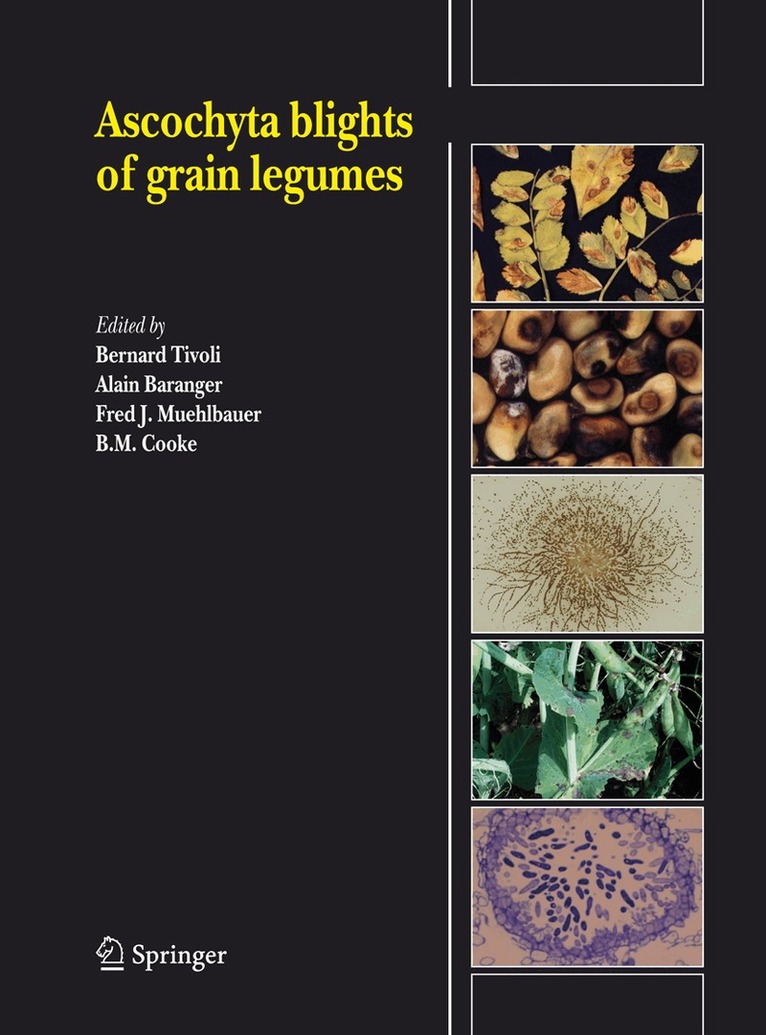
Ascochyta blights of grain legumes
Av Bernard Tivoli, Alain Baranger m. fl.
Häftad, 2010
1096 kr
Lägg i varukorg
Ascochyta blights consistently affect large areas of grain legume production (pea, lentil, chickpea and faba bean) in all countries where they are cultivated. These diseases are capable of causing large yield losses under conducive environmental conditions. This book considers the state of the art …
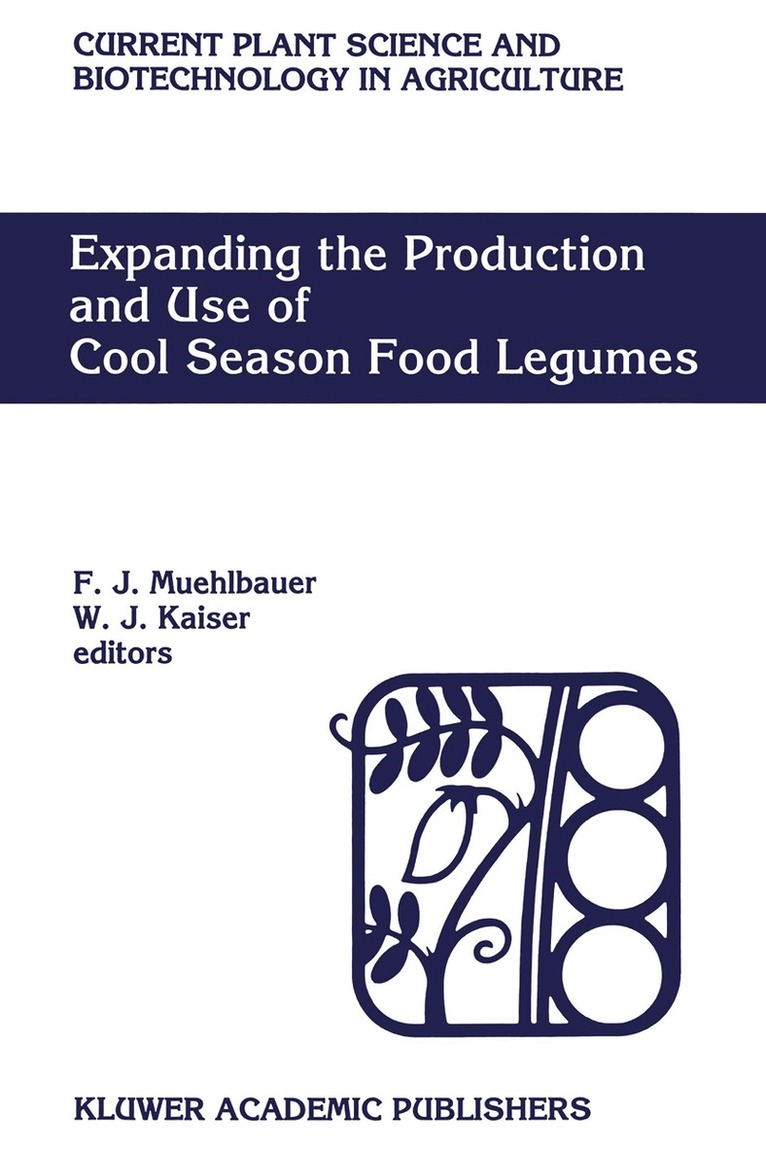
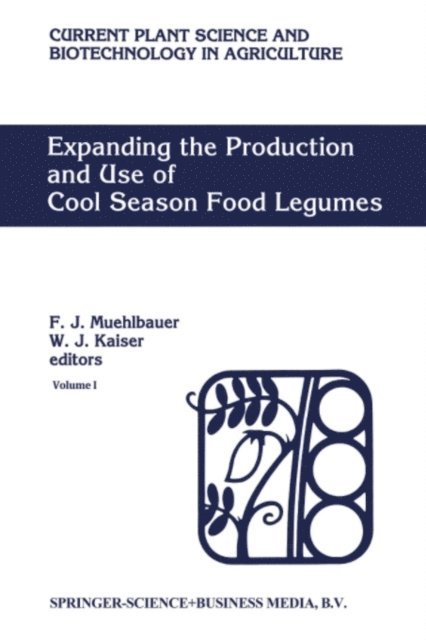
Expanding the Production and Use of Cool Season Food Legumes
A global perspective of peristent constraints and of opportunities and strategies for further increasing the productivity and use of pea, lentil, faba bean, chickpea and grasspea in different farming systems
Av Fred J. Muehlbauer, W.J. Kaiser
Häftad, 2012
552 kr
Lägg i varukorg
The goal of the Second International Food Legume Research Conference held in Cairo, Egypt was to build on the success of the first conference held nearly 6 years earlier at Spokane, Washington, USA. It was at that first conference where the decision was made to hold the second Conference in Egypt …
Expanding the Production and Use of Cool Season Food Legumes
A global perspective of peristent constraints and of opportunities and strategies for further increasing the productivity and use of pea, lentil, faba bean, chickpea and grasspea in different farming systems
Av W.J. Kaiser, Fred J. Muehlbauer
E-bok, 2012
734 kr
Lägg i varukorg
The goal of the Second International Food Legume Research Conference held in Cairo, Egypt was to build on the success of the first conference held nearly 6 years earlier at Spokane, Washington, USA. It was at that first conference where the decision was made to hold the second Conference in Egypt …