Frenchy Lunning - Böcker
Visar alla böcker från författaren Frenchy Lunning. Handla med fri frakt och snabb leverans.
10 produkter
10 produkter
224 kr
Skickas inom 7-10 vardagar
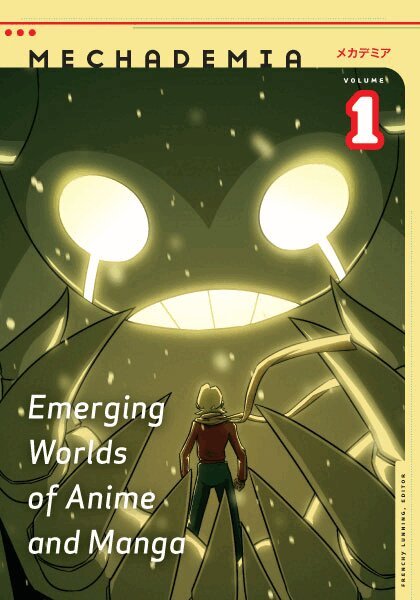
After decades in which American popular culture dominated global media and markets, Japanese popular culture—primarily manga and anime, but also toys, card and video games, and fashion—has exploded into a worldwide phenomenon. From Pokémon and the Power Rangers to Paranoia Agent and Princess Mononoke, Japanese popular culture is consumed by an eager and exponentially increasing audience of youths, teenagers, and adults. Mechademia, a new annual edited by Frenchy Lunning, begins an innovative and fresh conversation among scholars, critics, and fans about the complexity of art forms like Superflat, manga, and anime. The inaugural volume, Mechademia 1 engages the rise of Japanese popular culture through game design, fashion, graphic design, commercial packaging, character creation, and fan culture. Promoting dynamic ways of thinking, along with state-of-the-art graphic design and a wealth of images, this cutting-edge work opens new doors between academia and fandom.The premiere issue features the interactive worlds that anime and manga have created, including the origins of cosplay (the manga and anime costume subculture), Superflat, forgotten images from a founding manga artist, video game interactivity, the nature of anime fandom in America, and the globalization of manga. Contributors: Anne Allison, Duke U; William L. Benzon; Christopher Bolton, Williams College; Vern L. Bullough, California State U, Northridge; Martha Cornog; Patrick Drazen; Marc Hairston; Mari Kotani; Thomas LaMarre; Antonia Levi, Portland State U; Thomas Looser, NYU; Susan Napier, U of Texas, Austin; Michelle Ollie; Timothy Perper; Sara Pocock; Brian Ruh; Takayuki Tatsumi, Keio U, Tokyo; Toshiya Ueno, Wako U, Tokyo; Theresa Winge, U of Northern Iowa; Mark J. P. Wolf, Concordia U; Wendy Siuyi Wong, York U.Frenchy Lunning is professor of liberal arts at the Minneapolis College of Art and Design.
252 kr
Skickas inom 7-10 vardagar
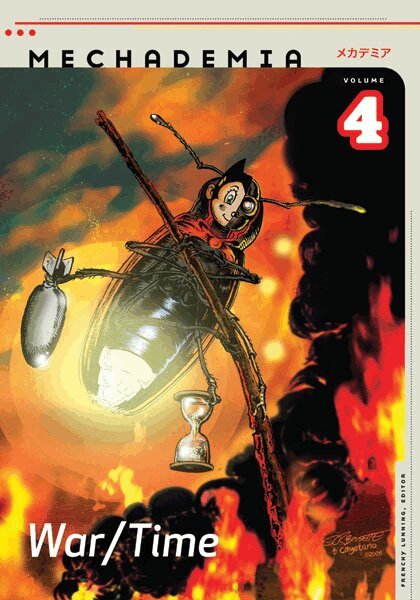
The themes of war and time are intertwined in unique ways in Japanese culture, freighted as that nation is with the multiple legacies of World War II: the country's militarization, its victories and defeats, Hiroshima and Nagasaki, and the uneasy pacifism imposed by the victors. Delving into topics ranging from the production of wartime propaganda to the multimedia adaptations of romance narrative, contributors to the fourth volume in the Mechademia series address the political, cultural, and technological continuum between war and the everyday time of orderly social productivity that is reflected, confronted, and changed in manga, anime, and other forms of Japanese popular culture.Grouped thematically, the essays in this volume explore the relationship between national sovereignty and war (from the militarization of children as critically exposed in Grave of the Fireflies to reworkings of Japanese patriotism in The Place Promised in Our Early Days), the intersection of war and the technologies of social control (as observed in the films of Oshii Mamoru and the apocalyptic vision of Neon Genesis Evangelion), history and memory as in manga artists working through the trauma of Japan's defeat in World War II and the new modalities of storytelling represented by Final Fantasy X), and the renewal and hybridization of militaristic genres as a means of subverting conventions (in Yamada Futaro's ninja fiction and Miuchi Suzue's girl knight manga).Contributors: Brent Allison; Mark Anderson; Christopher Bolton, Williams College; Martha Cornog; Marc Driscoll, U of North Carolina, Chapel Hill; Angela Drummond-Mathews, Paul Quinn College; Michael Fisch; Michael Dylan Foster, Indiana U; Wendy Goldberg; Marc Hairston, U of Texas, Dallas; Charles Shiro Inouye, Tufts University; Rei Okamoto Inouye, Northeastern U; Paul Jackson; Seth Jacobowitz, San Francisco State U; Thomas Lamarre, McGill U; Tom Looser, New York U; Sheng-mei Ma, Michigan State U; Christine Marran, U of Minnesota; Zilia Papp, Hosei U, Tokyo; Marco Pellitteri; Timothy Perper; Yoji Sakate; Chinami Sango; Deborah Scally; Deborah Shamoon, U of Notre Dame; Manami Shima; Rebecca Suter, U of Sydney; Takayuki Tatsumi, Keio U, Tokyo; Christophe Thouny; Gavin Walker; Dennis Washburn, Dartmouth College; Teresa M. Winge, Indiana U.
264 kr
Skickas inom 7-10 vardagar
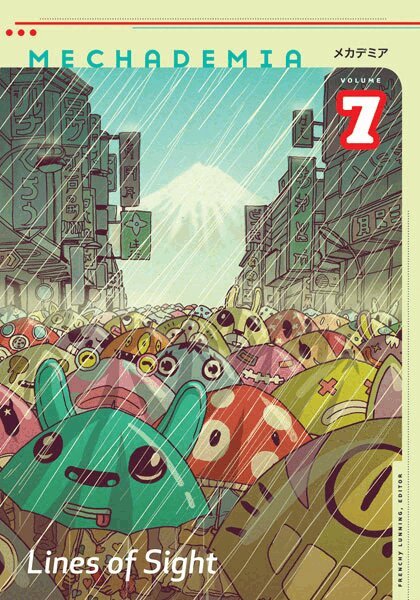
Lines of Sight-the seventh volume in the Mechademia series, an annual forum devoted to Japanese anime and manga-explores the various ways in which anime, manga, digital media, fan culture, and Japanese art-from scroll paintings to superflat-challenge, undermine, or disregard the concept of Cartesian (or one-point) perspective, the dominant mode of visual culture in the West since the seventeenth century. More than just a visual mode or geometric system, Cartesianism has shaped nearly every aspect of modern rational thought, from mathematics and science to philosophy and history.Framed by Thomas Lamarre’s introduction, “Radical Perspectivalism,” the essays here approach Japanese popular culture as a visual mode that employs non-Cartesian formations, which by extension make possible new configurations of perception and knowledge. Whether by shattering the illusion of visual or narrative seamlessness through the use of multiple layers or irregular layouts, blurring the divide between viewer and creator, providing diverse perspectives within a single work of art, or rejecting dualism, causality, and other hallmarks of Cartesianism, anime and manga offer in their radicalization of perspective the potential for aesthetic and even political transformation.Contributors: David Beynon, Deakin U; Fujimoto Yukari, Meiji U; Yuriko Furuhata, McGill U; Craig Jackson, Ohio Wesleyan U; Reginald Jackson, U of Chicago; Thomas Lamarre, McGill U; Jinying Li; Waiyee Loh; Livia Monnet, U of Montreal; Sharalyn Orbaugh, U of British Columbia; Stefan Riekeles; Atsuko Sakaki, U of Toronto; Miryam Sas, U of California, Berkeley; Timon Screech, U of London; Emily Somers; Marc Steinberg, Concordia U.
264 kr
Skickas inom 7-10 vardagar
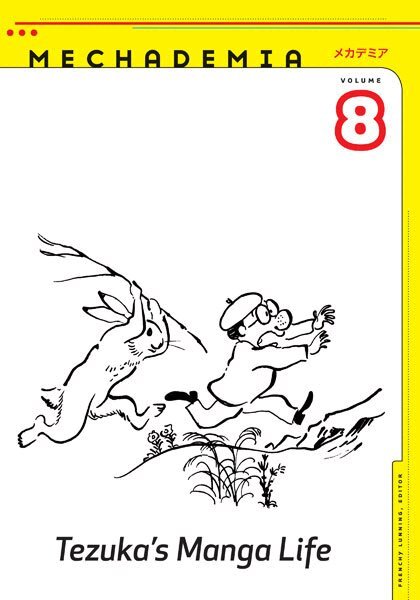
Known as the “Walt Disney of Japan” it is no surprise that Tezuka Osamu is still the best-known manga creator to Western fans. Current scholarship has uncovered the profound complexity and ambiguity not only of his work but of the man, the artist, and his life-dismantling his position as the god of manga.Contributors to this volume of Mechademia-a series devoted to creative and critical work on anime, manga, and the fan arts-analyze Tezuka and his complicated approaches toward life and nonlife on earth, as well as his effect on the lives of other manga artists. Using essays and reprints of Japanese manga on Tezuka, this book questions his influence and attitudes toward the nonhuman, evolutionary theory, the aesthetic lineage of contemporary manga, incipient feminism in the reinscription of the nonhuman feminine, the sexual politics of manga bodies, the origins of the moe culture, and the styles of didacticism revealing the digressions of insects and classical modes, among others.The authors offer varying perspectives on the historical transformations in production, distribution, and reception that gradually integrated and differentiated an overlapping series of markets and readerships in the postwar era. Divided into four sections that explore different “lives”-“Nonhuman Life,” “Media Life,” “A Life in Manga,” and “Everyday Life”-Mechademia 8 serves as a prehistory of the impersonal politics of the present while tracing Tezuka’s legacy. Contributors: Akatsuka Fujio; Anno Moyoko; Linda H. Chance, U of Pennsylvania; Jonathan Clements; Hideaki Fujiki, Nagoya U; Patrick W. Galbraith; Verina Gfader, U of Huddersfield; Alicia Gibson; G. Clinton Godart, USC; Yorimitsu Hashimoto, Osaka U; Ryan Holmberg; Hikari Hori, Columbia U; Mary A. Knighton, College of William and Mary; Thomas Lamarre, McGill U; Christine L. Marran, U of Minnesota; Natsume Fusanosuke, Gakushuin U, Tokyo; Ōtsuka Eiji, Kobe Design U; Baryon Tensor Posadas; Renato Rivera Rusca, Meiji U; Frederik L. Schodt; Marc Steinberg, Concordia U; Tezuka Osamu; Toshiya Ueno, Wako U, Tokyo; Matthew Young.
295 kr
Skickas inom 7-10 vardagar
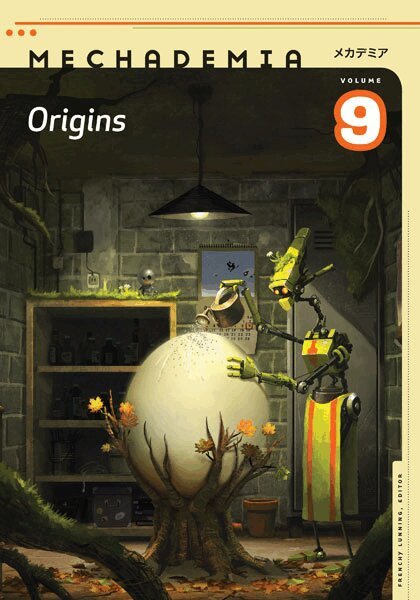
If the source of manga and anime is physically located in Japan, the temptation for many critics and scholars is to ask what aspects of Japanese culture and history gave rise to these media. This ninth volume of Mechademia-an annual collection of critical work on anime and manga-challenges the tendency to answer the question of origins by reductively generalizing and essentializing “Japaneseness.” The essays brought together in Mechademia 9 lead us to understand the extent to which “Japan” might be seen as an idea generated by anime, manga, and other texts rather than the other way around. What is it that manga and anime produce that no other medium can precisely duplicate? Is anime its own medium or a genre of animation-or something in between? And how must we adapt existing critical modes in order to read these new kinds of texts? While the authors begin with similar questions about the roots of Japanese popular culture and media, they invoke a wide range of theoretical work in the search for answers, including feminist criticism, disability studies, poststructuralist textual criticism, postcolonialism, art history, film theory, phenomenology, and more. Richly provocative and insightful, Mechademia 9 both enacts and resists the pursuit of fixed starting points, inspiring further creative investigation of this global artistic phenomenon.Contributors: Stephen R. Anderson; Dale K. Andrews, Tohoku Gakuin U; Andrew BallÚs; Jodie Beck; Christopher Bolton, Williams College; Kukhee Choo, Tulane U; Ranya Denison, U of East Anglia; Lucy Fraser; Fujimoto Yukari, Meiji U, Japan; Forrest Greenwood; Imamura Taihei; Seth Jacobowitz, Yale U; Kim Joon Yang; Thomas Lamarre, McGill U; Margherita Long, U of California, Riverside; Matsumoto Nobuyuki, Tokyo National Museum; Laura Miller, U of Missouri–St. Louis; Alexandra Roedder; Paul Roquet, Stanford U; Brian Ruh; Shun’ya Yoshimi, U of Tokyo; Alba G. Torrents.
291 kr
Skickas inom 7-10 vardagar
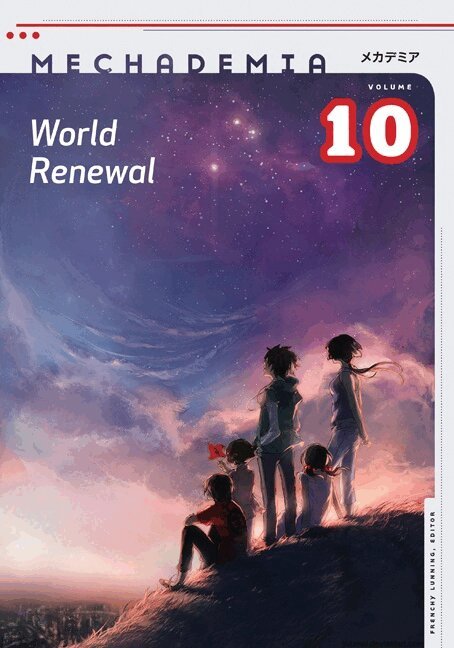
Mechademia 10 revolves around a maelstrom of events: the devastation of 3/11-the earthquake, tsunami, and nuclear reactor crises-and the ongoing environmental disasters that have recently overtaken Japan. Because anime and manga have long proposed (and illustrated) alternative worlds-some created after catastrophes-it is fitting that this volume should consider this propensity for “world renewal.”Individual essays range widely, from a poetic and personal reflection on the ritual of tÔrÔ nagashi (the lighting of floating paper lanterns that has traditionally commemorated souls lost in great public cataclysms, such as war) to a study of the various counterfactual histories written about the historical figure of Toyotomi Hideyoshi, a former peasant farmer who became a military dictator of feudal Japan. The book also includes an original manga, Nanohana, from the popular artist Hagio Moto, who is quoted as saying: “I want to think together with everyone else about Fukushima and Chernobyl, about the future of the Earth, about the future of humankind, and to keep thinking moving forward.”
1 074 kr
Skickas inom 10-15 vardagar
An exploration of cosplay and its relationship with the realms of its global fandom, performance, and the modes of fictional existence Flourishing far beyond its Japanese roots, cosplay has become an international phenomenon with fervid fans who gather at enormous, worldwide conventions annually. Here, author Frenchy Lunning offers an intimate, sensational tour through cosplay’s past and present, as well as its global lure.Through a culmination of years of personal research on cosplay, and growing out of Lunning’s wealth of scholarship, conference presentations, and cosplayer interviews, Cosplay is a unique and necessary examination of identity, performance, play, and otaku fandom and culture in relation to contemporary theories. With discussions covering construction, masquerades, and community through performance, Lunning presents cosplay as a dynamic and ever-evolving global practice. She combines the fascinating viewpoints of cosplayers with observational, in-depth research on cosplay history and practice, and a deep dive into critical theory involving the modes of fictional existence, in order to understand its global expansion. Augmented with beautiful photographs, this is an engrossing, lively read that explores a complicated and often misunderstood history and meditates on how cosplay allows its participants to create and construct meaning and identity.
257 kr
Skickas inom 7-10 vardagar
An exploration of cosplay and its relationship with the realms of its global fandom, performance, and the modes of fictional existence Flourishing far beyond its Japanese roots, cosplay has become an international phenomenon with fervid fans who gather at enormous, worldwide conventions annually. Here, author Frenchy Lunning offers an intimate, sensational tour through cosplay’s past and present, as well as its global lure.Through a culmination of years of personal research on cosplay, and growing out of Lunning’s wealth of scholarship, conference presentations, and cosplayer interviews, Cosplay is a unique and necessary examination of identity, performance, play, and otaku fandom and culture in relation to contemporary theories. With discussions covering construction, masquerades, and community through performance, Lunning presents cosplay as a dynamic and ever-evolving global practice. She combines the fascinating viewpoints of cosplayers with observational, in-depth research on cosplay history and practice, and a deep dive into critical theory involving the modes of fictional existence, in order to understand its global expansion. Augmented with beautiful photographs, this is an engrossing, lively read that explores a complicated and often misunderstood history and meditates on how cosplay allows its participants to create and construct meaning and identity.
475 kr
Skickas inom 10-15 vardagar
Fetish Style traces the history, forms and tendencies of sub-cultural fashions that are popular in both mainstream and alternative fashion cultures. Presenting the world of subcultural fetish clothing design in all of its richness and beauty, this book explores the idea of fetish as subversive and repressive as reflected in clothing choices in people of all ages and cultures. Linking the fetishistic aspects of contemporary culture with everyday clothing as dictated by fashion and merchandising, Fetish Style presents a fascinating study of historical as well as 21st century subcultures. Case studies include the Japanese-influenced 'tribes' of the various Lolita formations, the Shotaru (male Lolita), the club scene, the Goths, the hip-hop fashions and other locally-formed fetishized practices.Fetish Style will be key reading for anyone interested in fetish fashion both past and present.
1 888 kr
Skickas inom 10-15 vardagar
Fetish Style traces the history, forms and tendencies of sub-cultural fashions that are popular in both mainstream and alternative fashion cultures. Presenting the world of subcultural fetish clothing design in all of its richness and beauty, this book explores the idea of fetish as subversive and repressive as reflected in clothing choices in people of all ages and cultures. Linking the fetishistic aspects of contemporary culture with everyday clothing as dictated by fashion and merchandizing, Fetish Style presents a fascinating study of historical as well as 21st century subcultures. Case studies include the Japanese-influenced 'tribes' of the various Lolita formations, the Shotaru (male Lolita), the club scene, the Goths, the hip-hop fashions and other locally-formed fetishized practices.Fetish Style will be key reading for anyone interested in fetish fashion both past and present.