Frith - Böcker
Visar alla böcker från författaren Frith. Handla med fri frakt och snabb leverans.
2 produkter
2 produkter
1 633 kr
Skickas inom 7-10 vardagar
Autism is a neurodevelopmental disorder that allows a unique window on the relationship between mind and brain. The study of autism provides insight into the brain basis of the complex social interactions that are typical of human beings, since a profound impairment in social interactions is the hallmark of autistic disorders. While autism was first described almost 60 years ago, research into its cognitive and neurophysiological basis has intensified over the last two decades. Autism: mind and brain provides a comprehensive overview of currently conducted experiments, which are guided by bold theories that are being tested rigorously. With contributions from international leaders in autism research, the book focuses on new ideas and findings that are gradually influencing our understanding of autism and its variants. These new approaches include the use of functional and structural brain imaging studies as well as novel behavioural measures. Together they demonstrate significant advances in knowledge and testify to the development and integration of current cognitive theories of autism. The application of these new and sophisticated approaches forge a path forward for future autism research, and present powerful new insights into this fascinating and still puzzling disorder.
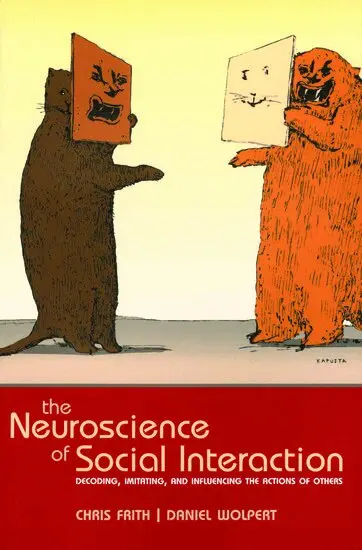
The Neuroscience of Social Interaction
Decoding, imitating and influencing the actions of others
Häftad, Engelska, 2004
1 633 kr
Skickas inom 7-10 vardagar
Humans, like other primates, are intensely social creatures. One of the main functions of our brains is to enable us to be as skilful in social interactions as we are in our interactions with the physical world. Any differences between human brains and those of our nearest relatives, the great apes, are likely to be linked to our unique achievements in social interaction and communication rather than our motor or perceptual skills. Unique to humans is the ability to mentalise (or mind read), that is to perceive and communicate mental states, such as beliefs and desires.A key problem facing neuroscience is to uncover the biological mechanisms underlying our ability to read other minds and to show how these mechanisms evolved. To solve this problem we need to do experiments in which people (or animals) interact with one another rather than behaving in isolation. Such experiments are now being conducted in increasing numbers and many of the leading exponents of such experiments have contributed to this volume. 'The Neuroscience of Social Interactions' will be an important step in uncovering the biological mechanisms underlying social interactions - undoubtedly one of the major programmes for neuroscience in the twenty-first century.