Gabriel Paquette - Böcker
Visar alla böcker från författaren Gabriel Paquette. Handla med fri frakt och snabb leverans.
11 produkter
11 produkter
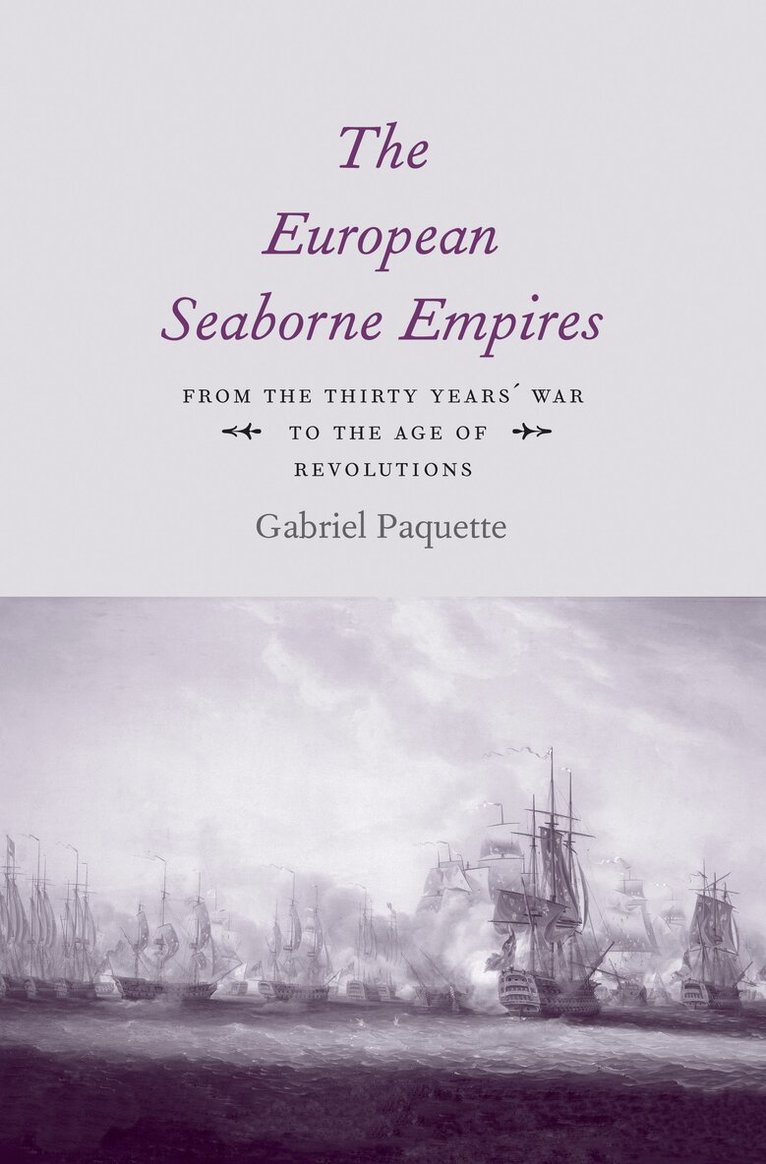
European Seaborne Empires
From the Thirty Years' War to the Age of Revolutions
Inbunden, Engelska, 2019
244 kr
Skickas inom 7-10 vardagar
An accessible survey of the history of European overseas empires in the seventeenth and eighteenth centuries based on new scholarshipIn this thematic survey, Gabriel Paquette focuses on the evolution of the Spanish, Portuguese, English, French, and Dutch overseas empires in the seventeenth and eighteenth centuries. He draws on recent advances in the field to examine their development, from efficacious forms of governance to coercive violence. Beginning with a narrative overview of imperial expansion that incorporates recent critiques of older scholarly approaches, Paquette then analyzes the significance of these empires, including their political, economic, and social consequences and legacies. He makes the multifaceted history of Europe’s globe‑spanning empires in this crucial period accessible to new readers.
2 150 kr
Skickas inom 10-15 vardagar
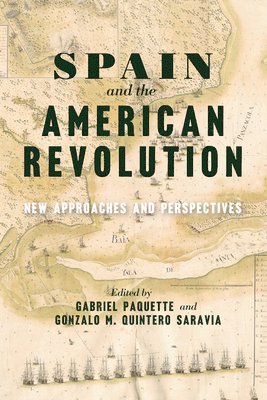
Though the participation of France in the American Revolution is well established in the historiography, the role of Spain, France’s ally, is relatively understudied and underappreciated. Spain's involvement in the conflict formed part of a global struggle between empires and directly influenced the outcome of the clash between Britain and its North American colonists. Following the establishment of American independence, the Spanish empire became one of the nascent republic's most significant neighbors and, often illicitly, trading partners. Bringing together essays from a range of well-regarded historians, this volume contributes significantly to the international history of the Age of Atlantic Revolutions.
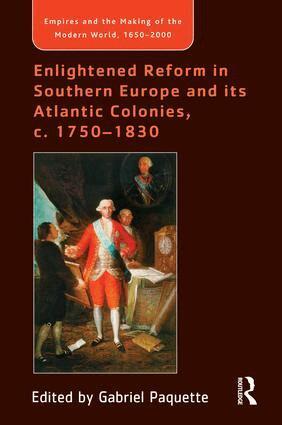
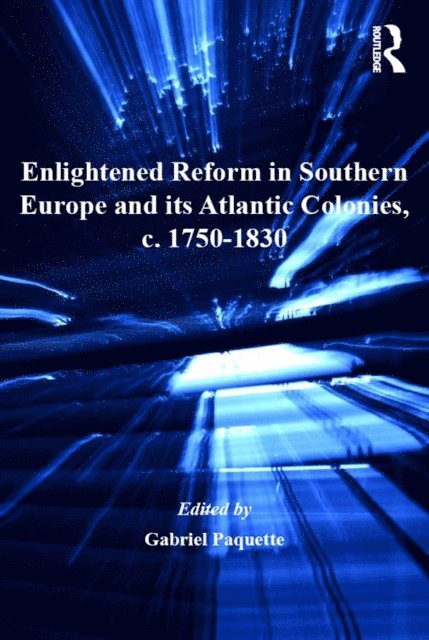
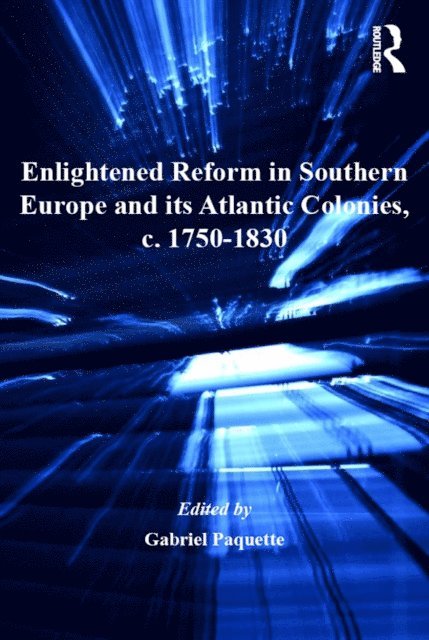
Enlightened Reform in Southern Europe and its Atlantic Colonies, c. 1750-1830
Inbunden, Engelska, 2009
2 219 kr
Skickas inom 10-15 vardagar
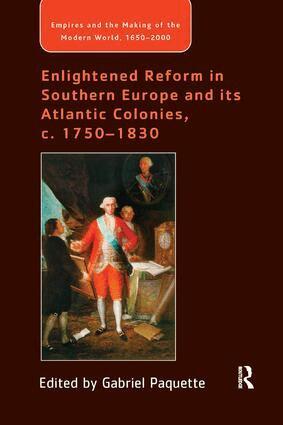
Efforts to ascertain the influence of enlightenment thought on state action, especially government reform, in the long eighteenth century have long provoked stimulating scholarly quarrels. Generations of historians have grappled with the elusive intersections of enlightenment and absolutism, of political ideas and government policy. In order to complement, expand and rejuvenate the debate which has so far concentrated largely on Northern, Central and Eastern Europe, this volume brings together historians of Southern Europe (broadly defined) and its ultramarine empires. Each chapter has been explicitly commissioned to engage with a common set of historiographical issues in order to reappraise specific aspects of 'enlightened absolutism' and 'enlightened reform' as paradigms for the study of Southern Europe and its Atlantic empires. In so doing it engages creatively with pressing issues in the current historical literature and suggests new directions for future research. No single historian, working alone, could write a history that did justice to the complex issues involved in studying the connection between enlightenment ideas and policy-making in Spanish America, Brazil, France, Italy, Portugal and Spain. For this reason, this well-conceived, balanced volume, drawing on the expertise of a small, carefully-chosen cohort, offers an exciting investigation of this historical debate.
350 kr
Skickas inom 10-15 vardagar
Although the participation of France in the American Revolution is well established in the historiography, the role of Spain, France’s ally, is relatively understudied and underappreciated. Spain’s involvement in the conflict formed part of a global struggle between empires and directly influenced the outcome of the clash between Britain and its North American colonists. Following the establishment of American independence, the Spanish empire became one of the nascent republic’s most significant neighbors and, often illicitly, trading partners. Bringing together essays from a range of well-regarded historians, this volume contributes significantly to the international history of the Age of Atlantic Revolutions.Contributors:Eric Becerra, University of North Carolina * Larrie D. Ferreiro, George Mason University * Gregg French, University of Windsor * Mary-Jo Kline, independent scholar * Manuel Lucena Giraldo, International University in Spain * Benjamin C. Lyons, University of Utah * Anthony McFarlane, University of Warwick * Ross Michael Nedervelt, Florida International University * John W. Nelson, Texas Tech University * Emmanuelle Perez Tisserant, University of Toulouse * Eduardo Posada Carbó, University of Oxford * Emily Berquist Soule, California State University, Long Beach * María Bárbara Zepeda Cortés, Lehigh University
603 kr
Skickas inom 7-10 vardagar
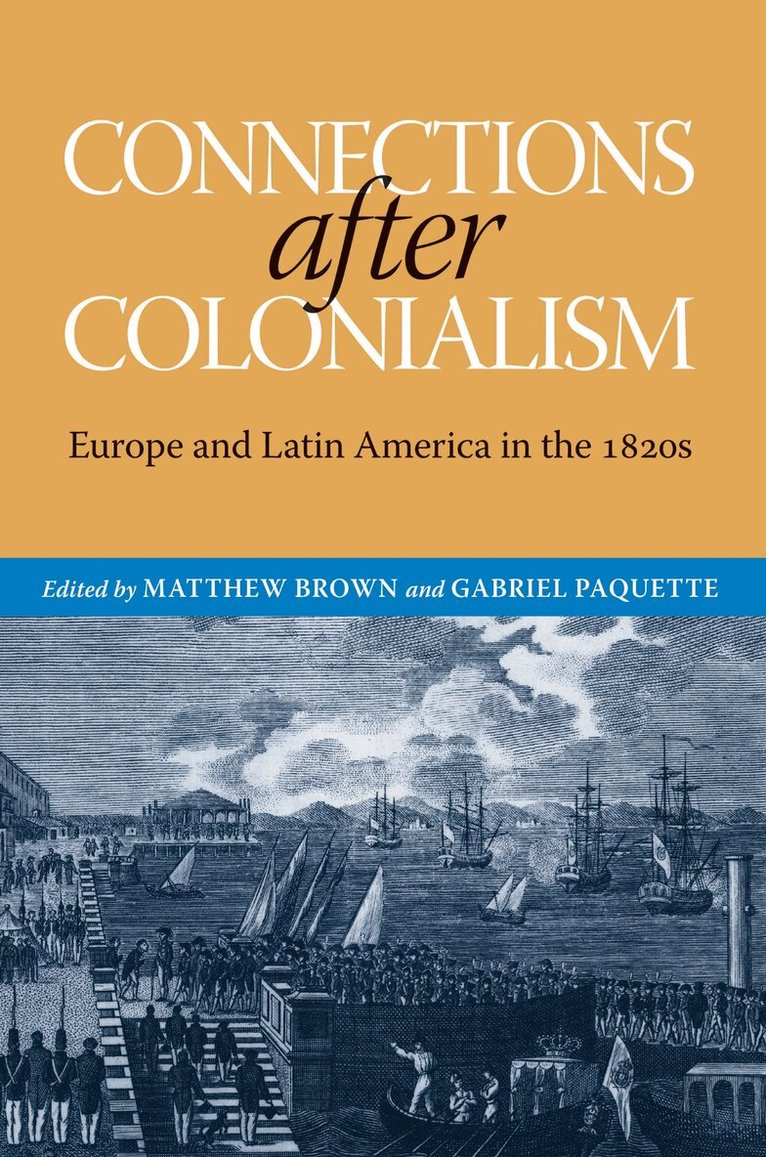
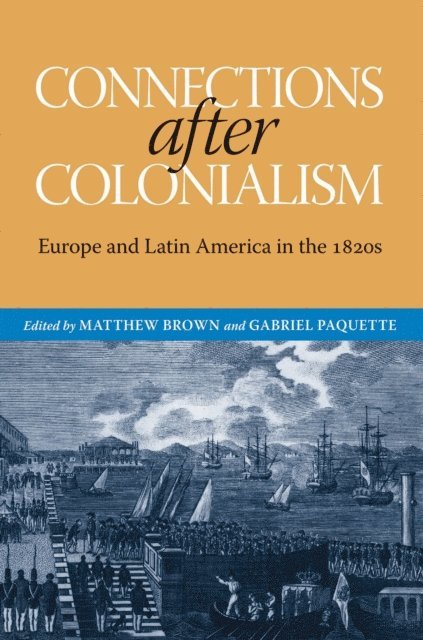
Contributing to the historiography of transnational and global transmission of ideas, Connections after Colonialism examines relations between Europe and Latin America during the tumultuous 1820s. In the Atlantic World, the 1820s was a decade marked by the rupture of colonial relations, the independence of Latin America, and the ever-widening chasm between the Old World and the New. Connections after Colonialism, edited by Matthew Brown and Gabriel Paquette, builds upon recent advances in the history of colonialism and imperialism by studying former colonies and metropoles through the same analytical lens, as part of an attempt to understand the complex connections - political, economic, intellectual, and cultural - between Europe and Latin America that survived the demise of empire. Historians are increasingly aware of the persistence of robust links between Europe and the new Latin American nations. This book focuses on connections both during the events culminating with independence and in subsequent years, a period strangely neglected in European and Latin American scholarship. Bringing together distinguished historians of both Europe and America, the volume reveals a new cast of characters and relationships ranging from unrepentant American monarchists, compromise seeking liberals in Lisbon and Madrid whenvisioned transatlantic federations, and British merchants in the River Plate who saw opportunity where others saw risk to public moralists whose audiences spanned from Paris to Santiago de Chile and plantation owners in eastern Cuba who feared that slave rebellions elsewhere in the Caribbean would spread to their island. Contributors Matthew Brown / Will Fowler / Josep M. Fradera / Carrie Gibson / Brian Hamnett / Maurizio Isabella / Iona Macintyre / Scarlett O'Phelan Godoy / Gabriel Paquette / David Rock / Christopher Schmidt-Nowara / Jay Sexton / Reuben Zahler
373 kr
Skickas inom 7-10 vardagar
Contributing to the historiography of transnational and global transmission of ideas, Connections after Colonialism examines relations between Europe and Latin America during the tumultuous 1820s. In the Atlantic World, the 1820s was a decade marked by the rupture of colonial relations, the independence of Latin America, and the ever-widening chasm between the Old World and the New. Connections after Colonialism, edited by Matthew Brown and Gabriel Paquette, builds upon recent advances in the history of colonialism and imperialism by studying former colonies and metropoles through the same analytical lens, as part of an attempt to understand the complex connections—political, economic, intellectual, and cultural—between Europe and Latin America that survived the demise of empire.Historians are increasingly aware of the persistence of robust links between Europe and the new Latin American nations. This book focuses on connections both during the events culminating with independence and in subsequent years, a period strangely neglected in European and Latin American scholarship. Bringing together distinguished historians of both Europe and America, the volume reveals a new cast of characters and relationships including unrepentant American monarchists; compromise-seeking liberals in Lisbon and Madrid who envisioned transatlantic federations; British merchants in the River Plate who saw opportunity where others saw risk; public moralists whose audiences spanned from Paris to Santiago de Chile; and plantation owners in eastern Cuba who feared that slave rebellions elsewhere in the Caribbean would spread to their island.ContributorsMatthew Brown / Will Fowler / Josep M. Fradera / Carrie Gibson / Brian Hamnett / Maurizio Isabella / Iona Macintyre / Scarlett O’Phelan Godoy / Gabriel Paquette / David Rock / Christopher Schmidt-Nowara / Jay Sexton / Reuben Zahler
Imperial Portugal in the Age of Atlantic Revolutions
The Luso-Brazilian World, c.1770-1850
Inbunden, Engelska, 2013
1 702 kr
Skickas inom 7-10 vardagar
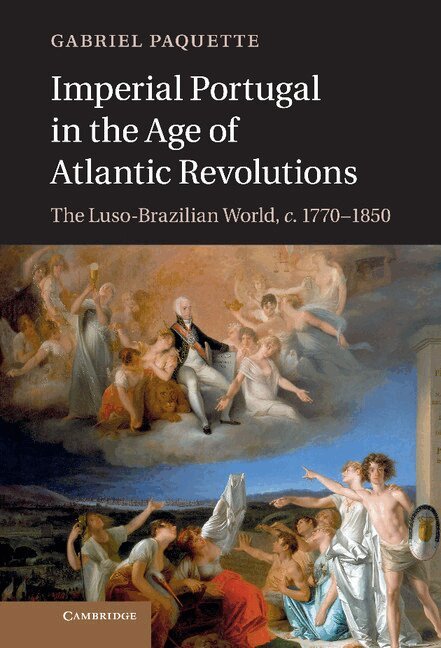
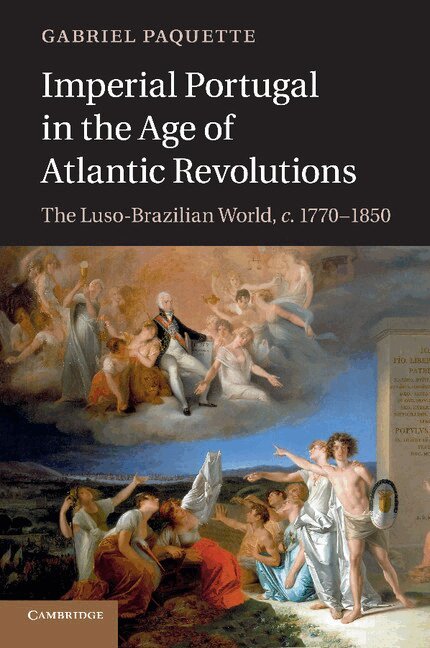
As the British, French and Spanish Atlantic empires were torn apart in the Age of Revolutions, Portugal steadily pursued reforms to tie its American, African and European territories more closely together. Eventually, after a period of revival and prosperity, the Luso-Brazilian world also succumbed to revolution, which ultimately resulted in Brazil's independence from Portugal. The first of its kind in the English language to examine the Portuguese Atlantic World in the period from 1750 to 1850, this book reveals that despite formal separation, the links and relationships that survived the demise of empire entwined the historical trajectories of Portugal and Brazil even more tightly than before. From constitutionalism to economic policy to the problem of slavery, Portuguese and Brazilian statesmen and political writers laboured under the long shadow of empire as they sought to begin anew and forge stable post-imperial orders on both sides of the Atlantic.
Imperial Portugal in the Age of Atlantic Revolutions
The Luso-Brazilian World, c.1770-1850
Häftad, Engelska, 2014
387 kr
Skickas inom 7-10 vardagar
As the British, French and Spanish Atlantic empires were torn apart in the Age of Revolutions, Portugal steadily pursued reforms to tie its American, African and European territories more closely together. Eventually, after a period of revival and prosperity, the Luso-Brazilian world also succumbed to revolution, which ultimately resulted in Brazil's independence from Portugal. The first of its kind in the English language to examine the Portuguese Atlantic World in the period from 1750 to 1850, this book reveals that despite formal separation, the links and relationships that survived the demise of empire entwined the historical trajectories of Portugal and Brazil even more tightly than before. From constitutionalism to economic policy to the problem of slavery, Portuguese and Brazilian statesmen and political writers laboured under the long shadow of empire as they sought to begin anew and forge stable post-imperial orders on both sides of the Atlantic.
845 kr
Skickas inom 10-15 vardagar
Efforts to ascertain the influence of enlightenment thought on state action, especially government reform, in the long eighteenth century have long provoked stimulating scholarly quarrels. Generations of historians have grappled with the elusive intersections of enlightenment and absolutism, of political ideas and government policy. In order to complement, expand and rejuvenate the debate which has so far concentrated largely on Northern, Central and Eastern Europe, this volume brings together historians of Southern Europe (broadly defined) and its ultramarine empires. Each chapter has been explicitly commissioned to engage with a common set of historiographical issues in order to reappraise specific aspects of 'enlightened absolutism' and 'enlightened reform' as paradigms for the study of Southern Europe and its Atlantic empires. In so doing it engages creatively with pressing issues in the current historical literature and suggests new directions for future research. No single historian, working alone, could write a history that did justice to the complex issues involved in studying the connection between enlightenment ideas and policy-making in Spanish America, Brazil, France, Italy, Portugal and Spain. For this reason, this well-conceived, balanced volume, drawing on the expertise of a small, carefully-chosen cohort, offers an exciting investigation of this historical debate.
Del 2 - Anthem Other Canon Economics
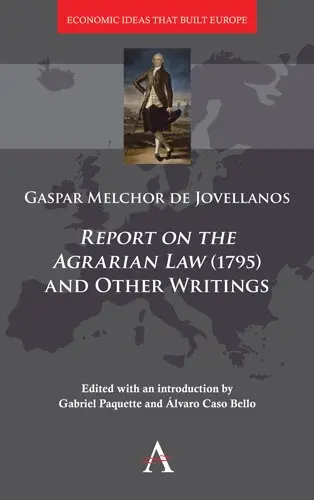
'Report on the Agrarian Law' (1795) and Other Writings
Inbunden, Engelska, 2016
1 132 kr
Skickas inom 5-8 vardagar
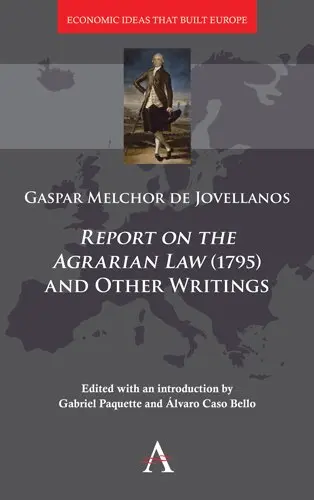
"Report on the Agrarian Law" (1795) and Other Writings' is the first modern English translation of perhaps the greatest work of the Spanish Enlightenment, Gaspar Melchor de Jovellanos’s 'Informe sobre la Ley Agraria' (1795). A major work of political economy and a beautifully crafted philosophical history of Spain’s political development until the eighteenth century, 'Informe sobre la Ley Agraria' is a classic work of the Spanish Enlightenment. Displaying the richness of Spanish Enlightenment writing on political economy emerging from a fecund conjugation of foreign writers (Smith, Ferguson, Condillac, Mirabeau, Genovesi) with Spanish writers (Ulloa, Olavide, Uztáriz, Campomanes), this masterpiece explores the lessons learned from the shortcomings of the Spanish Crown's economic policies in the eighteenth century.
Del 1 - Economic Ideas that Built Europe
'Report on the Agrarian Law' (1795) and Other Writings
Häftad, Engelska, 2018
414 kr
Skickas inom 5-8 vardagar
"Report on the Agrarian Law" (1795) and Other Writings' is the first modern English translation of perhaps the greatest work of the Spanish Enlightenment, Gaspar Melchor de Jovellanos’s 'Informe sobre la Ley Agraria' (1795). A major work of political economy and a beautifully crafted philosophical history of Spain’s political development until the eighteenth century, 'Informe sobre la Ley Agraria' is a classic work of the Spanish Enlightenment. Displaying the richness of Spanish Enlightenment writing on political economy emerging from a fecund conjugation of foreign writers (Smith, Ferguson, Condillac, Mirabeau, Genovesi) with Spanish writers (Ulloa, Olavide, Uztáriz, Campomanes), this masterpiece explores the lessons learned from the shortcomings of the Spanish Crown's economic policies in the eighteenth century.