Gaël Saint-Cricq - Böcker
Visar alla böcker från författaren Gaël Saint-Cricq. Handla med fri frakt och snabb leverans.
2 produkter
2 produkter
334 kr
Skickas inom 7-10 vardagar
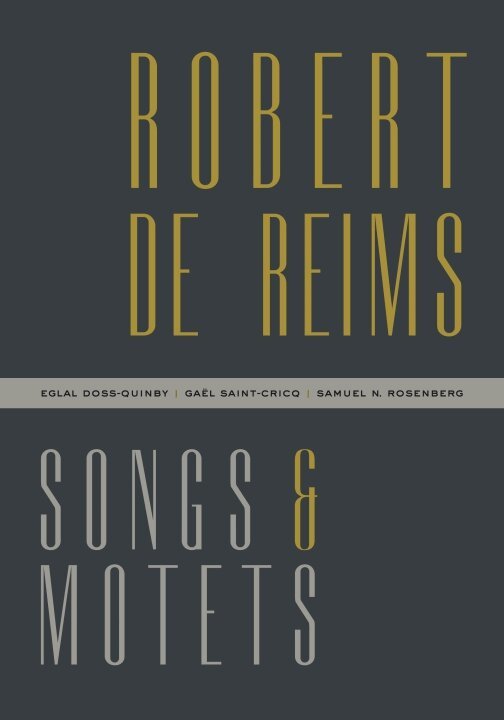
Robert de Reims, also known as “La Chievre de Rains,” was among the earliest trouvères—poet-composers who were contemporaries of the troubadours but who wrote in the dialects of northern France. This critical edition provides new translations into English and modern French of all the songs and motets ascribed to him, along with the original texts, the extant music, and a substantive introduction.Active sometime between 1190 and 1220, Robert was an influential figure in the literary circles of Arras. Thirteen compositions set to music are here attributed to him, including nine chansons and four polyphonic motets that were broadly disseminated in the thirteenth century and beyond. Robert’s work is exceptional on a number of fronts. He lavished particular care on the phonic harmony of his words. Acoustic luxuriance and expertise in rhyming, grounded in the play of echoes and variation (often extending into the music), constitute the hallmark of his poetry. Moreover, he is the earliest trouvère known to have composed a parodic sotte chanson contre Amours (silly song against Love).Located clearly at the nexus of monophonic song and polyphony, Robert’s corpus also poses the intriguing question of trouvère participation in the development of the polyphonic repertory. The case of Robert de Reims jostles and tempers the standard history of the chanson and motet.Accessible and instructive, this trilingual critical edition of his complete works makes the oeuvre of this innovative and consequential trouvère available in one volume for the first time.
Del 25 - Studies in Medieval and Renaissance Music
Composers in the Middle Ages
Inbunden, Engelska, 2024
1 198 kr
Skickas inom 7-10 vardagar
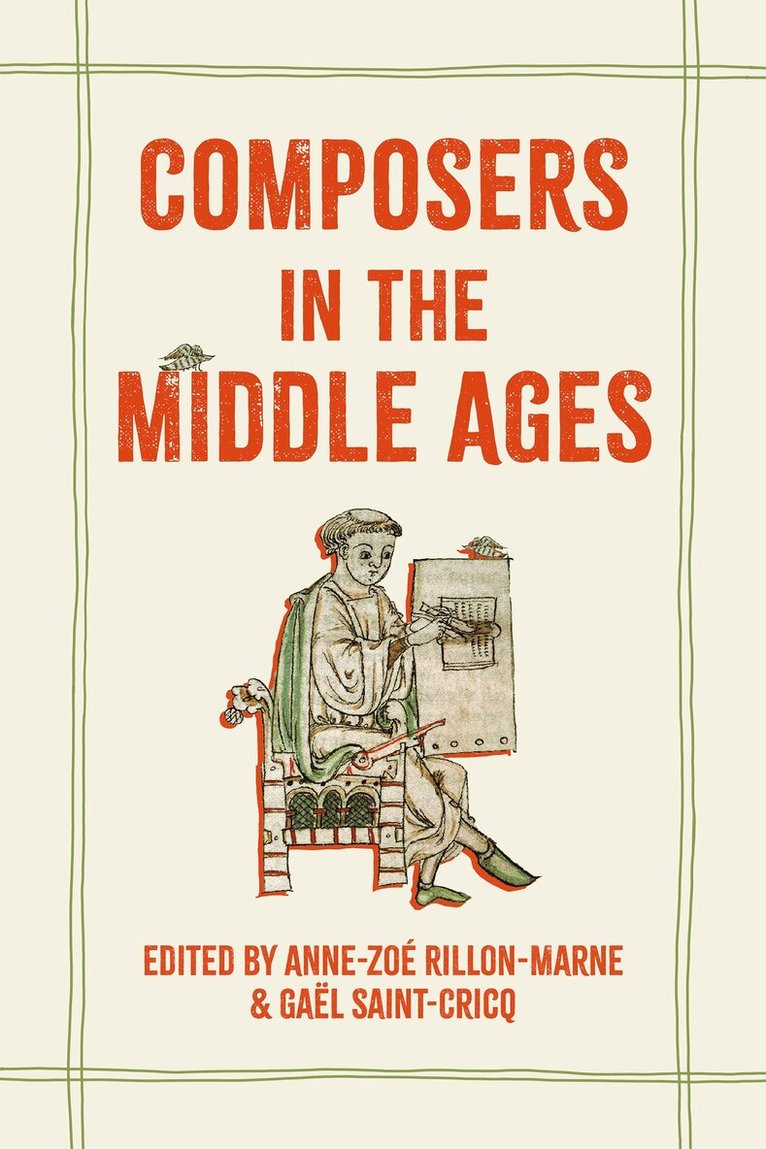
A reflection on the idea of the "composer" in the medieval period, including a study of the individuals and groups active in the creation of medieval music.The modern concept of the individual composer is central to accounts of Western music, and continues to represent a critical field of research in musicology. However, this approach cannot be straightforwardly transposed to the Middle Ages, as it does not reflect the complex creative realities of medieval composition, and conflicts with the evidence from extant sources and documentation.This collection, the first full-length study of the subject, questions and revises the concept of the composer for the medieval period through five thematic parts: 'Historiographical Critique', 'Ascriptions, Attributions, Signatures', 'Medieval Constructions of Authority and of the Authorial Persona', 'The Composing Workshop', and 'Composers as Communities'. Spanning a period from the seventh century to the early Renaissance, and taking in different cultural and geographical areas of Western Europe, the essays examine a range of repertoires and fields - plainchant, Latin devotional song, medieval motet, trouvère song, Ars nova, drama, and illuminated Gothic manuscripts - in diverse contexts, from clerical communities, to princely courts and lay workshops. Overall, the new perspectives here shed fresh light on the musical practices and repertoires of the Middle Ages.Chapters 6 and 10 are available as Open Access under the Creative Commons license CC-BY-NC-ND.