Anne-Zoé Rillon-Marne - Böcker
Visar alla böcker från författaren Anne-Zoé Rillon-Marne. Handla med fri frakt och snabb leverans.
2 produkter
2 produkter
2 643 kr
Kommande
Latin Song in the Medieval West reconsiders the porous boundaries and shifting identities of medieval Latin song through new methodologies and interdisciplinary inquiry. Moving beyond inherited binaries—text and music, sacred and secular, Latin and vernacular—the volume explores what it meant to sing in Latin across diverse social, cultural, and performative contexts. Rather than treating Latin song as coterminous with the liturgy, the essays foreground its multivalence: its mobility across institutions and regions, its adaptability across genres, and its capacity to accrue meaning over time.Bringing together musicology, literary studies, history, theology, and performance studies, the contributors examine Latin song in relation to ritual practice, intertextuality, gender, memory, transmission, rhetoric, genre, and voice. Several essays also interrogate “song” itself as a conceptual and theoretical category, asking how medieval thinkers and singers understood its powers and possibilities.Taken together, the volume presents Latin song as a dynamic and culturally embedded practice central to medieval intellectual, devotional, and social life. By situating Latin song within broader networks of performance and meaning, Latin Song in the Medieval West offers a rethinking of how Latin song functioned—and why it mattered—in the European Middle Ages.An Open Access version of the following chapter will be available on publication on the Liverpool University Press website: Alessandra Ignesti, “Ritual Archaeology of a Song-Form Trope for Christmas: Reworkings of Cum gaudio concurrite”.
Del 25 - Studies in Medieval and Renaissance Music
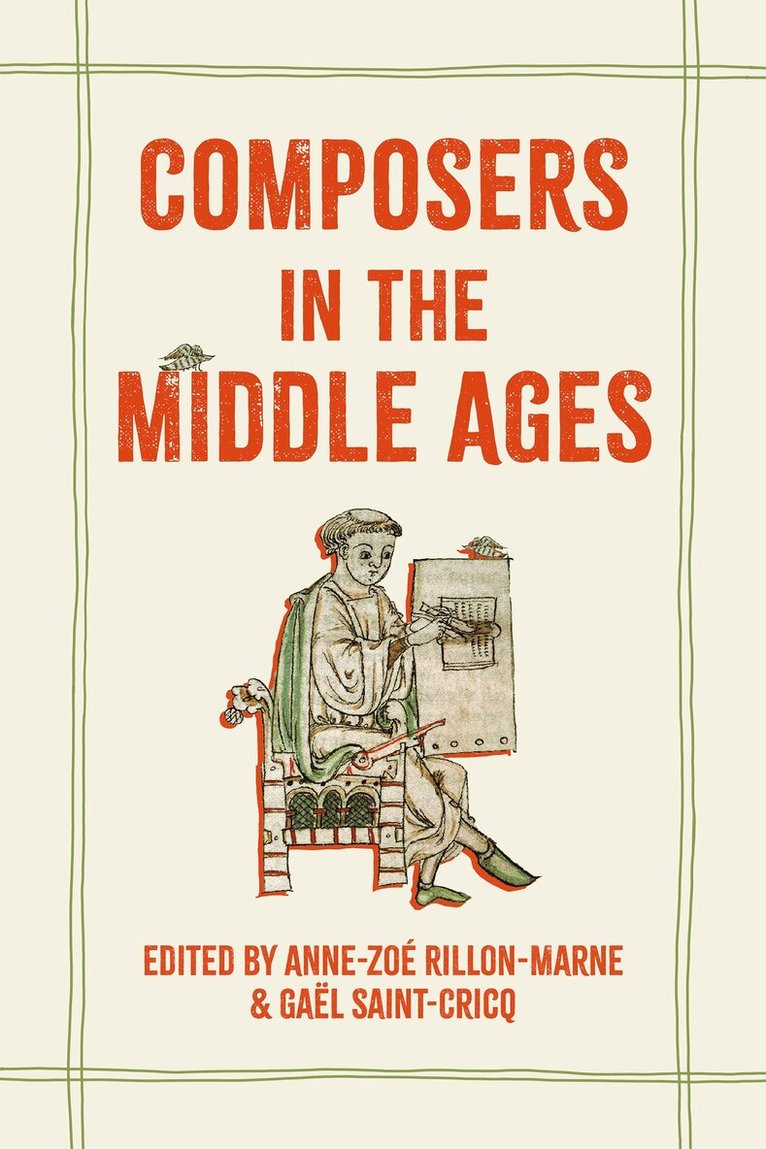
Composers in the Middle Ages
Inbunden, Engelska, 2024
1 198 kr
Skickas inom 7-10 vardagar
A reflection on the idea of the "composer" in the medieval period, including a study of the individuals and groups active in the creation of medieval music.The modern concept of the individual composer is central to accounts of Western music, and continues to represent a critical field of research in musicology. However, this approach cannot be straightforwardly transposed to the Middle Ages, as it does not reflect the complex creative realities of medieval composition, and conflicts with the evidence from extant sources and documentation.This collection, the first full-length study of the subject, questions and revises the concept of the composer for the medieval period through five thematic parts: 'Historiographical Critique', 'Ascriptions, Attributions, Signatures', 'Medieval Constructions of Authority and of the Authorial Persona', 'The Composing Workshop', and 'Composers as Communities'. Spanning a period from the seventh century to the early Renaissance, and taking in different cultural and geographical areas of Western Europe, the essays examine a range of repertoires and fields - plainchant, Latin devotional song, medieval motet, trouvère song, Ars nova, drama, and illuminated Gothic manuscripts - in diverse contexts, from clerical communities, to princely courts and lay workshops. Overall, the new perspectives here shed fresh light on the musical practices and repertoires of the Middle Ages.Chapters 6 and 10 are available as Open Access under the Creative Commons license CC-BY-NC-ND.