Mary Channen Caldwell – författare
Visar alla böcker från författaren Mary Channen Caldwell. Handla med fri frakt och snabb leverans.
5 produkter
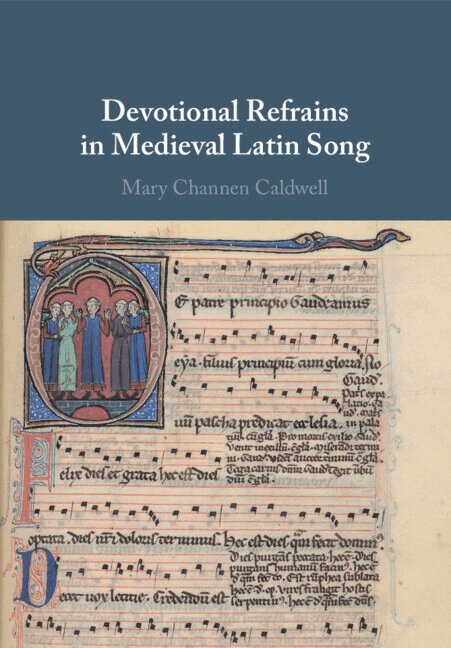
Devotional Refrains in Medieval Latin Song
Häftad, 2024
426 kr
Lägg i varukorg
Throughout medieval Europe, male and female religious communities attached to churches, abbeys, and schools participated in devotional music making outside of the chanted liturgy. Newly collating over 400 songs from primary sources, this book reveals the role of Latin refrains and refrain songs in …
Devotional Refrains in Medieval Latin Song
E-bok, 2022
420 kr
Lägg i varukorg
Throughout medieval Europe, male and female religious communities attached to churches, abbeys, and schools participated in devotional music making outside of the chanted liturgy. Newly collating over 400 songs from primary sources, this book reveals the role of Latin refrains and refrain songs in …
Devotional Refrains in Medieval Latin Song
E-bok, 2022
411 kr
Lägg i varukorg
Throughout medieval Europe, male and female religious communities attached to churches, abbeys, and schools participated in devotional music making outside of the chanted liturgy. Newly collating over 400 songs from primary sources, this book reveals the role of Latin refrains and refrain songs in …
Devotional Refrains in Medieval Latin Song
Inbunden, 2022
1391 kr
Lägg i varukorg
Throughout medieval Europe, male and female religious communities attached to churches, abbeys, and schools participated in devotional music making outside of the chanted liturgy. Newly collating over 400 songs from primary sources, this book reveals the role of Latin refrains and refrain songs in …
Latin Song in the Medieval West
Av Mary Channen Caldwell, Anne-Zoé Rillon-Marne
Inbunden, 2027
2306 kr
Kommande
Latin Song in the Medieval West reconsiders the porous boundaries and shifting identities of medieval Latin song through new methodologies and interdisciplinary inquiry. Moving beyond inherited binaries—text and music, sacred and secular, Latin and vernacular—the volume explores what it meant to …