Galen Brokaw - Böcker
Visar alla böcker från författaren Galen Brokaw. Handla med fri frakt och snabb leverans.
3 produkter
3 produkter
1 282 kr
Skickas inom 7-10 vardagar
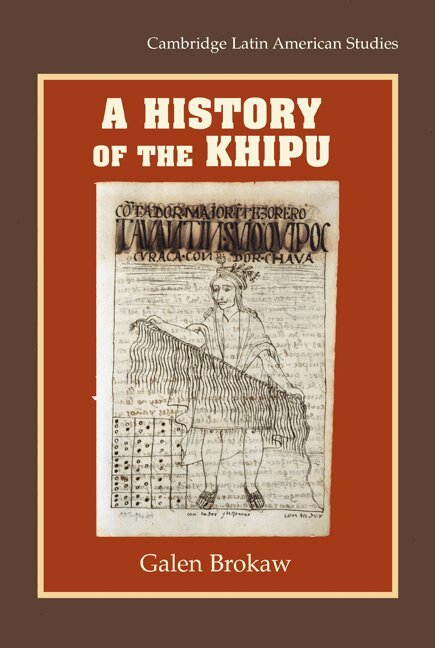
This book begins by proposing a theoretical model that reconciles orality-literacy studies and media theory in order to avoid the specious dichotomization of societies into those with and those without writing. The more relevant issue is the way in which a given society distributes semiotic functions among the various media that it employs and the forms of economic and political integration within which such media function. This theoretical model then informs a history of the Andean khipu from pre-Columbian times through the first 120 years of the colonial period. The first half of the book examines early Andean media and their socioeconomic and political contexts, culminating with the emergence of Wari and subsequently Inca khipu. The second half of the book documents and analyzes the continued use of khipu by indigenous individuals and communities in their interactions with Spanish officials, chroniclers, and priests. The study corrects many common misconceptions, such as the alleged mass destruction of khipu in the late sixteenth century. Even more importantly, it highlights the dialogue that occurred in the colonial period between the administrative and historiographic discourses of alphabetic Spanish and those of native Andean khipu genres.
896 kr
Tillfälligt slut
Texcoco: Prehispanic and Colonial Perspectives presents an in-depth, highly nuanced historical understanding of this major indigenous Mesoamerican city from the conquest through the present. The book argues for the need to revise conclusions of past scholarship on familiar topics, deals with current debates that derive from differences in the way scholars view abundant and diverse iconographic and alphabetic sources, and proposes a new look at Texcocan history and culture from different academic disciplines.Contributors address some of the most pressing issues in Texcocan studies and bring new ones to light: the role of Texcoco in the Aztec empire, the construction and transformation of Prehispanic history in the colonial period, the continuity and transformation of indigenous culture and politics after the conquest, and the nature and importance of iconographic and alphabetic texts that originated in this city-state, such as the Codex Xolotl, the Mapa Quinatzin, and Fernando de Alva Ixtlilxochitl’s chronicles. Multiple scholarly perspectives and methodological approaches offer alternative paradigms of research and open a needed dialogue among disciplines—social, political, literary, and art history, as well as the history of science.This comprehensive overview of Prehispanic and colonial Texcoco will be of interest to Mesoamerican scholars in the social sciences and humanities.
433 kr
Skickas inom 5-8 vardagar
Revealing the resiliency of Nahua culture and language while highlighting the adaptations and changes they have undergone over the centuries, The Nahua demonstrates that Nahuatl remained a vibrant and central language well after European contact and into the twenty-first century, and its characteristic features can provide insight into nuanced aspects of Nahua culture and history. During the colonial period, Nahuatl became a means of empowerment, oppression, and indoctrination. In modern times, Nahuatl continues to serve as an ideological lightning rod for both the Mexican government and Indigenous communities. Contributors to this volume focus on Nahua intellectual production from the sixteenth century to the present; contact and the negotiation of meaning; adaptations of Christian lore that show how representations of creation, hell, and the Passion of Christ reflected Nahua perceptions and understandings; Nahua cultural expressions, including poetry, healing rituals, and even running; language and geography; Nahuatl place-names; and the transformation of Nahuatl speakers from antiquity to the present. Showcasing how Nahuatl’s cultural resilience permanently shaped the region’s social geography, The Nahua engages the field’s interest in the nonhomogenous character of the language, with regional and subregional dialects and pronunciations that reflect the history of pre-Columbian migrations and modern-era influences. Bridging the study of Nahuatl as a “historical” Indigenous language tradition with the study of modern-day speakers and their experiences, this work is of significance to students, scholars, and speakers of the languages as well as those studying colonial New Spain, Indigenous resilience, or Indigenous linguistics.