Gary A. Boyd - Böcker
Visar alla böcker från författaren Gary A. Boyd. Handla med fri frakt och snabb leverans.
5 produkter
5 produkter
778 kr
Skickas inom 10-15 vardagar
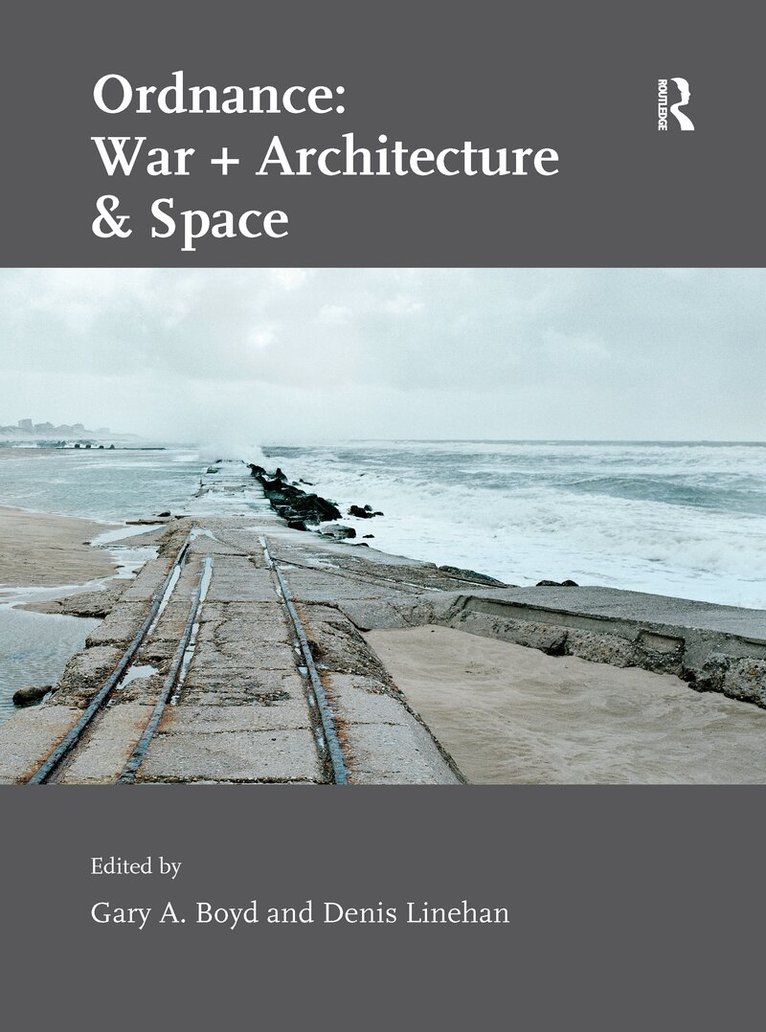
Ordnance: War + Architecture & Space investigates how strategies of warfare occupy and alter built and other landscapes. Ranging across the modern period from the eighteenth century to the present day, the book presents a series of case-studies which operate in and between a number of settings and scales, from the infrastructures of the battlefield to the logistics of the domestic realm. The book explores the patterns, forms and systems that articulate militarised spaces, excavates how these become re-circulated and reconfigured within other domains and discusses the often ephemeral legacies and residues of these architectures. The complexities of unpicking the spaces of the 'fog of war' are addressed by an inter-disciplinary approach which deploys graphic and textual analyses and techniques to provide new and unique perspectives on a hitherto underexplored aspect of architectural and spatial discourse: the tactics and programmes through which the built environment has historically been made to respond to the imperatives and threats of conflict and, in the context of the 'war on terror', continues to be so in ever more pervasive ways.
750 kr
Skickas inom 10-15 vardagar
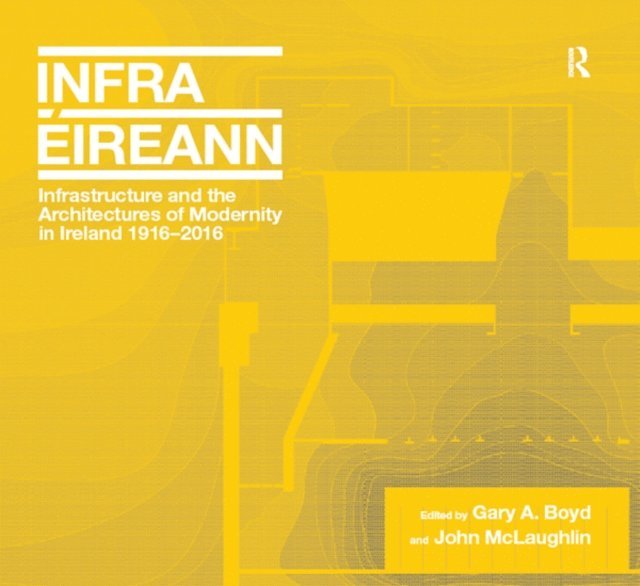
At the formation of the new Republic of Ireland, the construction of new infrastructures was seen as an essential element in the building of the new nation, just as the adoption of international style modernism in architecture was perceived as a way to escape the colonial past. Accordingly, infrastructure became the physical manifestation, the concrete identity of these objectives and architecture formed an integral part of this narrative. Moving between scales and from artefact to context, Infrastructure and the Architectures of Modernity in Ireland 1916-2016 provides critical insights and narratives on what is a complex and hitherto overlooked landscape, one which is often as much international as it is Irish. In doing so, it explores the interaction between the universalising and globalising tendencies of modernisation on one hand and the textures of local architectures on the other. The book shows how the nature of technology and infrastructure is inherently cosmopolitan. Beginning with the building of the heroic Shannon hydro-electric facility at Ardnacrusha by the German firm of Siemens-Schuckert in the first decade of independence, Ireland became a point of varying types of intersection between imported international expertise and local need. Meanwhile, at the other end of the century, by the year 2000, Ireland had become one of the most globalized countries in the world, site of the European headquarters of multinationals such as Google and Microsoft. Climatically and economically expedient to the storing and harvesting of data, Ireland has subsequently become a repository of digital information farmed in large, single-storey sheds absorbed into anonymous suburbs. In 2013, it became the preferred site for Intel to design and develop its new microprocessor chip: the Galileo. The story of the decades in between, of shifts made manifest in architecture and infrastructure from the policies of economic protectionism, to the opening up of the country to direct foreign investment and the embracing of the EU, is one of the influx of technologies and cultural references into a small country on the edges of Europe as Ireland became both a launch-pad and testing ground for a series of aspects of designed modernity.
2 230 kr
Skickas inom 10-15 vardagar
Ordnance: War + Architecture & Space investigates how strategies of warfare occupy and alter built and other landscapes. Ranging across the modern period from the eighteenth century to the present day, the book presents a series of case-studies which operate in and between a number of settings and scales, from the infrastructures of the battlefield to the logistics of the domestic realm. The book explores the patterns, forms and systems that articulate militarised spaces, excavates how these become re-circulated and reconfigured within other domains and discusses the often ephemeral legacies and residues of these architectures. The complexities of unpicking the spaces of the 'fog of war' are addressed by an inter-disciplinary approach which deploys graphic and textual analyses and techniques to provide new and unique perspectives on a hitherto underexplored aspect of architectural and spatial discourse: the tactics and programmes through which the built environment has historically been made to respond to the imperatives and threats of conflict and, in the context of the 'war on terror', continues to be so in ever more pervasive ways.
2 160 kr
Skickas inom 7-10 vardagar
At the formation of the new Republic of Ireland, the construction of new infrastructures was seen as an essential element in the building of the new nation, just as the adoption of international style modernism in architecture was perceived as a way to escape the colonial past. Accordingly, infrastructure became the physical manifestation, the concrete identity of these objectives and architecture formed an integral part of this narrative. Moving between scales and from artefact to context, Infrastructure and the Architectures of Modernity in Ireland 1916-2016 provides critical insights and narratives on what is a complex and hitherto overlooked landscape, one which is often as much international as it is Irish. In doing so, it explores the interaction between the universalising and globalising tendencies of modernisation on one hand and the textures of local architectures on the other. The book shows how the nature of technology and infrastructure is inherently cosmopolitan. Beginning with the building of the heroic Shannon hydro-electric facility at Ardnacrusha by the German firm of Siemens-Schuckert in the first decade of independence, Ireland became a point of varying types of intersection between imported international expertise and local need. Meanwhile, at the other end of the century, by the year 2000, Ireland had become one of the most globalized countries in the world, site of the European headquarters of multinationals such as Google and Microsoft. Climatically and economically expedient to the storing and harvesting of data, Ireland has subsequently become a repository of digital information farmed in large, single-storey sheds absorbed into anonymous suburbs. In 2013, it became the preferred site for Intel to design and develop its new microprocessor chip: the Galileo. The story of the decades in between, of shifts made manifest in architecture and infrastructure from the policies of economic protectionism, to the opening up of the country to direct foreign investment and the embracing of the EU, is one of the influx of technologies and cultural references into a small country on the edges of Europe as Ireland became both a launch-pad and testing ground for a series of aspects of designed modernity.
554 kr
Skickas inom 5-8 vardagar
With only a handful of British coalmines remainingactive and with targets set to reduce carbon emissions, the coal industry nowseems to be heading towards extinction. Yet, it was coal that turned Britaininto a world-leader during the Industrial Revolution and established theconditions for the modern state. In the 20th century, it generated buildingprogrammes on a massive scale concerning miners’ welfare, settlements andhousing. The form, space, organisation, and aesthetics of architecturebecame of critical importance not just to the process of the industry’s modernisationbut also how it was perceived and understood both within and outside itsworkforce. But despite the centrality of coal mining and its workers to thedevelopment of modern Britain, as well as the contemporary recognition thataspects of its innovative architecture received, its built legacy has often beenoverlooked and physically almost completely erased. Divided into three parts, thisis the first book which provides a critical and comprehensive examination ofthe architecture of coal in Britain and how it responded to the needs of theindustry and, perhaps more significantly, its labour force. Part I explores the relationship betweenthe architecture of coal and the provision of welfare. While this produced aseries of enlightened built projects for miners and their communities especiallybetween the wars – educational buildings, reading rooms, holiday camps, welfareinstitutes, sports grounds, swimming pools, medical centres, children’splaygrounds, etc. – it focusses on the paradigmatic integration of aestheticsand programme seen most emphatically in the creation of over 600 pithead baths.Part II looks at settlement and the relationships between responses to oftenadverse conditions within domestic environments in mining settlements and thedevelopment of broader and influential theories and practices concerninghousing. Finally, Part III explores the modernisation of the industry duringthe post-war period arguing that that architectural design and representationbecame pivotal to the functional and symbolic requirements of the newlyNationalised entity and its position within, and singular contribution to,post-war society.