• Fri frakt över 249 kr
  • •
  • Snabba leveranser
  • •
  • Billiga böcker
Kundservice

Du är på sajten för privatpersoner.

Företag, bibliotek eller offentlig verksamhet?

Du handlar på classic.bokus.com, där alla dina funktioner finns intakta.
Till classic.bokus.com
Bokus logotyp. Gå till startsidan.
  • Erbjudanden
  • Nyheter
  • Student
  • Topplistor
  • Barn & ungdom
  • Bokus Play
  • E-böcker
  • Pocketböcker
  • Spel & pussel

10% rabatt på allt med kod: NYSTART10 →

Sidfot

Mina sidor

    Hjälp

    • Kundservice
    • Vanliga frågor och svar
    • Frakt och leverans
    • Retur vid ångerrätt
    • Reklamera vara
    • Betalning
    • Köpvillkor
    • Allmänna villkor
    • Information om webbplatsens tillgänglighet

    Om Bokus

    • Om oss
    • Pressrum
    • För studenter
    • För företag
    • För bibliotek och offentlig verksamhet
    • För leverantörer
    • Hållbarhet

    Populärt

    • Aktuella erbjudanden
    • Presentkort
    • Studentlitteratur
    • Nya böcker
    • Topplistor
    • Signerade böcker
    • Engelska böcker

    Inspiration

    • Boktips
    • BookTok
    • Populära bokserier
    • Barnbokskaraktärer
    • Populära författare
    Logotyp för Bokus
    Följ oss på Facebook (extern länk)Följ oss på Instagram (extern länk)Följ oss på YouTube (extern länk)Följ oss på TikTok (extern länk)
    bokus @ CookiesAnpassa cookiesIntegritetspolicyKöpvillkor
    Till Citymail hemsida (extern länk)Till Budbee hemsida (extern länk)Till Postnord hemsida (extern länk)Till Schenker hemsida (extern länk)Till Early Bird hemsida (extern länk)Till Walleys hemsida (extern länk)
    1. Kultur
    2. Arkitektur

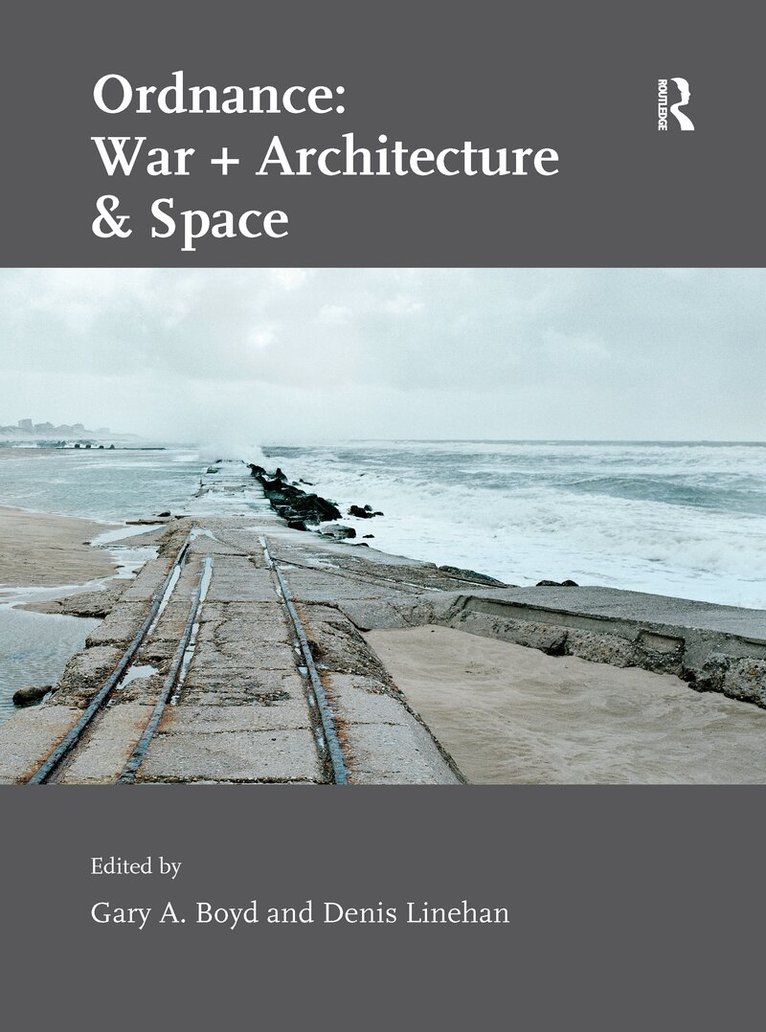
    Ordnance: War + Architecture & Space

    AvDenis Linehan,Gary A. Boyd

    Häftad, Engelska, 2016

    845 kr

    Beställningsvara. Skickas inom 10-15 vardagar. Fri frakt över 249 kr.

    Fler format och utgåvor

    E-bok

    1 002 kr

    E-bok

    1 004 kr

    Inbunden

    2 493 kr

    Beskrivning

    Ordnance: War + Architecture & Space investigates how strategies of warfare occupy and alter built and other landscapes. Ranging across the modern period from the eighteenth century to the present day, the book presents a series of case-studies which operate in and between a number of settings and scales, from the infrastructures of the battlefield to the logistics of the domestic realm. The book explores the patterns, forms and systems that articulate militarised spaces, excavates how these become re-circulated and reconfigured within other domains and discusses the often ephemeral legacies and residues of these architectures. The complexities of unpicking the spaces of the 'fog of war' are addressed by an inter-disciplinary approach which deploys graphic and textual analyses and techniques to provide new and unique perspectives on a hitherto underexplored aspect of architectural and spatial discourse: the tactics and programmes through which the built environment has historically been made to respond to the imperatives and threats of conflict and, in the context of the 'war on terror', continues to be so in ever more pervasive ways.

    Produktinformation

    • Utgivningsdatum:2016-10-11
    • Mått:189 x 246 x 23 mm
    • Vikt:453 g
    • Format:Häftad
    • Språk:Engelska
    • Antal sidor:298
    • Förlag:Taylor & Francis Ltd
    • ISBN:9781138250437

    Utforska kategorier

    • Arkitektur inom Kultur
    • Krig och försvar inom Samhälle och politik

    Recensioner i media

    ’War and architecture are usually seen as mutual opposites, in that the former destroys urban and social fabrics while the latter hopes to repair and improve them. Yet this excellent collection of essays shows that the two are far more intertwined than perhaps we would wish. On a fascinating journey we are taken from the squares of colonial Savannah over to Ireland and Britain, then to France and Germany in the Second World War, plus a digression to look at soldiers’ gravestones from an earlier conflict in the Crimea. It is a chilling but highly informative read.’ Murray Fraser, UCL Bartlett School of Architecture, UK ’From colonies, bunkers and camouflaged buildings to maps, railways, watchtowers, counter-terrorist street furniture, even homes... Like no book before it, Ordnance really gets to grips with the many ways in which militarism stalks everyday architecture, infrastructure, landscape and memory. A startling and beautifully illustrated collection that should become a pivotal text in burgeoning debates about the architectures of war past and present.’ Stephen Graham, Newcastle University, UK

    Innehållsförteckning

    • Contents: Introduction: a place called war, Gary A. Boyd and Denis Linehan; Part I Urban Orders: Militarised Terrains in the City: To gather in war and peace; the city squares of Savannah, Georgia, Nathaniel Robert Walker; The political aesthetics of counter-terrorism, Peter Mörtenböck and Helge Mooshammer; Protecting the population: bureaucracy, affectivity and governing the Liverpool blitz, Peter Adey (with Barry Godfrey and Dave Cox); Funky bunkers: the post-military landscape as a readymade space and a cultural playground, Per Strömberg. Part II The Invisible Front: Domesticity and Defence: ’Hiding the assets’: 'self-concealing' architecture and the British landscape in the Second World War, James Robinson; Home base: militarization of the American home in the Second World War, Rebecca Lyn Cooper; The art and science of invisible landscapes: camouflage for war and peace, Sonja Duemplemann. Part III War in the Landscape: Infrastructures and Topology: The Atlantikwall: from a forgotten military space towards places of collective remembrance, Rose Tzalmona; Military intelligence: the Board of Ordnance maps and plans of Scotland 1698-c.1760, Carolyn J. Anderson; Commanding the rivers: guarding the German railway network in peace and war, Volker Mende; Forteresse invisible: the casemates of the Maginot Line in Alsace-Lorraine, Lisa Haber-Thomson. Part IV Trauma: Spaces of Memory: Defending the Irish border: the map of watchful architecture, Garrett Carr; British soldiers' graves in the Crimea and the origins of modern war commemoration, Andrew Keating; Contested spaces: invisible architectures, Reenie (Karin) Elliott; Sketches of war: the graveyards of historical memory, Jonathan Charley; Index.