Gay L. Gullickson – författare
Visar alla böcker från författaren Gay L. Gullickson. Handla med fri frakt och snabb leverans.
4 produkter
4 produkter
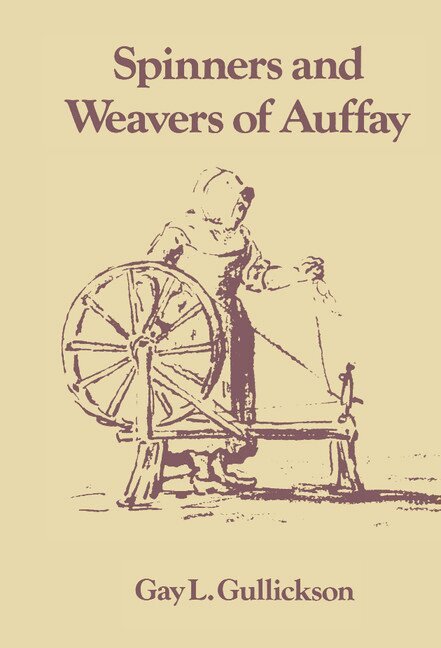
The Spinners and Weavers of Auffay
Rural Industry and the Sexual Division of Labor in a French Village
Inbunden, Engelska, 1986
1 228 kr
Skickas inom 7-10 vardagar
The cottage industry of France enjoyed enormous growth from the mid-eighteenth to the mid-nineteenth century. Through an intensive analysis of the social and economic impact of the expansion of this female-dominated industry, Gay Gullickson broadens our understanding of the variety and complexity of proto-industrial regions and of the proto-industrial processes. Focusing on the village of Auffay, located in the pays de Caux, a thriving agricultural region, Gullickson recreates the experiences of the women and men who spun and wove for the urban putting-out merchants. Social analysis of local memoirs, government reports, notarial and judicial records, and village cahiers de doléances, enables Gullickson to offer a more nuanced and accurate view of the causes and consequences of the expansion of the cottage textile industry in the pre-factory era. Her 1987 study is further enhanced by a quantitative analysis based primarily on the reconstitution of the families of the 727 couples who married in Auffay between 1750 and 1850.
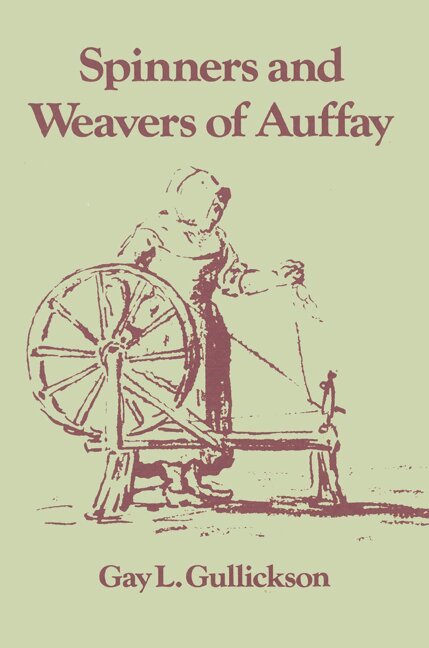
The Spinners and Weavers of Auffay
Rural Industry and the Sexual Division of Labor in a French Village
Häftad, Engelska, 2002
441 kr
Skickas inom 7-10 vardagar
The cottage industry of France enjoyed enormous growth from the mid-eighteenth to the mid-nineteenth century. Through an intensive analysis of the social and economic impact of the expansion of this female-dominated industry, Gay Gullickson broadens our understanding of the variety and complexity of proto-industrial regions and of the proto-industrial processes. Focusing on the village of Auffay, located in the pays de Caux, a thriving agricultural region, Gullickson recreates the experiences of the women and men who spun and wove for the urban putting-out merchants. Social analysis of local memoirs, government reports, notarial and judicial records, and village cahiers de doléances, enables Gullickson to offer a more nuanced and accurate view of the causes and consequences of the expansion of the cottage textile industry in the pre-factory era. Her 1987 study is further enhanced by a quantitative analysis based primarily on the reconstitution of the families of the 727 couples who married in Auffay between 1750 and 1850.

1 604 kr
Skickas inom 10-15 vardagar
In this vividly written and amply illustrated book, Gay L. Gullickson analyzes the representations of women who were part of the insurrection known as the Paris Commune. The uprising and its bloody suppression by the French army is still one of the most hotly debated episodes in modern history. Especially controversial was the role played by women, whose prominent place among the Communards shocked many commentators and spawned the legend of the pétroleuses, women who were accused of burning the city during the battle that ended the Commune.In the midst of the turmoil that shook Paris, the media distinguished women for their cruelty and rage. The Paris-Journal, for example, raved: "Madness seems to possess them; one sees them, their hair down like furies, throwing boiling oil, furniture, paving stones, on the soldiers." Gullickson explores the significance of the images created by journalists, memoirists, and political commentators, and elaborated by latter-day historians and political thinkers. The pétroleuse is the most notorious figure to emerge from the Commune, but the literature depicts the Communardes in other guises, too: the innocent victim, the scandalous orator, the Amazon warrior, and the ministering angel, among others. Gullickson argues that these caricatures played an important role in conveying and evoking moral condemnation of the Commune. More important, they reveal the gender conceptualizations that structured, limited, and assigned meaning to women as political actors for the balance of the nineteenth and well into the twentieth century.
338 kr
Skickas inom 10-15 vardagar
In this vividly written and amply illustrated book, Gay L. Gullickson analyzes the representations of women who were part of the insurrection known as the Paris Commune. The uprising and its bloody suppression by the French army is still one of the most hotly debated episodes in modern history. Especially controversial was the role played by women, whose prominent place among the Communards shocked many commentators and spawned the legend of the pétroleuses, women who were accused of burning the city during the battle that ended the Commune.In the midst of the turmoil that shook Paris, the media distinguished women for their cruelty and rage. The Paris-Journal, for example, raved: "Madness seems to possess them; one sees them, their hair down like furies, throwing boiling oil, furniture, paving stones, on the soldiers." Gullickson explores the significance of the images created by journalists, memoirists, and political commentators, and elaborated by latter-day historians and political thinkers. The pétroleuse is the most notorious figure to emerge from the Commune, but the literature depicts the Communardes in other guises, too: the innocent victim, the scandalous orator, the Amazon warrior, and the ministering angel, among others. Gullickson argues that these caricatures played an important role in conveying and evoking moral condemnation of the Commune. More important, they reveal the gender conceptualizations that structured, limited, and assigned meaning to women as political actors for the balance of the nineteenth and well into the twentieth century.