Gayatri Chakravorty Spivak – författare
Visar alla böcker från författaren Gayatri Chakravorty Spivak. Handla med fri frakt och snabb leverans.
22 produkter
22 produkter
640 kr
Skickas inom 5-8 vardagar
This book collects ten essays from the five volumes of Subaltern Studies that have so far appeared. The aim of the studies is to 'promote a systematic and informed discussion of subaltern themes in the field of South Asian studies, and thus help to rectify the elitist bias characteristic of much research and academic work in this particular area. The contributors...focus attention on what Gramsci called the subaltern classes and their condition, and also re-examine well-known events and themes in the new, more rounded perspective. The contributors encompass history, politics, economics and sociology; attitudes, ideologies, and belief systems.' Gayatri Chakravorty Spivak's essay 'Subaltern Studies: Deconstructing Historiography' introduces the volume and Edward Said, Professor of English and Comparative Literature at Columbia has provided a foreword.
1 731 kr
Skickas inom 3-6 vardagar
For almost three decades, Gayatri Chakravorty Spivak has been ignoring the standardized "rules" of the academy and trespassing across disciplinary boundaries. Today she remains one of the foremost figures in the study of world literature and its cultural consequences. In this new book she declares the death of comparative literature as we know it and sounds an urgent call for a "new comparative literature," in which the discipline is given new life-one that is not appropriated and determined by the market. In the era of globalization, when mammoth projects of world literature in translation are being undertaken in the United States, how can we protect the multiplicity of languages and literatures at the university? Spivak demonstrates how critics interested in social justice should pay close attention to literary form and offers new interpretations of classics such as Joseph Conrad's Heart of Darkness and Virginia Woolf's A Room of One's Own. Through close readings of texts not only in English, French, and German but also in Arabic and Bengali, Spivak practices what she preaches.Acclaim for Gayatri Chakravorty Spivak and her work: "[Spivak] pioneered the study in literary theory of non-Western women."-Edward W. Said "She has probably done more long-term political good, in pioneering feminist and post-colonial studies within global academia, than almost any of her theoretical colleagues." -Terry Eagleton "A celebrity in academia...create[s] a stir wherever she goes." -The New York Times
237 kr
Skickas inom 5-8 vardagar
For almost three decades, Gayatri Chakravorty Spivak has been ignoring the standardized "rules" of the academy and trespassing across disciplinary boundaries. Today she remains one of the foremost figures in the study of world literature and its cultural consequences. In this new book she declares the death of comparative literature as we know it and sounds an urgent call for a "new comparative literature," in which the discipline is given new life-one that is not appropriated and determined by the market. In the era of globalization, when mammoth projects of world literature in translation are being undertaken in the United States, how can we protect the multiplicity of languages and literatures at the university? Spivak demonstrates how critics interested in social justice should pay close attention to literary form and offers new interpretations of classics such as Joseph Conrad's Heart of Darkness and Virginia Woolf's A Room of One's Own. Through close readings of texts not only in English, French, and German but also in Arabic and Bengali, Spivak practices what she preaches.Acclaim for Gayatri Chakravorty Spivak and her work: "[Spivak] pioneered the study in literary theory of non-Western women."-Edward W. Said "She has probably done more long-term political good, in pioneering feminist and post-colonial studies within global academia, than almost any of her theoretical colleagues." -Terry Eagleton "A celebrity in academia...create[s] a stir wherever she goes." -The New York Times
925 kr
Skickas inom 5-8 vardagar
Gayatri Chakravorty Spivak is among the foremost figures in the study of world literature and its cultural consequences of the past half-century. In this book, originally published in 2003, she declares the death of comparative literature as we know it and sounds an urgent call for a “new comparative literature,” in which the discipline is reborn—one that is not appropriated and determined by the market.Spivak examines how comparative literature and world literature in translation have fared in the era of globalization and considers how to protect the multiplicity of languages and literatures at the university. She demonstrates why critics interested in social justice should pay close attention to literary form and offers insightful interpretations of classics such as Joseph Conrad’s Heart of Darkness and Virginia Woolf’s A Room of One’s Own. Through readings of texts not only in English, French, and German but also in Arabic and Bengali, Spivak practices what she preaches.This anniversary edition features a new preface in which Spivak reflects on the fortunes of comparative literature in the intervening years and its tasks today.
266 kr
Skickas inom 5-8 vardagar
Gayatri Chakravorty Spivak is among the foremost figures in the study of world literature and its cultural consequences of the past half-century. In this book, originally published in 2003, she declares the death of comparative literature as we know it and sounds an urgent call for a “new comparative literature,” in which the discipline is reborn—one that is not appropriated and determined by the market.Spivak examines how comparative literature and world literature in translation have fared in the era of globalization and considers how to protect the multiplicity of languages and literatures at the university. She demonstrates why critics interested in social justice should pay close attention to literary form and offers insightful interpretations of classics such as Joseph Conrad’s Heart of Darkness and Virginia Woolf’s A Room of One’s Own. Through readings of texts not only in English, French, and German but also in Arabic and Bengali, Spivak practices what she preaches.This anniversary edition features a new preface in which Spivak reflects on the fortunes of comparative literature in the intervening years and its tasks today.
380 kr
Skickas
In this classic work, Gayatri Chakravorty Spivak, one of the leading and most influential cultural theorists working today, analyzes the relationship between language, women and culture in both Western and non-Western contexts. Developing an original integration of powerful contemporary methodologies – deconstruction, Marxism and feminism – Spivak turns this new model on major debates in the study of literature and culture, thus ensuring that In Other Worlds has become a valuable tool for studying our own and other worlds of culture.
731 kr
Skickas inom 10-15 vardagar
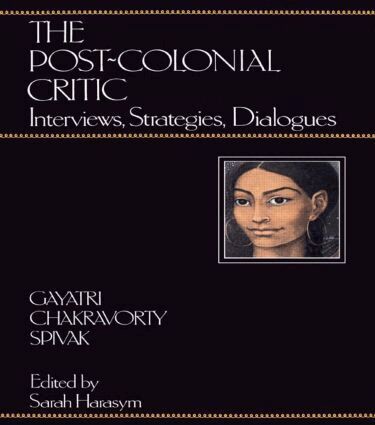
Gayatri Spivak, one of our best known cultural and literary theorists, addresses a vast range of political questions with both pen and voice in this unique book. The Post-Colonial Critic brings together a selection of interviews and discussions in which she has taken part over the past five years; together they articulate some of the most compelling politico-theoretical issues of the present.In these lively texts, students of Spivak's work will identify her unmistakeable voice as she speaks on questions of representation and self-representation, the politicization of deconstruction; the situations of post-colonial critics; pedagogical responsibility; and political strategies.
359 kr
Skickas
Gayatri Chakravorty Spivak is one of the most pre-eminent postcolonial theorists writing today and a scholar of genuinely global reputation. This collection, first published in 1993, presents some of Spivak’s most engaging essays on works of literature such as Salman Rushdie's controversial Satanic Verses, and twentieth century thinkers such as Jacques Derrida and Karl Marx. Spivak relentlessly questions and deconstructs power structures where ever they operate. In doing so, she provides a voice for those who can not speak, proving that the true work of resistance takes place in the margins, Outside in the Teaching Machine.
282 kr
Skickas inom 10-15 vardagar
During the past twenty years, the world’s most renowned critical theorist—the scholar who defined the field of postcolonial studies—has experienced a radical reorientation in her thinking. Finding the neat polarities of tradition and modernity, colonial and postcolonial, no longer sufficient for interpreting the globalized present, she turns elsewhere to make her central argument: that aesthetic education is the last available instrument for implementing global justice and democracy.Spivak’s unwillingness to sacrifice the ethical in the name of the aesthetic, or to sacrifice the aesthetic in grappling with the political, makes her task formidable. As she wrestles with these fraught relationships, she rewrites Friedrich Schiller’s concept of play as double bind, reading Gregory Bateson with Gramsci as she negotiates Immanuel Kant, while in dialogue with her teacher Paul de Man. Among the concerns Spivak addresses is this: Are we ready to forfeit the wealth of the world’s languages in the name of global communication? “Even a good globalization (the failed dream of socialism) requires the uniformity which the diversity of mother-tongues must challenge,” Spivak writes. “The tower of Babel is our refuge.”In essays on theory, translation, Marxism, gender, and world literature, and on writers such as Assia Djebar, J. M. Coetzee, and Rabindranath Tagore, Spivak argues for the social urgency of the humanities and renews the case for literary studies, imprisoned in the corporate university. “Perhaps,” she writes, “the literary can still do something.”
432 kr
Skickas inom 10-15 vardagar
Are the “culture wars” over? When did they begin? What is their relationship to gender struggle and the dynamics of class? In her first full treatment of postcolonial studies, a field that she helped define, Gayatri Chakravorty Spivak, one of the world’s foremost literary theorists, poses these questions from within the postcolonial enclave.“We cannot merely continue to act out the part of Caliban,” Spivak writes; and her book is an attempt to understand and describe a more responsible role for the postcolonial critic. A Critique of Postcolonial Reason tracks the figure of the “native informant” through various cultural practices—philosophy, history, literature—to suggest that it emerges as the metropolitan hybrid. The book addresses feminists, philosophers, critics, and interventionist intellectuals, as they unite and divide. It ranges from Kant’s analytic of the sublime to child labor in Bangladesh. Throughout, the notion of a Third World interloper as the pure victim of a colonialist oppressor emerges as sharply suspect: the mud we sling at certain seemingly overbearing ancestors such as Marx and Kant may be the very ground we stand on.A major critical work, Spivak’s book redefines and repositions the postcolonial critic, leading her through transnational cultural studies into considerations of globality.
173 kr
Skickas inom 5-8 vardagar
The African American at the end of the nineteenth century was described by W. E. B. Du Bois as "two souls in one dark body, whose dogged strength alone keeps it from being torn asunder." In the United States today, the hyphen between these two souls-African and American, African-American-is still being negotiated. In "Harlem", Gayatri Chakravorty Spivak engages with twenty-four photographs by Alice Attie as she attempts teleopoiesis, which she describes as a reaching toward the distant other through the empathetic power of the imagination. In the hands of Spivak, teleopoiesis is a kind of identity politics in which one disrupts identity as a result of migration or exile. For the last two decades, Spivak notes, Harlem has been the focus of major economic development. As the old Harlem disappears into a present that simultaneously demands and rejects a cultural essence, Spivak dwells in Attie's images, trying to navigate some middle ground between the rock of social history and the hard place of a collective culture.
227 kr
Skickas inom 5-8 vardagar
Throughout her distinguished career, Gayatri Chakravorty Spivak has sought to locate and confront shifting forms of social and cultural oppression. As her work shows, the best method for doing so is through extended practice in the ethics of reading. In Readings, Spivak elaborates a utopian vision for the kind of deep and investigative reading that can develop a will for peaceful social justice in coming generations. Through her own analysis of specific works, Spivak demonstrates modes in which such a vision might be achieved. In the examples here, she pays close attention to signposts of character, action, and place in J. M. Coetzec's Summertime and Elizabeth Gaskell's North and South. She also offers rereads of two of her own essays, addressing changes in her own thinking and practice over the course of her career. Now in her fifth decade of teaching, Spivak passes on her lessons through anecdote, interpretation, warning, and instruction to students and teachers of literature. She writes, "I urge students of English to understand that utopia does not happen, and yet to understand, also, their importance to the nation and the world.Indeed, I know how hard it is to sustain such a spirit in the midst of a hostile polity, but I urge the students to consider the challenge."
1 851 kr
Skickas inom 10-15 vardagar
Gayatri Chakravorty Spivak is one of the most pre-eminent postcolonial theorists writing today and a scholar of genuinely global reputation. This collection, first published in 1993, presents some of Spivak’s most engaging essays on works of literature such as Salman Rushdie's controversial Satanic Verses, and twentieth century thinkers such as Jacques Derrida and Karl Marx. Spivak relentlessly questions and deconstructs power structures where ever they operate. In doing so, she provides a voice for those who can not speak, proving that the true work of resistance takes place in the margins, Outside in the Teaching Machine.
1 783 kr
Skickas inom 10-15 vardagar
In this classic work, Gayatri Chakravorty Spivak, one of the leading and most influential cultural theorists working today, analyzes the relationship between language, women and culture in both Western and non-Western contexts. Developing an original integration of powerful contemporary methodologies – deconstruction, Marxism and feminism – Spivak turns this new model on major debates in the study of literature and culture, thus ensuring that In Other Worlds has become a valuable tool for studying our own and other worlds of culture.
1 239 kr
Skickas inom 5-8 vardagar
In this major intervention into the 'Asian Century', Gayatri Chakravorty Spivak challenges the reader to re-think Asia, in its political and cultural complexity, in the global South and in the metropole. Major work from one of the world's most distinguished literary and cultural theoristsIntervenes in the fraught issues generated by ideas of AsiaFeatured essays include "Foucault and Najibullah," "Moving Devi," "Responsibility," and "Megacity"Other chapters focus on, among other things, Human Rights, and the turbulent "present" of the CaucasusEssential reading for anyone interested in postcolonialism, and devotees of Spivak's writing
461 kr
Skickas inom 5-8 vardagar
In this major intervention into the 'Asian Century', Gayatri Chakravorty Spivak challenges the reader to re-think Asia, in its political and cultural complexity, in the global South and in the metropole. Major work from one of the world's most distinguished literary and cultural theoristsIntervenes in the fraught issues generated by ideas of AsiaFeatured essays include "Foucault and Najibullah," "Moving Devi," "Responsibility," and "Megacity"Other chapters focus on, among other things, Human Rights, and the turbulent "present" of the CaucasusEssential reading for anyone interested in postcolonialism, and devotees of Spivak's writing
106 kr
Skickas inom 5-8 vardagar
A lively discussion between two eminent Indian academics that examines what it means to be an Indian. Through a stimulating dialogue, two old friends trace the history of the idea of India through digressions, anecdotes, and observations. Historian Romila Thapar and theorist Gayatri Chakravorty Spivak reflect on the challenges posed by essentialism and exclusion whenever cultures attempt to define and assert themselves. They also emphasize the role of education in fostering a more inclusive and accurate understanding of the nation’s complex history. Their conversation revolves around the narratives that have shaped Indian identity—from Vedic times to the present—and those whose voices and visions for this land remain unheard and unseen. Ranging from nationalism to religion and beyond, TheIdea of India discusses an urgent question: What does it mean to be an Indian in contemporary society?
293 kr
Kommande
A bold, transnational interpretation of Ritwik Ghatak’s cinema that invites readers to encounter his films as meditations on history, migration, and collective survival.The cinema of Ritwik Ghatak (1925–76) continues to resonate across borders and generations. His films—largely shaped by the 1947 Partition of Bengal and the experience of displacement—probe the fractured human condition through bold formal experimentation, unforgettable soundscapes, and a profound sense of myth and memory. Though his body of work was modest in size, Ghatak’s influence has steadily expanded, securing his place as a major figure in world cinema. This distinctive volume, which marks the centenary of this visionary filmmaker, gathers essays by important scholars and thinkers from around the world.Moving beyond conventional film criticism and area studies, the collection stages new, transnational encounters with Ghatak’s films—approaching them as world texts, as sonic and visual experiments, and as meditations on migration, collectivity, and social existence.
Kritik Der Postkolonialen Vernunft: Hin Zu Einer Geschichte Der Verrinnenden Gegenwart
Häftad, Tyska, 2013
490 kr
Skickas inom 3-6 vardagar
162 kr
Skickas inom 3-6 vardagar
85 kr
Skickas inom 5-8 vardagar
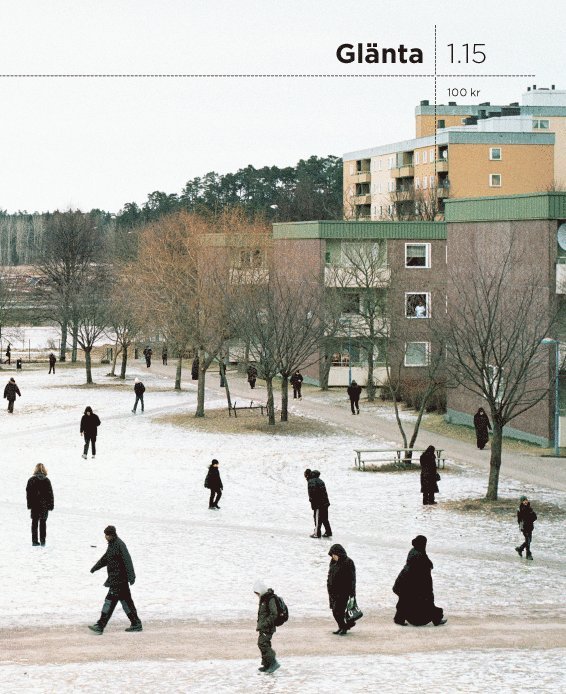
Glänta 1.15 består av texter som inte förhåller sig till ett på förhand uttänkt tema. Det börjar med Elnathan Johns novell om Boko Haram och slutar med att Gayatri Chakravorty Spivak manar oss att öva föreställningsförmågan. Däremellan finner Tormod Otter Johansen att den svenska självbilden sitter i väggarna, medan Felicia Mulinari skriver från ett Malmö som brinner och Lydia Davis sätter ut gammelmormödrar på verandan. Och Alexandru Vakulovski blir ihjälslagen av sin far; Ulrika Dahl spinner trådar mellan mostrar och monster; Elis Burrau uppmanar oss att torka oss om munnen, performativt; Mårten Björk & Göran Larsson tecknar Islamiska statens historia; Adriana Cavarero ställer terrorism & horrorism bredvid varandra; Tobias Hübinette & Lennart E H Räterlinck finner en vit rasmelankoli bland utklädda västerlänningar; Yves Citton introducerar rytmologin; Ulf Karl Olov Nilsson analyserar nya och gamla skadade och Judith Kiros får allt att börja om.
156 kr
Skickas inom 5-8 vardagar
Förhållandet mellan feminismen och den socialistiska vänstern har ibland beskrivits som ett olyckligt äktenskap: den återkommande frågan har varit om det är klass eller kön som ska ges politiskt företräde. I Fronesis nr 2526 samsas historiska tillbakablickar med analyser av dagens spänningsförhållande mellan feministisk och socialistisk kritik och politik. Feminismen och vänstern Numret handlar om förra sekelskiftets impuls att ställa arbetarfrågan över kvinnofrågan, om trettiotalets abortmotstånd inom socialdemokratin, om Grupp 8 och vänstern och om vänsterfeministiska visioner efter identitetspolitikens 90-tal och intersektionalitetens 00-tal. Har dagens feminism kidnappats av vänstern eller tvärtom vänt ryggen åt frågor om kapitalism och klassmotsättningar? I vad som kan ses som ett vänsterinlägg i den aktuella debatten kring diskrimineringslagstiftningens tillämpning diskuterar statsvetaren Wendy Brown den institutionaliserade identitetspolitiken och dess komplicerade förhållande till feministiska och socialistiska befrielseprojekt. I en intervju med sociologen Beverley Skeggs kritiseras tendensen att se intersektionalitetsteorin som en universallösning för att förstå komplexa maktförhållanden. I en personligt hållen essä av Lynne Segal diskuteras det självbiografiska skrivandets betydelse för förgrundsgestalterna inom den andra vågens feminism, med utgångspunkt i bland andra Doris Lessings och Simone de Beauvoirs arbeten. Genusvetaren Robyn Wiegman kritiserar föreställningen om att feminismen har förlorat sitt politiska mål och därmed riskerar att förgöra sig själv. Hon menar att sådana domedagsprofetior enbart kan utfärdas av dem som ser feminismen som en enhetlig framåtskridande rörelse. Gayatri Spivak diskuterar Världsbankens retorik och menar att sammankopplingen mellan kapitalets globalisering och kvinnofrigörelse i tredje världen bygger på att man aktivt undviker att göra en klassanalys. I en text om prostitution menar Elizabeth Bernstein att sexköp bör förstås mot bakgrund av kapitalismens utveckling för att förhindra en moralisk disciplinering som riktar sig mot arbetarklassmännens sexualitet men ignorerar medelklassmännens. I ett samtal med svenska feministiska aktivister diskuteras Feministiskt initiativ och de senaste årens politiska turbulens inom den svenska vänstern och feminismen. Innehåll: Sofie Tornhill och Helena Tolvhed: Samhällsomdaningens subjekt och horisonter Ulrika Westerlund, Johanna Gustavsson och Lisa Nyberg: Feminismen och vänstern i dag Katharina Tollin och Sofie Tornhill: Feministisk kunskapsproduktion och kapitalismens premisser Intervju med Beverley Skeggs: Om moralismens ekonomi och arbetarklassens värdighet Beverley Skeggs: Skapandet av klass och kön genom visualiseringen av moraliska subjekt Elizabeth Bernstein: Köpets betydelse Gayatri Chakravorty Spivak: Allt annat är aldrig lika Svenska Akademin & MJM Propaganda: PK-pimpen Hanna Pettersson och Helena Tolvhed: Kamp om agendan: historier om klass och kön Geoff Eley: Vänstern och kvinnofrågan: Krig och revolution 19141923 Andrés Brink: Likgiltighetens och motståndets emancipatoriska potential Cathrin Wasshede: Fotboll, falukorv och öl eller kjol och hårspännen? Carolina Jonsson: Klasskamp eller kvinnokamp? Eva Schmitz: Vält grytorna! Lynne Segal: Kvinnors politiska memoarer Sara Edenheim: Ur led är feminismens tid! Wendy Brown: En befriad feminism? Revolution, sorg, politik Robyn Wiegman: Feminismens apokalyptiska framtider Sara Ahmed: Denne andre och andra andra