Gene Kritsky - Böcker
Visar alla böcker från författaren Gene Kritsky. Handla med fri frakt och snabb leverans.
9 produkter
9 produkter
459 kr
Skickas inom 5-8 vardagar
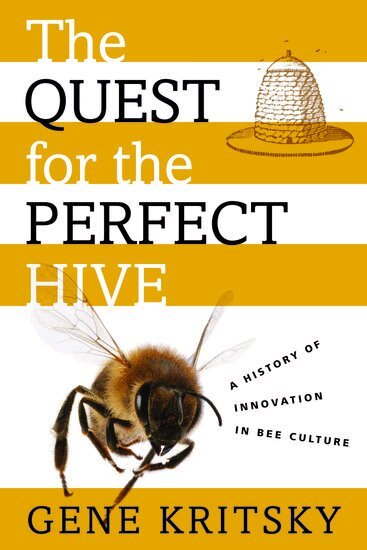
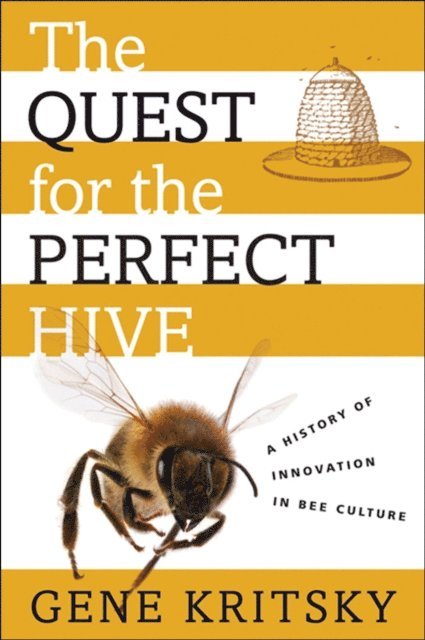
Beekeeping is a sixteen-billion-dollar-a-year business. But the invaluable honey bee now faces severe threats from diseases, mites, pesticides, and overwork, not to mention the mysterious Colony Collapse Disorder, which causes seemingly healthy bees to abandon their hives en masse, never to return. In The Quest for the Perfect Hive, entomologist Gene Kritsky offers a concise, beautifully illustrated history of beekeeping, tracing the evolution of hive design from ancient Egypt to the present. Not simply a descriptive account, the book suggests that beekeeping's long history may in fact contain clues to help beekeepers fight the decline in honey bee numbers. Kritsky guides us through the progression from early mud-based horizontal hives to the ascent of the simple straw skep (the inverted basket which has been in use for over 1,500 years), from hive design's Golden Age in Victorian England up through the present. He discusses what worked, what did not, and what we have forgotten about past hives that might help counter the menace to beekeeping today. Indeed, while we have sequenced the honey bee genome and advanced our knowledge of the insects themselves, we still keep our bees in hives that have changed little during the past century. If beekeeping is to survive, Kritsky argues, we must start inventing again. We must find the perfect hive for our times. For thousands of years, the honey bee has been a vital part of human culture. The Quest for the Perfect Hive not only offers a colorful account of this long history, but also provides a guide for ensuring its continuation into the future.
398 kr
Skickas inom 5-8 vardagar
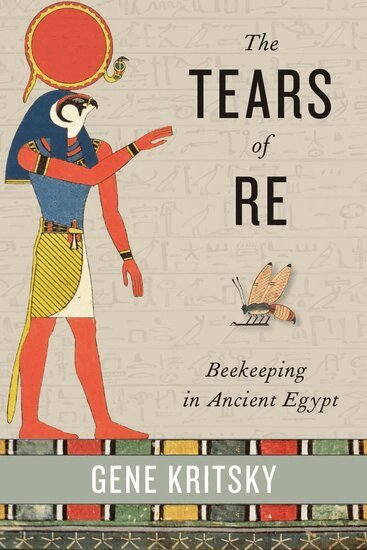
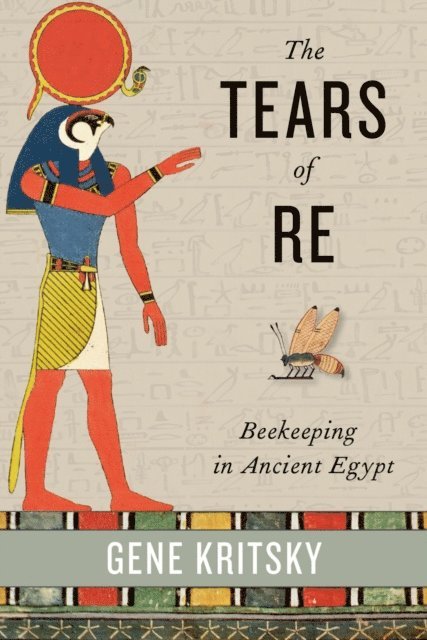
According to Egyptian mythology, when the god Re cried, his tears turned into bees upon touching the ground. Beyond the realm of myth, the honey bee is a surprisingly common and significant motif in Egyptian history, playing a role in the mythology, medicine, art, and food of the ancient culture. In The Tears of Re: Beekeeping in Ancient Egypt, entomologist Gene Kritsky presents the first full-length discussion of the ways in which bees were a part of life in ancient Egypt, shedding light on one of the many mysteries of the ancient world. Kritsky delves into ancient Egypt's complex society, revealing that bees had a significant presence in everything from death rituals to trade. In fact, beekeeping was a state-controlled industry, and in certain instances honey could even be used to pay taxes! Honey was used both to sweeten foods and treat cuts, and was sometimes used as a tribute or offering. From the presence of bees in paintings and hieroglyphs in tombs to the use of beeswax in a variety of products, bees had a significant presence in ancient Egyptian culture. Richly illustrated and engagingly written, The Tears of Re will appeal to anyone with a passion for beekeeping, Egypt, or the ancient world.
170 kr
Skickas inom 5-8 vardagar
1 030 kr
Skickas inom 7-10 vardagar
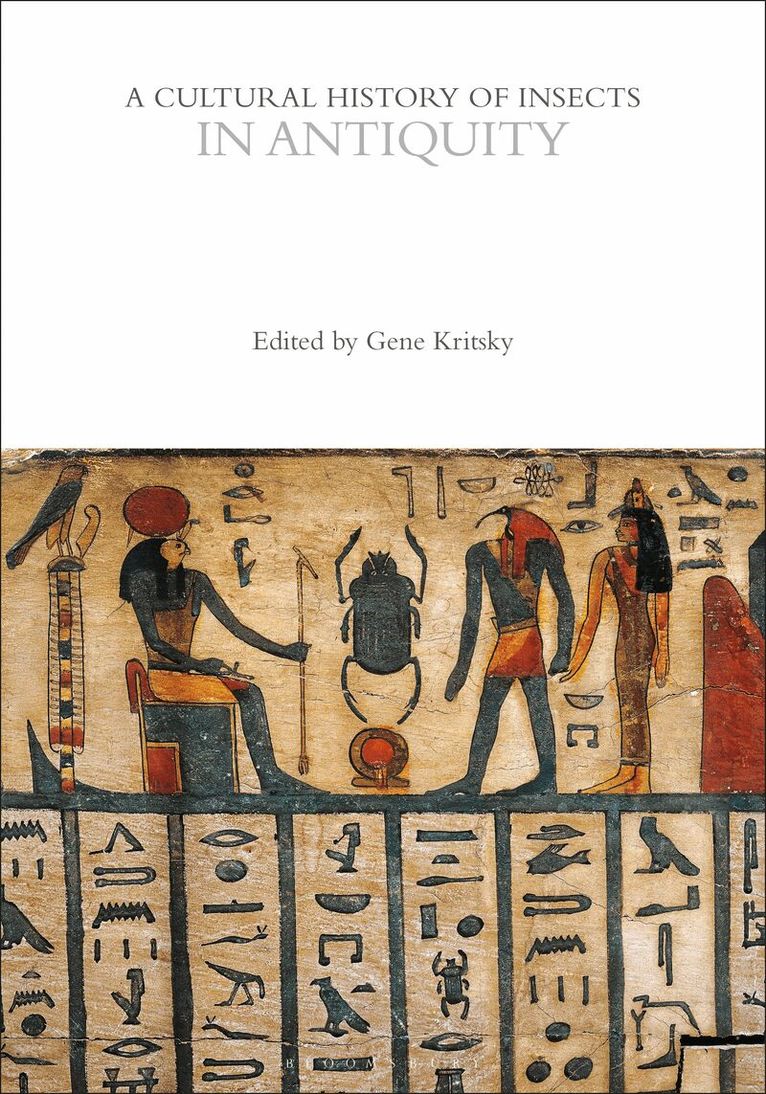
A Cultural History of Insects in Antiquity covers the period from 1000 BCE to 500 CE. As different cultures expanded so did their interactions with insects, largely seen as vectors of disease and as agricultural and bodily pests. However, as knowledge of insects grew, insect products were developed, notably honey or beeswax as used in food, preservation, medicine, and religious ritual. Insects were feared but were also invested with great power, even sanctity. The jewelry of ancient Egypt, Greece, and Rome fashioned insects into symbols of the beauty of nature, whilst literary and sacred texts transformed insects into metaphors for fertility and immortality. The six-volume set of the Cultural History of Insects presents the first comprehensive history from antiquity to today of all forms and aspects of human-insect interaction. The themes covered in each volume are insect knowledge; insects and disease; insects and food; insect products; insects in mythology and religion; insects as symbols; insects in literature and language; and insects in art.
1 030 kr
Skickas inom 7-10 vardagar
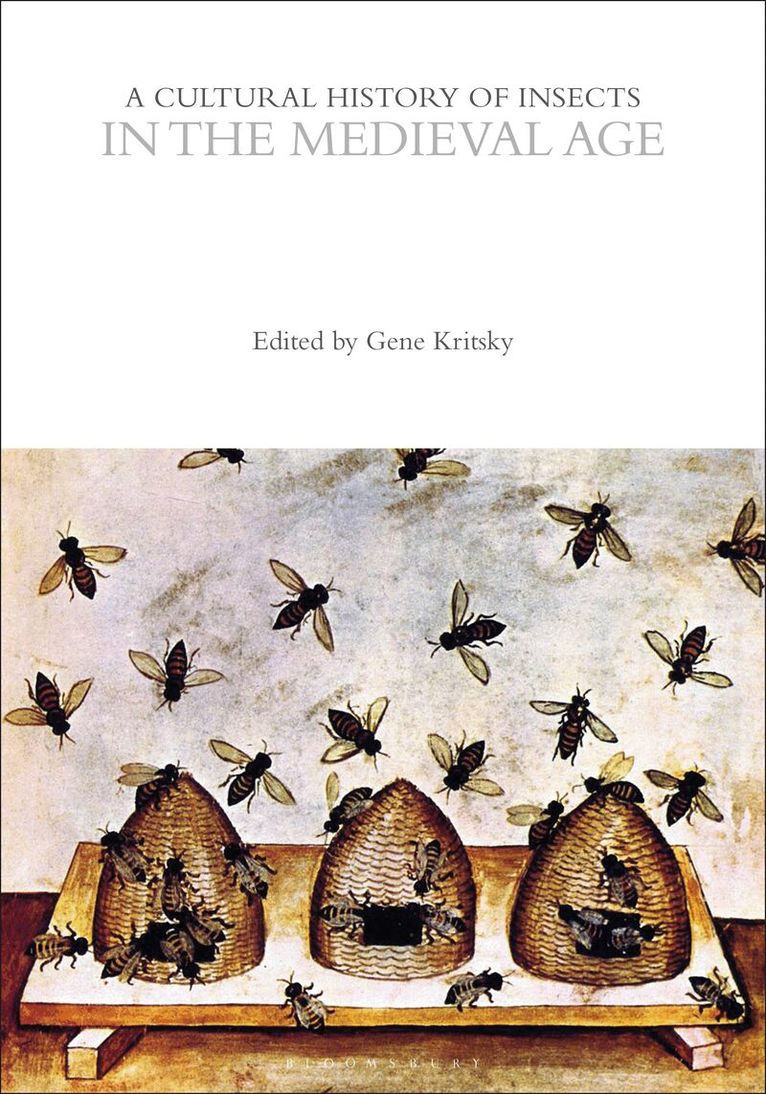
A Cultural History of Insects in the Medieval Age covers the period from 500 to 1300, a time when the uses and value of insect products greatly increased. Silk, in particular, created economies and led to increased global trade; trade which, in turn, expanded the scope of insect-borne disease. The explosion in writing in the Middle Ages relied on inks, dyes, and waxes actively produced by insects or extracted from their crushed bodies. More visibly, insects began to teem across the pages of illuminated manuscripts, becoming symbols of divine order, earthly corruption, and ephemeral beauty.The six-volume set of the Cultural History of Insects presents the first comprehensive history from antiquity to today of all forms and aspects of human-insect interaction. The themes covered in each volume are insect knowledge; insects and disease; insects and food; insect products; insects in mythology and religion; insects as symbols; insects in literature and language; and insects in art.
1 030 kr
Skickas inom 7-10 vardagar
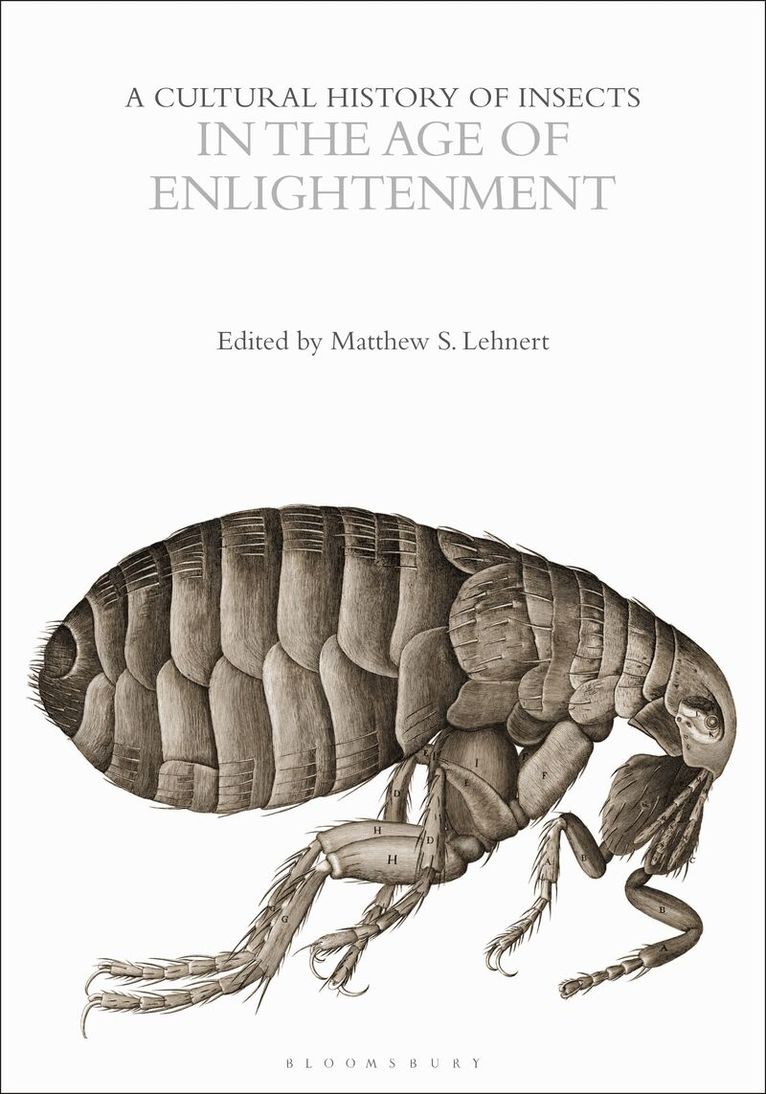
A Cultural History of Insects in the Age of Enlightenment covers the period from 1600 to 1820, a time of global exploration, the discovery of species, and advances in scientific technologies and methods. The natural sciences were increasingly shaped by what could be seen, observed, and classified. This new, Enlightenment approach to knowledge was greatly facilitated by enormous advances in microscopy. Enlightenment entomologists used miscrosopes to examine previously invisible bodies and worlds, illuminating insect metamorphosis and establishing the field of insect morphology. The six-volume set of the Cultural History of Insects presents the first comprehensive history from antiquity to today of all forms and aspects of human-insect interaction. The themes covered in each volume are insect knowledge; insects and disease; insects and food; insect products; insects in mythology and religion; insects as symbols; insects in literature and language; and insects in art.
1 030 kr
Skickas inom 7-10 vardagar
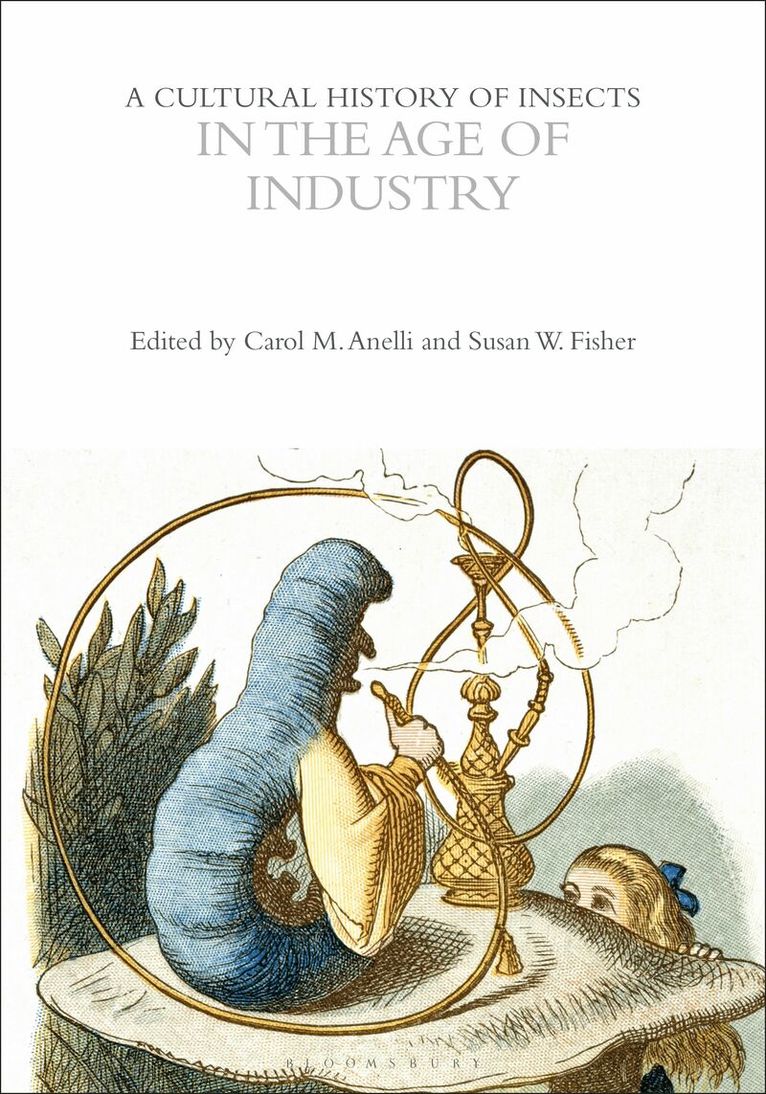
A Cultural History of Insects in the Age of Industry covers the period from 1820 to 1920, a time of great technological innovation and intensified trade. As urban populations spread so did pollution, squalor, and disease – and so did education and scientific knowledge. The expeditions of nineteenth century naturalists such as Charles Darwin and Alfred Russel Wallace fed the natural history collections of museums. At the same time, with the formation of new scientific groups and societies, professional entomology emerged as a specific branch of science. Knowledge of insect diversity accelerated whilst the increasing demands on agricultural production foregrounded the work of entomologists on pest control. The six-volume set of the Cultural History of Insects presents the first comprehensive history from antiquity to today of all forms and aspects of human-insect interaction. The themes covered in each volume are insect knowledge; insects and disease; insects and food; insect products; insects in mythology and religion; insects as symbols; insects in literature and language; and insects in art.
1 030 kr
Skickas inom 7-10 vardagar
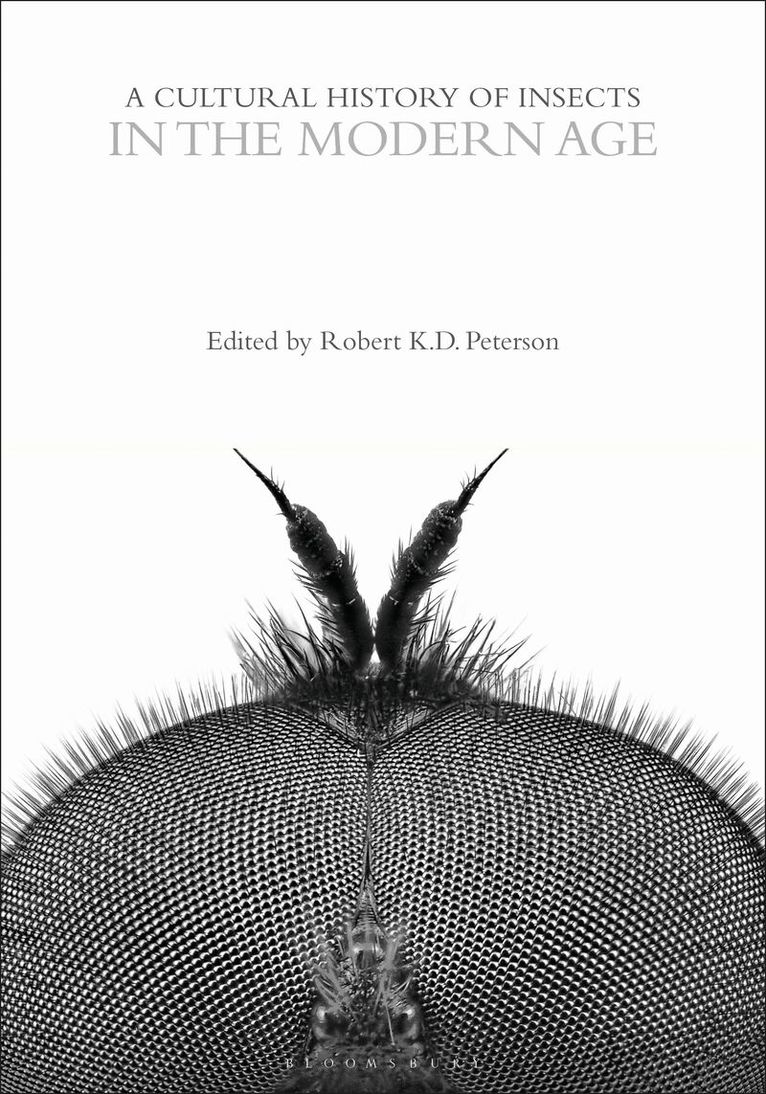
A Cultural History of Insects in the Modern Age covers the period from 1920 to the present, a time of tremendous scientific advances in our understanding of insects and their place in the natural world. The age ushered in an optimism fueled by the power of science and technology to improve the human condition and included stunning achievements in managing insect pests in the first half of the century. Today, although insects are recognised as cultural symbols of natural harmony and as bellwethers of ecological damage, our irrational fears continue, transforming insects into metaphors of invasion, alienation, and decay across literature, art, music, film, and political rhetoric.The six-volume set of the Cultural History of Insects presents the first comprehensive history from antiquity to today of all forms and aspects of human-insect interaction. The themes covered in each volume are insect knowledge; insects and disease; insects and food; insect products; insects in mythology and religion; insects as symbols; insects in literature and language; and insects in art.
7 108 kr
Skickas inom 7-10 vardagar
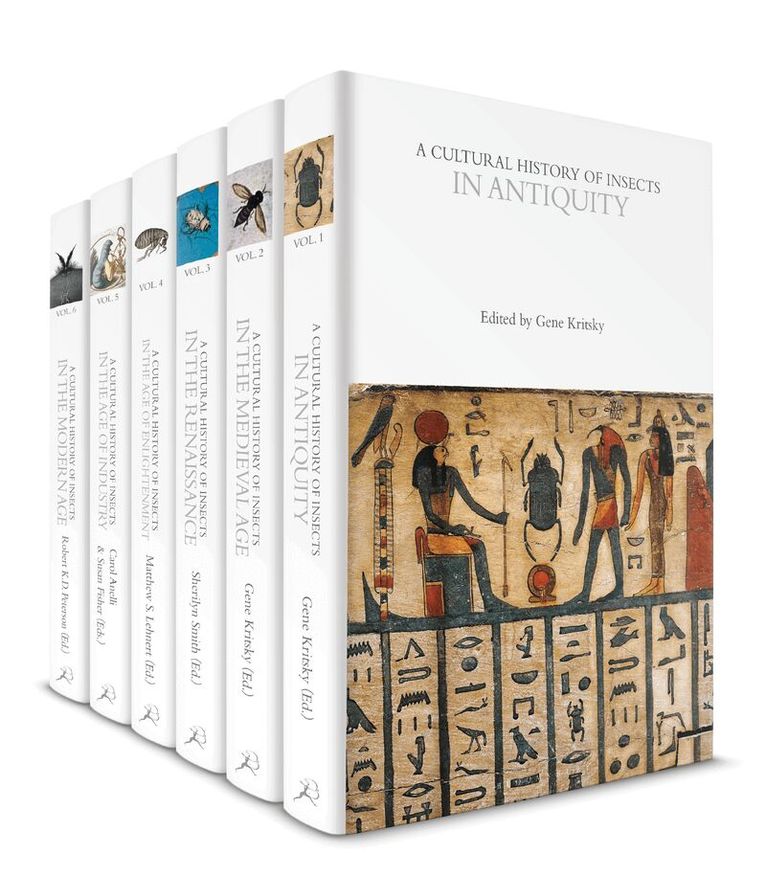
Insects are the form of life most alien to us. Across millennia, insects have been providers and sources of food as well as feared vectors of infection. Particular insect types have come to be associated with beauty, diligence, and social and divine order, whilst others have become symbols of invasion, disease, and social decay. Today, insects are used to create luxury goods, to pollinate crops, to color political rhetoric, and to contribute to modern-day logistics, genetics, and forensics. A Cultural History of Insects reveals how our relationship with insects – in life and in death – is one of our most productive and intimate.The work is divided into 6 volumes, with each volume covering the same topics, so readers can either study a period/volume or follow a topic across history. The 6 volumes cover: Antiquity (c.1000 BCE-500 CE); the Medieval Age (500-1300); the Renaissance (1300-1600); the Age of Enlightenment (1600-1820); the Age of Industry (1820-1920); the Modern Age (1920-present).Themes (and chapter titles) are: insect knowledge; insects and disease; insects and food; insect products; insects in mythology and religion; insects as symbols; insects in literature and language; insects in art. The page extent for the pack is approximately 1572pp. Each volume opens with notes on contributors and an introduction and concludes with notes, bibliography, and an index.The Cultural Histories SeriesA Cultural History of Insects is part of The Cultural Histories Series. Titles are available as hardcover sets for libraries needing just one subject or preferring a tangible reference for their shelves or as part of a fully-searchable digital library. The digital product is available to institutions by annual subscription or on perpetual access via www.bloomsburyculturalhistory.com . Individual volumes for academics and researchers interested in specific historical periods are also available in print or digitally via www.bloomsburycollections.com.