Geoffrey Robertson – författare
Visar alla böcker från författaren Geoffrey Robertson. Handla med fri frakt och snabb leverans.
11 produkter
11 produkter
116 kr
Skickas
How Russians, the Rich and the Government Try to Prevent Free Speech and How to Stop Them. ‘ESSENTIAL’ Amal Clooney‘AUTHORITATIVE’ Sir Geoffrey Bindman KC‘IMPORTANT ’Baroness Helena Kennedy KC‘COULD HARDLY BE MORE TIMELY’ Alan RusbridgerThe British tradition of “free speech” is a myth. From the middle ages to the present, the law of defamation has worked to cover up misbehaviour by the rich and powerful, whose legal mercenaries intimidate investigative journalists.Now a new terror has been added through misguided judicial development of the laws of privacy, breach of confidence and data protection, to suppress the reporting of truths of public importance to tell.Drawing upon the author’s unparalleled experience of defending journalists and editors in English and Commonwealth courtrooms over the past half-century, the book describes the hidden world of lawfare, in which authors struggle against unfair rules that put them always on the defensive and against a costs burden that runs to millions. Law schools do not teach freedom of speech and judges in the Supreme Court do not understand it.This book identifies and advocates the reforms that will be necessary before Britain can truly boast that it is a land of free speech, rather than a place where free speech can come very expensive.
168 kr
Skickas
Charles I waged civil wars that cost one in ten Englishmen their lives. But in 1649 parliament was hard put to find a lawyer with the skill and daring to prosecute a King who was above the law: in the end the man they briefed was the radical barrister, John Cooke.Cooke was a plebeian, son of a poor farmer, but he had the courage to bring the King's trial to its dramatic conclusion: the English republic. Cromwell appointed him as a reforming Chief Justice in Ireland, but in 1660 he was dragged back to the Old Bailey, tried and brutally executed.John Cooke was the bravest of barristers, who risked his own life to make tyranny a crime. He originated the right to silence, the 'cab rank' rule of advocacy and the duty to act free-of-charge for the poor. He conducted the first trial of a Head of State for waging war on his own people - a forerunner of the prosecutions of Pinochet, Miloševic and Saddam Hussein, and a lasting inspiration to the modern world.
168 kr
Skickas
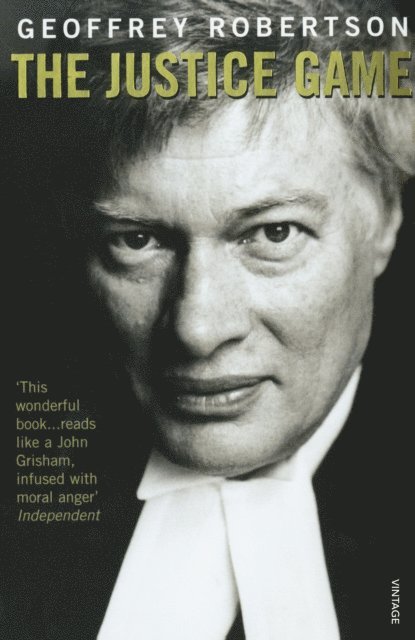
Geoffrey Robertson QC has been at the centre of internationally high-profile legal cases for over three decades. From representing Princess Diana to Salman Rushdie, to his involvement in the celebrated criminal trials of Oz magazine and Gay News, Robertson is an unfailing champion of human rights, justice, freedom and democracy. In this captivating memoir, Robertson reveals what draws him to each case, his ingenious analysis and interpretation of the courtroom proceedings, and the legal and civic consequences – wrapping each case into a thrilling, rollercoaster sequence of events.Entertaining, scandalous and hugely insightful, The Justice Game provides a piercing behind-the-scenes look into courtroom cases, the practice of the law and the never-ending fight in striving to narrow the gap between the law and justice. A highly recommended read for those interested in current affairs, criminal and public law, legal history and the British legal system.‘This wonderful book...reads like a John Grisham, infused with moral anger’ Independent
The Tyrannicide Brief: The Story of the Man Who Sent Charles I to the Scaffold
Häftad, Engelska, 2007
294 kr
Skickas inom 3-6 vardagar
640 kr
Skickas inom 3-6 vardagar
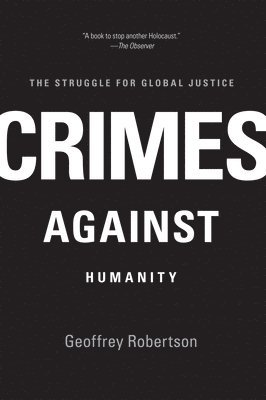
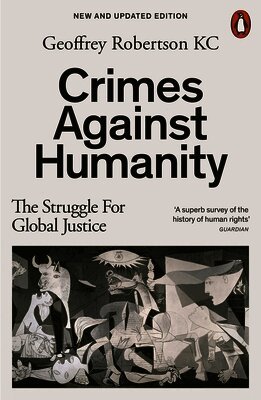
When it was first published in 1999, Crimes Against Humanity called for a radical shift from diplomacy to justice in international affairs. In vivid, non-legalese prose, leading human rights lawyer Geoffrey Robertson made a riveting case for holding political and military leaders accountable in international courts for genocide, torture, and mass murder.Since then, fearsome figures such as Charles Taylor, Laurent Gbagbo, and Ratko Mladic have been tried in international criminal court, and a global movement has rallied around the human rights framework of justice. Any such legal framework requires constant evolution in order to stay relevant, and this newly revised and expanded volume brings the conversation up to date. In substantial new chapters, Robertson covers the protection of war correspondents, the problem of piracy, crimes against humanity in Syria, nuclear armament in Iran, and other challenges we are grappling with today. He criticizes the Obama administration's policies around “targeted killing” and the trials of Khalid Sheik Mohammed and other “high value” detainees. By rendering a complex debate accessible, Robertson once again provides an essential guide for anyone looking to understand human rights and how to work toward a more complete blueprint for justice.
125 kr
Skickas
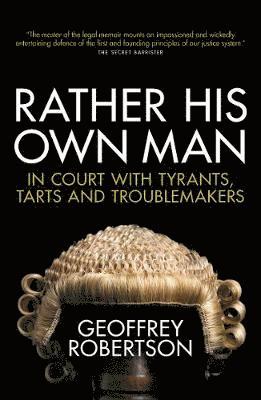
Geoffrey Robertson led students in the '60s to demand an end to racism and censorship. He went on to become a top human rights advocate, saving the lives of many death-row inmates, freeing dissidents and taking on tyrants in a career marked by courage, determination and a fierce independence.In this witty, honest and sometimes irreverent memoir, he recalls battles on behalf of George Harrison and Julian Assange, Salman Rushdie and Vaclav Havel, Mike Tyson and the Sex Pistols, and battles against General Pinochet, Lee Kuan Yew and Mrs Thatcher (the true story of Spycatcher is told for the first time).Interspersed with these forensic fireworks is the story of a pimply schoolboy from a state comprehensive, inspired by a banned book to become a barrister at the Old Bailey and who went on to found the UK's leading human rights practice (Doughty Street Chambers) and to defend troublemakers throughout the world.Rather His Own Man captures the drama of the trial, the thrill of victory and the feeling of `courtus interruptus' when a big case settles. Its cast of characters includes Princess Diana, Pee-Wee Herman, Dame Edna, the Queen and Rupert - the bear and the media mogul. It's a read that is both exhilarating and erudite - and very funny.
214 kr
Tillfälligt slut
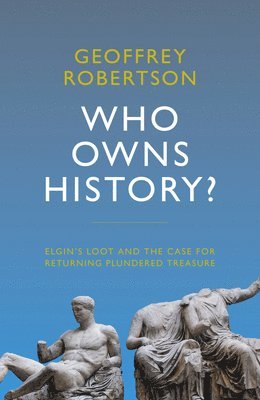
The biggest question in the world of art and culture concerns the return of property taken without consent. Throughout history, conquerors or colonial masters have taken artefacts from subjugated peoples, who now want them returned from museums and private collections in Europe and the USA.The controversy rages on over the Elgin Marbles, and has been given immediacy by figures such as France's President Macron, who says he will order French museums to return hundreds of artworks acquired by force or fraud in Africa, and by British opposition leader Jeremy Corbyn, who has pledged that a Labour government would return the Elgin Marbles to Greece. Elsewhere, there is a debate in Belgium about whether the Africa Museum, newly opened with 120,000 items acquired mainly by armed forces in the Congo, should close. Although there is an international convention dated 1970 that deals with the restoration of artefacts stolen since that time, there is no agreement on the rules of law or ethics which should govern the fate of objects forcefully or lawlessly acquired in previous centuries.Who Owns History? delves into the crucial debate over the Elgin Marbles, but also offers a system for the return of cultural property based on human rights law principles that are being developed by the courts. It is not a legal text, but rather an examination of how the past can be experienced by everyone, as well as by the people of the country of origin.
111 kr
Tillfälligt slut
On 18 October 1945, a day that would haunt him for ever, Airey Neave personally served the official indictments on the twenty-one top Nazis awaiting trial in Nuremberg - including Hermann Goering, Rudolf Hess and Albert Speer. With his visit to their gloomy prison cells, the tragedy of an entire generation reached its final act. The 29-year-old Neave, a wartime organiser of MI9 and the first Englishman to escape from Colditz Castle, had watched and listened over the months as the trials unfolded. Here, he describes the cowardice, calumny and in some cases bravado of the defendants - men he came to know and who in turn would become known as some of the most evil men in history. A milestone in international law, the Nuremberg trials prompted uncomfortable but vital questions about how we prosecute the worst crimes ever committed - and who is entitled to deliver justice. Challenging, poignant and incisive, this definitive eyewitness account remains indispensable reading today.
182 kr
Skickas
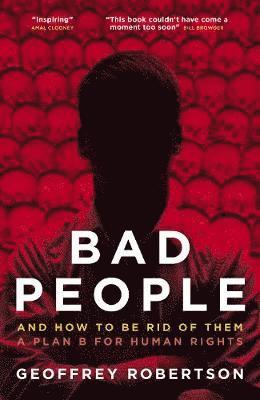
From the Nuremberg trials to the arrest of General Pinochet to the prosecution of barbarians of the Balkans, we have crafted a global human rights law to punish crimes against humanity. And yet today it is rarely applied: the International Criminal Court has faltered, populist governments refuse to cooperate, the UN Security Council is pole-axed and liberal democracy is on the defensive.When faced with the torture of Sergei Magnitsky, the murder of Jamal Khashoggi and the repression of the Uighurs, what recourse do we have?Distinguished human rights lawyer Geoffrey Robertson argues that our most powerful weapon is Magnitsky laws, by which not only perpetrators but their accomplices - lickspittle judges, doctors who assist in torture, corporations that profit from slave labour - are named, shamed and blamed.Though the UK and the EU have passed nascent Magnitsky laws, they are not deploying them effectively. It is only by developing a full-blooded system of coordinated sanctions - banning human rights violators from entering democratic countries to funnel their ill-gotten gains through Western banks and take advantage of our schools and hospitals - that we can fight back against cruelty and corruption.Bad People sets out a Plan B for human rights, offering a new blueprint for global justice in a post-pandemic world.
140 kr
Skickas
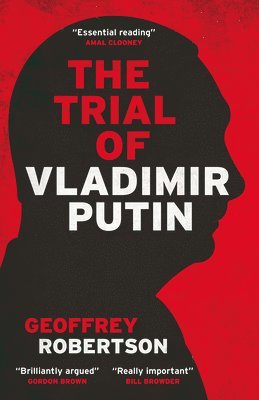
Vladimir Putin's war against Ukraine has cost hundreds of thousands of lives and is fundamentally an attack on democracy. Under international law, the invasion of a United Nations member state which poses no imminent threat to the invader amounts to the serious crime of aggression. But can Putin be prosecuted? And if so, will he ever be held to account? This remarkable book, by one of the world's most celebrated human rights lawyers, shows how the Nuremberg trials of Nazi leaders validate the prosecution of Putin. Ironically, Putin's defence hinges on a doctrine invented by George W. Bush to justify his invasion of Iraq, which Geoffrey Robertson exposes as contravening international law. If Putin fails to attend court, Robertson argues that he could be tried fairly in his absence, ensuring a verdict that will give pause to China and other countries which look to destroy democracy. This brilliant deep dive into international law offers a unique perspective on an unjust war, highlighting why democracy is not safe unless Putin can be put - at least metaphorically - behind bars.
192 kr
Skickas
The definitive book on human rights law, now updated with a new chapter on war crimes in Ukraine and the continuing war in Gaza In Crimes Against Humanity, Geoffrey Robertson KC explains why we must hold political and military leaders accountable for genocide, torture and mass murder.He shows how human rights standards can be enforced against cruel governments, armies and multi-national corporations. This seminal work contains a critical perspective on events such as the invasion of Iraq, the abuses at Abu Ghraib, the killings in Darfur, the death of Milosevic and the trial of Saddam Hussein.Cautiously optimistic about ending impunity, but unsparingly critical of diplomats, politicians, Bush lawyers and others who evade international rules, this book will provide further guidance to a movement which aims to make justice predominant in world affairs.'A beacon of clear-sighted commitment to the humanitarian cause ... impassioned ... exemplary ... seminal' Observer'A devastating critique of the inadequate response of the international community to violations of basic freedoms ... a formidable achievement' Evening Standard