Georg Sørensen - Böcker
Visar alla böcker från författaren Georg Sørensen. Handla med fri frakt och snabb leverans.
7 produkter
7 produkter
492 kr
Tillfälligt slut
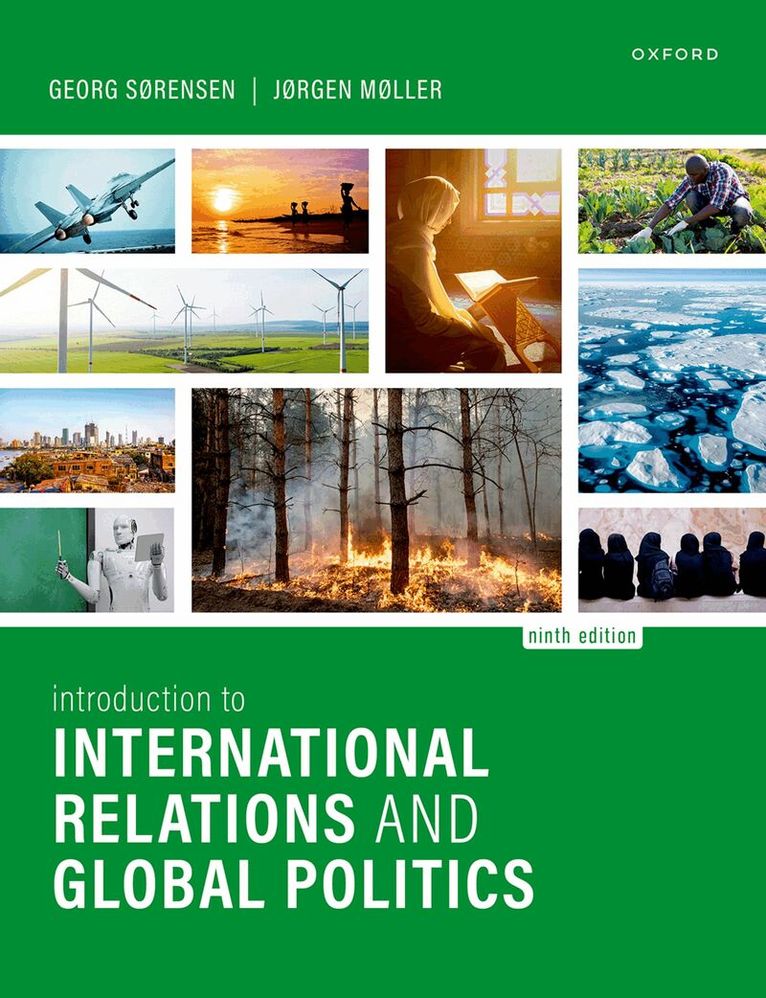
Offering unrivalled coverage of classical theories, contemporary approaches, and current issues, together with an exceptionally clear writing style, Introduction to International Relations provides a uniquely accessible and engaging introduction to the subject. With an emphasis on theoretical approaches and their application to the real world, the authors encourage critical engagement with the theories presented, highlighting their strengths, weaknesses, and the major points of contention.The eighth edition has been thoroughly updated to incorporate current events and key developments in the discipline. The changes include a new, three-part structure, which helps students to build a clear understanding of how key debates in the discipline are connected with each other, and how these can be applied to the world around them. The first part, 'Studying IR', emphasises the practical reality of international relations in everyday life, and how to connect this reality with the academic study of the subject. The second part, 'Major IR Theories and Approaches', guides the reader through the essential theories in the field, including Realism, Liberalism, Social Constructivism, Postcolonialism, and Feminism, among others. Finally, the third part, 'Theory Meets the Real World: Policy and Issues', builds on this foundation by exploring how we can understand current issues such as climate change and terrorism through the lens of IR theory.A new final chapter, 'The Big Question: World Order or World Chaos?', concludes the text by tracing the development of, and theoretical debates around, the concept of 'world order', providing students with a nuanced and compelling analysis of the key challenges confronting the contemporary world. Opening with an overview of the concept, the authors go on to examine the consequences of the rise of China and the resurgence of Russian influence, the new issues facing established democracies and parts of the Global South, as well as international institutions and their ability to provide global governance. The chapter ends with a discussion that answers the question posed at the start: are we witnessing world order or world chaos?Digital formats and resourcesIn addition to helpful learning features within the book, the text is accompanied by online resources designed to help students to take their learning further. These include:For students:- Reinforce your understanding of each chapter's key themes with short case studies- Test your understanding and revise for exams with review questions- Explore different theoretical debates through a series of annotated web links to reliable content- Test your knowledge of key terminology using the flashcard glossary- Extend your learning with videos exploring key issues in IRFor registered lecturers:- Encourage debate and critical thinking in class with seminar resources- Download figures from the text for use in your own teaching materials
530 kr
Skickas inom 5-8 vardagar
The most accessible, succinct introduction to the principal international relations theories, with an emphasis on how theory can be used to analyse key global issues.Introduction to International Relations and Global Politics provides students with a complete understanding of theory and how it applies to the real world. With comprehensive coverage of all major classical and contemporary theories and approaches, the text focuses on the connections between theory and current issues in international relations.- A truly accessible introduction to international relations, which demystifies the key theories, debates, and issues- Includes up-to-date examples to help students link theory to real-world developments- Encourages students to think critically by presenting the strengths and weaknesses of different theories and highlighting points of contention between them- Also available as an e-book with functionality, navigation features, and links that offer extra learning supportNew to this edition- The book has been restructured. It now contains an extended Part 2 on Major Global Politics (GP) Theories and Approaches. This new part - almost one-third of the book -contains chapters on Post-structuralism, Postcolonialism, Feminism and Queer Theory, and Green Theory.- A new Chapter 1 replaces the old Chapter 1 and Chapter 2. It carefully introduces the new structure of the book. - To make room for the new Part 2, substantial revisions have been made to all other chapters. The chapters on IR theories have thus been shortened and the chapters and issues in Part 3 have been reworked so that GP perspectives are included. - All chapters have been brought up to date in light of current events and ongoing debates in the discipline. The book contains many new text boxes and figures.
1 964 kr
Skickas inom 10-15 vardagar
Recent years have seen a range of theoretical challenges to traditional notions of state sovereignty and a burgeoning debate about the power of the state in the face of globalization and new forms of governance. In this important new text, Georg Sørensen provides a systematic assessment of the contemporary state, steering a middle course between those who argue the state is in retreat and their critics. In so doing he sheds new light on just what is actually changing in the nature of sovereign statehood, on changes in the relative power of different states and on the changing relationship between the domestic and external aspects of state power.
581 kr
Skickas inom 10-15 vardagar
Recent years have seen a range of theoretical challenges to traditional notions of state sovereignty and a burgeoning debate about the power of the state in the face of globalization and new forms of governance. In this important new text, Georg Sørensen provides a systematic assessment of the contemporary state, steering a middle course between those who argue the state is in retreat and their critics. In so doing he sheds new light on just what is actually changing in the nature of sovereign statehood, on changes in the relative power of different states and on the changing relationship between the domestic and external aspects of state power.
530 kr
Skickas inom 10-15 vardagar
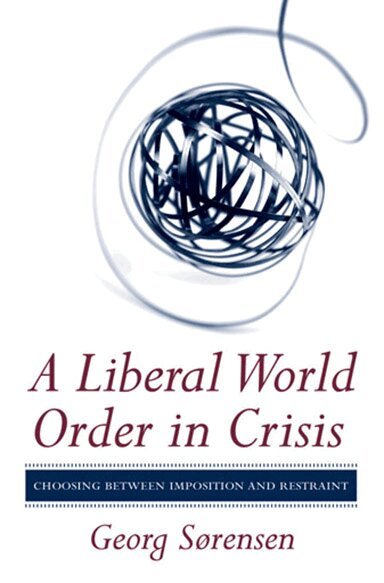
The collapse of the bipolar international system near the end of the twentieth century changed political liberalism from a regional system with aspirations of universality to global ideological dominance as the basic vision of how international life should be organized. Yet in the last two decades liberal democracies have not been able to create an effective and legitimate liberal world order. In A Liberal World Order in Crisis, Georg Sorensen suggests that this is connected to major tensions between two strains of liberalism: a "liberalism of imposition" affirms the universal validity of liberal values and is ready to use any means to secure the worldwide expansion of liberal principles. A "liberalism of restraint" emphasizes nonintervention, moderation, and respect for others. This book is the first comprehensive discussion of how tensions in liberalism create problems for the establishment of a liberal world order. The book is also the first skeptical liberal statement to appear since the era of liberal optimism—based in anticipation of the end of history—in the 1990s. Sorensen identifies major competing analyses of world order and explains why their focus on balance-of-power competition, civilizational conflict, international terrorism, and fragile states is insufficient.
541 kr
Skickas inom 10-15 vardagar
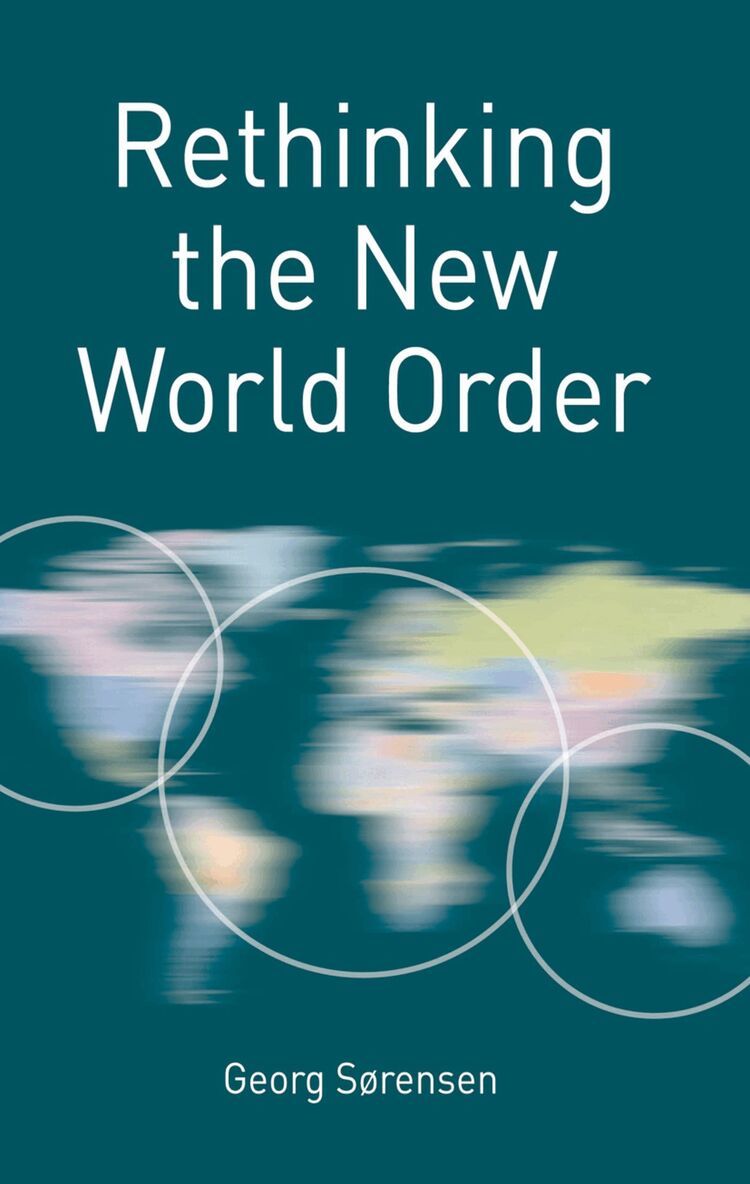
The end of the Cold War gave rise to much talk of a 'new' global order and debate about just how new or orderly it was and would be. Attempts to analyse the nature of this order have been many and various. This important new text assesses the main approaches and offers its own analysis arguing that, while chaos and raw anarchy are not on the cards, each of the major domains of power - security, economics, institutions and values - contains elements of potentially major instability. Interstate war may be receding, but there are no simple solutions to comprehensive violent conflict inside fragile states, and the non-democratic great powers continue to have major regional ambitions. There is a global liberal market economy, but it is increasingly unequal and its financial infrastructure remains fragile and crisis-prone. There is a comprehensive set of international institutions but they are rather weak and in need of reform. Liberal values are nominally endorsed by most states but they are in internal conflict and make up no firm basis for a stable world order. Finally, world order is threatened from within because the social compacts, political infrastructures, and national economic capacities of many states will decline. This will have negative consequences for the willingness to bring about effective global governance. The result may be a destructive dynamic which might take us towards a Hobbesian world in ways which Hobbes himself had never imagined.
1 833 kr
Skickas inom 10-15 vardagar
The end of the Cold War gave rise to much talk of a 'new' global order and debate about just how new or orderly it was and would be. Attempts to analyse the nature of this order have been many and various. This important new text assesses the main approaches and offers its own analysis arguing that, while chaos and raw anarchy are not on the cards, each of the major domains of power - security, economics, institutions and values - contains elements of potentially major instability. Interstate war may be receding, but there are no simple solutions to comprehensive violent conflict inside fragile states, and the non-democratic great powers continue to have major regional ambitions. There is a global liberal market economy, but it is increasingly unequal and its financial infrastructure remains fragile and crisis-prone. There is a comprehensive set of international institutions but they are rather weak and in need of reform. Liberal values are nominally endorsed by most states but they are in internal conflict and make up no firm basis for a stable world order. Finally, world order is threatened from within because the social compacts, political infrastructures, and national economic capacities of many states will decline. This will have negative consequences for the willingness to bring about effective global governance. The result may be a destructive dynamic which might take us towards a Hobbesian world in ways which Hobbes himself had never imagined.