George J. Armelagos - Böcker
Visar alla böcker från författaren George J. Armelagos. Handla med fri frakt och snabb leverans.
5 produkter
5 produkter
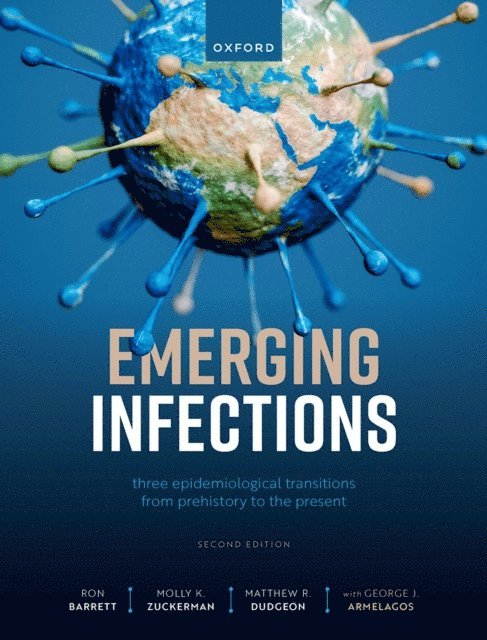
Emerging Infections
Three Epidemiological Transitions from Prehistory to the Present
Inbunden, Engelska, 2024
1 379 kr
Skickas inom 5-8 vardagar
Serving as both an accessible textbook and an original synthesis of interdisciplinary scholarship, Emerging Infections traces the social and environmental determinants of human infectious diseases from the Paleolithic to the present day. Contrary to earlier predictions of a post-infectious era, humanity now faces a post-antimicrobial era with the emergence of drug-resistant pathogens and the entry of new and deadly viruses such as Ebola and COVID-19 in the human population. Yet despite the novelty of these infections, their evolution is primarily driven by the same human activities of subsistence, settlement, and social organization that have been recurring over the last ten thousand years. Approaching these activities from a biocultural perspective, this book examines the prehistory and history of human infectious diseases. Much has happened in the decade since the first edition, with significant developments in both disease research and in the evolution of the diseases themselves. As such, this new edition has been expanded to include recent epidemics of Ebola, Zika, MERS, and of course, COVID-19. Indeed, the book's biocultural approach is especially relevant to the COVID-19 pandemic, examining it from a deep time perspective and placing it within a much-needed explanatory framework. Emerging Infections is suitable for advanced undergraduates, graduates, and researchers in anthropology, the medical social sciences, public health, and the history of medicine. The book will also appeal to a more general readership with an interest in public health and infectious diseases.
Emerging Infections
Three Epidemiological Transitions from Prehistory to the Present
Häftad, Engelska, 2024
505 kr
Skickas inom 5-8 vardagar
Serving as both an accessible textbook and an original synthesis of interdisciplinary scholarship, Emerging Infections traces the social and environmental determinants of human infectious diseases from the Paleolithic to the present day. Contrary to earlier predictions of a post-infectious era, humanity now faces a post-antimicrobial era with the emergence of drug-resistant pathogens and the entry of new and deadly viruses such as Ebola and COVID-19 in the human population. Yet despite the novelty of these infections, their evolution is primarily driven by the same human activities of subsistence, settlement, and social organization that have been recurring over the last ten thousand years. Approaching these activities from a biocultural perspective, this book examines the prehistory and history of human infectious diseases. Much has happened in the decade since the first edition, with significant developments in both disease research and in the evolution of the diseases themselves. As such, this new edition has been expanded to include recent epidemics of Ebola, Zika, MERS, and of course, COVID-19. Indeed, the book's biocultural approach is especially relevant to the COVID-19 pandemic, examining it from a deep time perspective and placing it within a much-needed explanatory framework. Emerging Infections is suitable for advanced undergraduates, graduates, and researchers in anthropology, the medical social sciences, public health, and the history of medicine. The book will also appeal to a more general readership with an interest in public health and infectious diseases.
433 kr
Skickas inom 10-15 vardagar
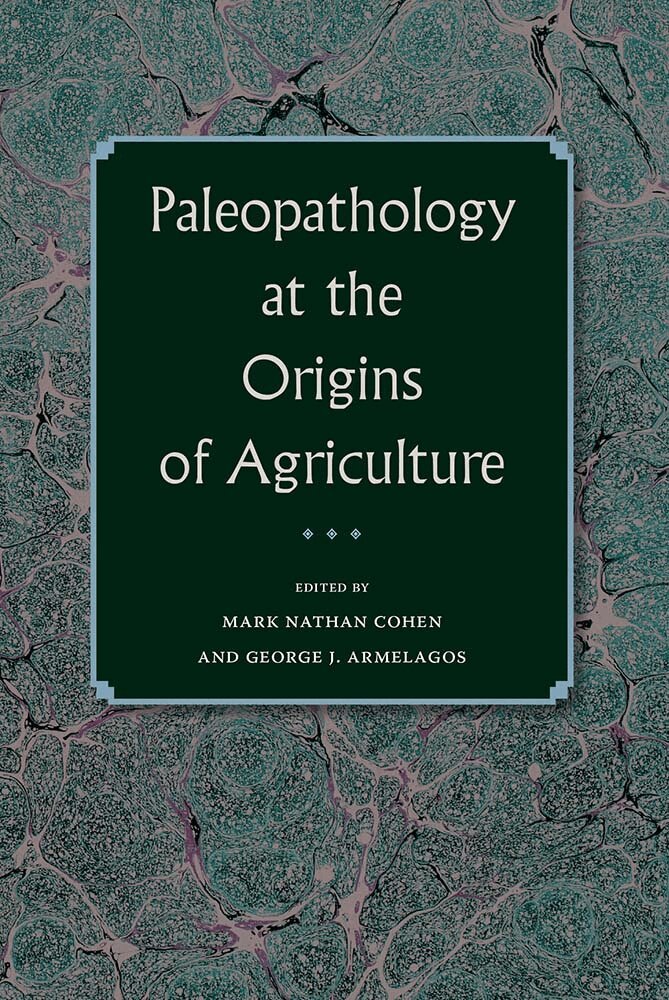
In 1982, the Conference on Paleopathology and Socioeconomic Change at the Origins of Agriculture was held in Plattsburgh, New York, to examine previously untested theories about how the adoption of agriculture had impacted human health. The collection of those conference proceedings transformed into this landmark book that set the standard for how to collect, analyse, and interpret osteological data in the study of health transitions. Using skeletal pathologies, the contributors examine how the transition from foraging to farming affected human health and nutrition. Now back in print and for the first time in paperback, Paleopathology at the Origins of Agriculture is a foundational piece in bioarchaeological literature and a central source of information regarding the impact of early farming on socioeconomic evolution. It remains a highly cited reference for archaeologists and physical anthropologists. Contributors present data from nineteen different regions before, during, and after agricultural transitions, analysing populations in Africa, Asia, the Middle East, Europe, and South America while primarily focusing on North America. A wide range of health indicators are discussed, including mortality, episodic stress, physical trauma, degenerative bone conditions, isotopes, and dental pathology.
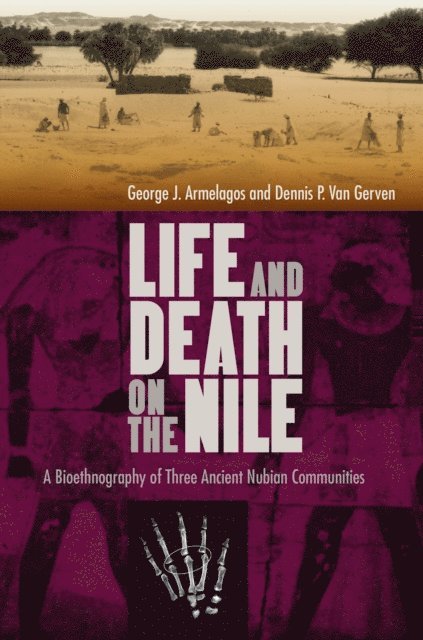
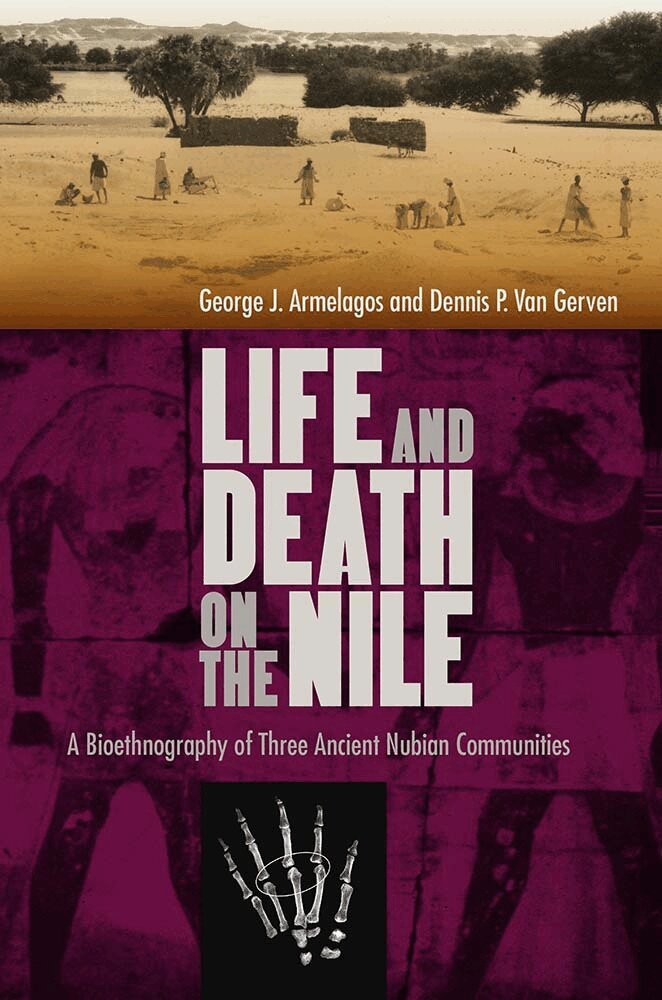
Life and Death on the Nile
A Bioethnography of Three Ancient Nubian Communities
Inbunden, Engelska, 2017
1 051 kr
Skickas inom 10-15 vardagar
A monumental synthesis of a half century of research, this book investigates three communities from the ancient Nubian civilization of the Nile River Valley. Excavations in this region first inspired the “biocultural approach” to human biology now used by anthropologists worldwide, and Life and Death on the Nile exemplifies the very best of this perspective. It is the life’s work of two highly accomplished anthropologists.George Armelagos and Dennis Van Gerven present studies of cranial morphology and evolution in Nubian populations. They look at patterns of physiological stress and disease, as well as growth and development, in infants and children. They study bone fractures and age-related bone loss in adults, and they discuss case studies of diseases such as cancers and congenital defects. Focusing on the link between human biology and the cultural and natural environment, they provide a holistic view of the lives of ancient Nubian peoples.
Disease in Populations in Transition
Anthropological and Epidemiological Perspectives
Inbunden, Engelska, 1990
1 039 kr
Skickas inom 10-15 vardagar
Societies in transition are often faced with new settings and/or new diseases that require a response in order for the affected group to thrive or survive. A lack of effective response by a transitional population to a new pathogen can lead to the group's disintegration. A stark example of this, historically, is the decline of Native American civilizations with the arrival of European colonists in the sixteenth and seventeenth centuries. The transitional response mechanism has been a neglected topic in anthropology until the publication of this book. In a broad selection of nineteen essays by distinguished researchers, the epidemiology and health status of prehistoric, historical, and present day populations in transition are thoroughly explored.Different models--biomedical, ethnomedical, ecological, and politicoeconomic--are used to illustrate the effects of transition on the health of human populations throughout the world. Swedlund and Armelagos have compiled and arranged these essays into three parts: genetic and evolutionary perspectives; infectious disease and nutrition in temporal perspective; and social epidemiology. Some of the topics studied in the essays include: disease and evolution in Amerindian populations; health and disease in prehistoric transitional peoples; mortality and morbidity consequences of nutritional variation in early child growth; and social support and mortality in post-transition populations. This insightful book will provide a vital perspective for medical anthropologists, development specialists, epidemiologists, and health professionals, as well as for graduate students in related course areas.