George Kouvaros - Böcker
Visar alla böcker från författaren George Kouvaros. Handla med fri frakt och snabb leverans.
5 produkter
5 produkter
258 kr
Skickas inom 7-10 vardagar
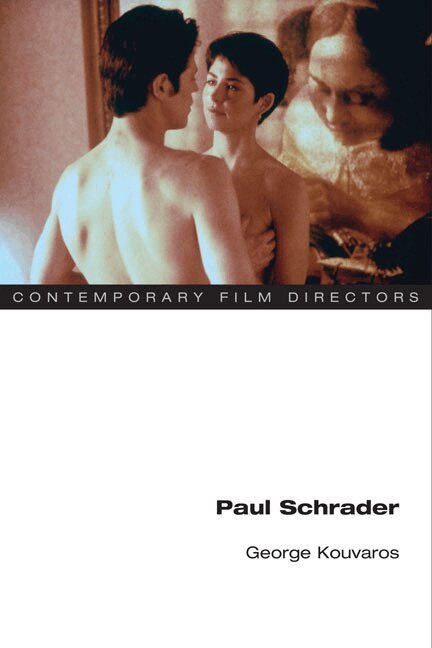
As the first full-length study on Paul Schrader's films, this book examines the different styles of his work and the multiple influences on which it draws. A defining feature of Schrader's career is his capacity to engage in a range of collaborations and production contexts while returning to a consistent set of themes, character types, and dramatic scenarios. Going beyond the affirmation of a directorial vision, Schrader creates a cinema driven by issues of obsession, memory, and the difficult nature of experience. Representative of a new generation of American writer-directors of the 1970s, Schrader's films highlight the tension between old and new ways of telling a story and between the maintenance of commercial formulas and openness to individual expression. George Kouvaros draws on a personal interview conducted with Schrader and the director's prior commentary to trace common motivations and impulses behind such well-known films as Light Sleeper, American Gigolo, Affliction, Auto Focus, Taxi Driver, and Patty Hearst. Kouvaros reads Schrader's films not only in terms of a number of important themes such as male obsession and estrangement, but also in regard to harder to define issues that include melancholia, trauma, and the complex linkages of violence and guilt that bind individuals to places and each other.
232 kr
Skickas inom 5-8 vardagar
203 kr
Skickas inom 7-10 vardagar
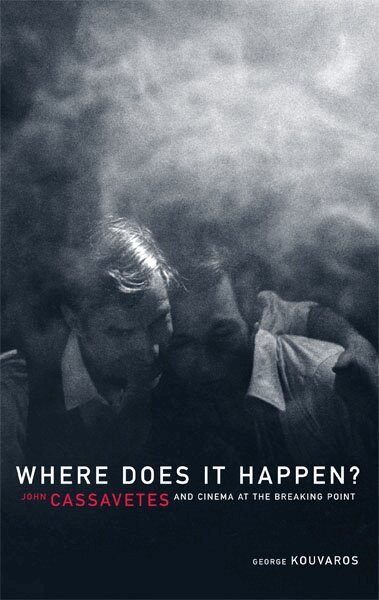
"A good movie," John Cassavetes has remarked, "will ask you questions you don't already know the answers to." And in his films, Cassavetes is as good as his word. Taking up the radical question that Cassavetes's films consistently pose—specifically, where is the line between actor and character, fiction and reality, film and life?—George Kouvaros reveals the unique and illuminating position that Cassavetes's work occupies at the intersection of filmmaking and film theory.Central to any understanding of Cassavetes's achievement is the issue of performance. Looking at the work of Gena Rowlands, Ben Gazzara, and Cassavetes himself in films such as Faces, A Woman under the Influence, and The Killing of a Chinese Bookie, Kouvaros shows how performative instances—gestures, words, or glances—open up intimations of dramas belonging neither strictly to these films nor to the everyday worlds in which they are immersed. A major reassessment of the filmmaker as a formal experimenter, Where Does It Happen? gives Cassavetes his due as a filmmaker whose critical place in the modern cinema is only now becoming clear. George Kouvaros is senior lecturer in the School of Theatre, Film, and Dance at the University of New South Wales, Australia.
265 kr
Skickas inom 7-10 vardagar
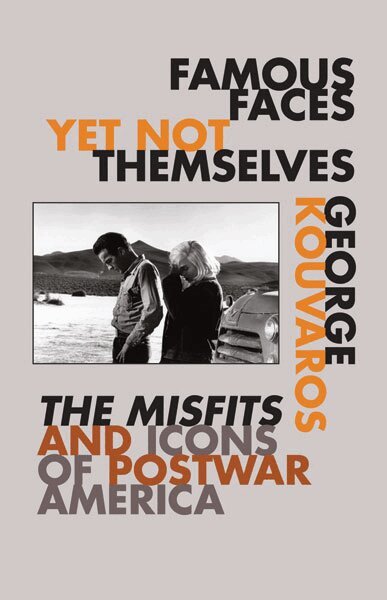
The 1961 film The Misfits saw the collaboration of director John Huston with playwright Arthur Miller and brought together on screen Clark Gable and Marilyn Monroe in what would be their final roles. Adding to the production’s luster, the elite photo agency Magnum was hired to do the on-set photography. The photographs of this landmark film represent the end of an era of Hollywood stardom and the emergence of a new vision of the actor’s craft. In Famous Faces Yet Not Themselves, George Kouvaros offers a multilayered study of the Magnum photographs that illuminates larger changes in Hollywood acting during the postwar period. Just as the industrial context of film production evolved dramatically in the decades after the war, Kouvaros asserts, so too did the iconography associated with the figure of the actor. Photographs of Hollywood stars such as Monroe, Gable, Montgomery Clift, James Dean, Joan Crawford, Marlene Dietrich, and Humphrey Bogart form the basis of an evocative analysis of the way photography gave shape to fundamental shifts in the nature of screen acting, perceptions of celebrity, and the relationship between actor and audience. By closely scrutinizing the images produced on the set of one of America’s most haunting and least understood films, Kouvaros presents a new recognition of the connection between the power of star culture, art photography, and the film industry during a time of rapid social transformation.
292 kr
Skickas inom 7-10 vardagar
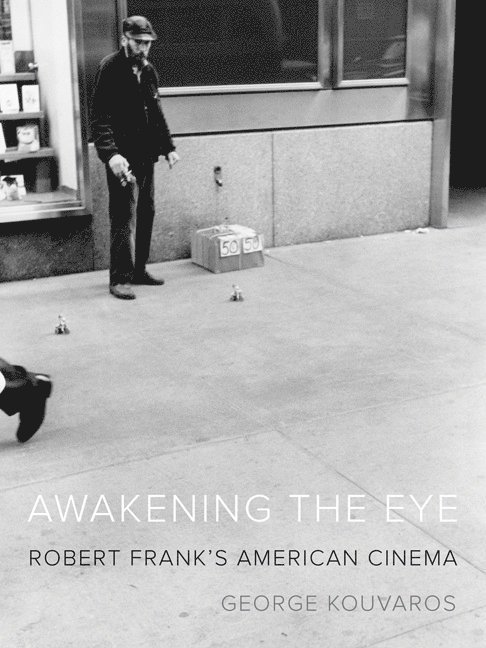
Until now, celebrated photographer Robert Frank’s daring and unconventional work as a filmmaker has not been awarded the critical notice it deserves. In this timely volume, George Kouvaros surveys Frank’s films and videos and places them in the larger context of experimentation in American art and literature since World War II.Born in 1924, Frank emigrated from Switzerland to the United States in 1947 and quickly made his mark as a photojournalist. A 1955 Guggenheim Foundation fellowship allowed him to travel across the country, photographing aspects of American life that had previously received little attention. The resulting book, The Americans, with an Introduction by Jack Kerouac, is generally considered a landmark in the history of postwar photography. During the same period, Frank befriended other artists and writers, among them Allen Ginsberg, Peter Orlovsky, and Gregory Corso, all of whom are featured in his first film, Pull My Daisy, which is narrated by Kerouac. This film set the terms for a new era of experimental filmmaking.By examining Frank’s films and videos, including Pull My Daisy, Me and My Brother, and Cocksucker Blues, in the framework of his more widely recognized photographic achievements, Kouvaros develops a model of cross-media history in which photography, film, and video are complicit in the search for fresh forms of visual expression. Awakening the Eye is an insightful, compelling, and, at times, moving account of Frank’s determination to forge a personal connection between the circumstances of his life and the media in which he works.