Georgi M. Derluguian - Böcker
Visar alla böcker från författaren Georgi M. Derluguian. Handla med fri frakt och snabb leverans.
4 produkter
4 produkter
824 kr
Skickas inom 7-10 vardagar
Bourdieu's Secret Admirer in the Caucasus is a gripping account of the developmental dynamics involved in the collapse of Soviet socialism. Fusing a narrative of human agency to his critical discussion of structural forces, Georgi M. Derluguian reconstructs from first-hand accounts the life story of Musa Shanib - who from a small town in the Caucasus grew to be a prominent leader in the Chechen revolution. In his examination of Shanib and his keen interest in the sociology of Pierre Bourdieu, Derluguian discerns how and why this dissident intellectual became a nationalist warlord. Exploring globalization, democratization, ethnic identity, and international terrorism, Derluguian contextualizes Shanib's personal trajectory from de-Stalinization through the nationalist rebellions of the 1990s to the recent rise in Islamic militancy. He masterfully reveals not only how external economic and political forces affect the former Soviet republics but also how those forces are in turn shaped by the individuals, institutions, ethnicities, and social networks that make up those societies.Drawing on the work of Charles Tilly, Immanuel Wallerstein, and, of course, Bourdieu, Derluguian's explanation of the recent ethnic wars and terrorist acts in Russia succeeds in illuminating the role of human agency in shaping history.
331 kr
Skickas inom 7-10 vardagar
Bourdieu's Secret Admirer in the Caucasus is a gripping account of the developmental dynamics involved in the collapse of Soviet socialism. Fusing a narrative of human agency to his critical discussion of structural forces, Georgi M. Derluguian reconstructs from first-hand accounts the life story of Musa Shanib - who from a small town in the Caucasus grew to be a prominent leader in the Chechen revolution. In his examination of Shanib and his keen interest in the sociology of Pierre Bourdieu, Derluguian discerns how and why this dissident intellectual became a nationalist warlord. Exploring globalization, democratization, ethnic identity, and international terrorism, Derluguian contextualizes Shanib's personal trajectory from de-Stalinization through the nationalist rebellions of the 1990s to the recent rise in Islamic militancy. He masterfully reveals not only how external economic and political forces affect the former Soviet republics but also how those forces are in turn shaped by the individuals, institutions, ethnicities, and social networks that make up those societies.Drawing on the work of Charles Tilly, Immanuel Wallerstein, and, of course, Bourdieu, Derluguian's explanation of the recent ethnic wars and terrorist acts in Russia succeeds in illuminating the role of human agency in shaping history.
474 kr
Skickas inom 10-15 vardagar
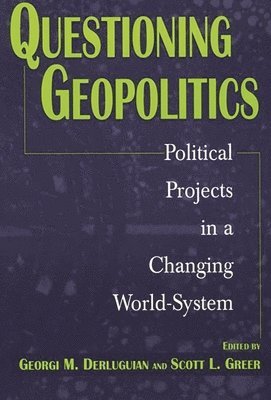
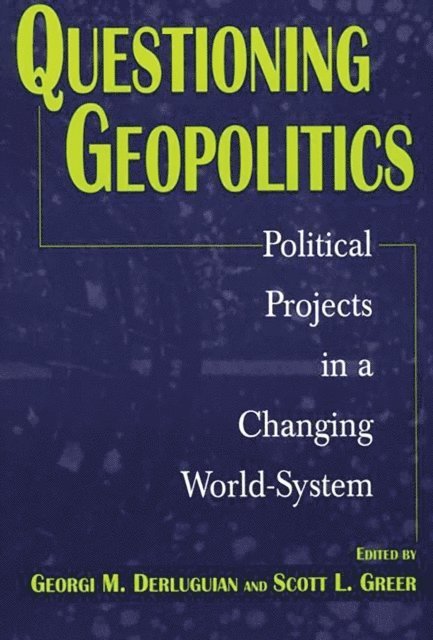
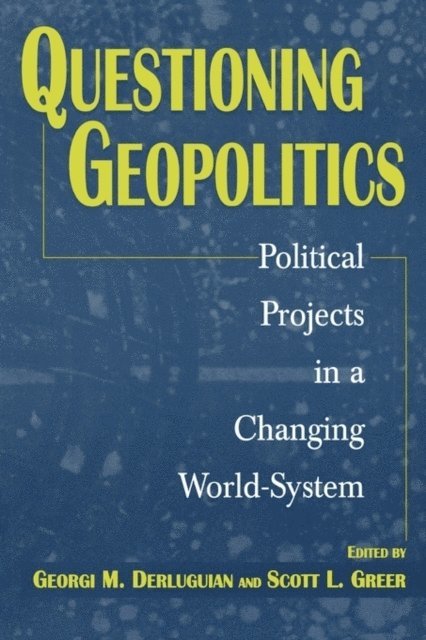
This volume takes an enlightened step back from the ongoing discussion of globalization. The authors reject the notion that globalization is an analytically useful term. Rather, this volume shows globalization as merely the framework of the current political debate on the future of world power. Some of the many other novel ideas advanced by the authors include: the explicit prediction that East Asia is not going to become the center of the world; the contention that the USSR collapsed for the same reasons that nearly brought down the United States in 1973; and the notion that the regional economic networks that are emerging from under the modern states are in fact rather old formations.The articles in the volume are organized around three main themes. Part One explores both the changing patterns of global power from the viewpoint of geopolitics and the Gramscian approach to the study of international relations. Part Two further develops the debate among a number of eminent historians and sociologists challenging both the apologists for and the opponents of globalization in new and unexpected ways. Part Three traces the emergence of regional economic networks and explores the ambiguous problems of security and identity posed by the old-new transborder formations.
1 009 kr
Skickas inom 10-15 vardagar
This volume takes an enlightened step back from the ongoing discussion of globalization. The authors reject the notion that globalization is an analytically useful term. Rather, this volume shows globalization as merely the framework of the current political debate on the future of world power. Some of the many other novel ideas advanced by the authors include: the explicit prediction that East Asia is not going to become the center of the world; the contention that the USSR collapsed for the same reasons that nearly brought down the United States in 1973; and the notion that the regional economic networks that are emerging from under the modern states are in fact rather old formations.The articles in the volume are organized around three main themes. Part One explores both the changing patterns of global power from the viewpoint of geopolitics and the Gramscian approach to the study of international relations. Part Two further develops the debate among a number of eminent historians and sociologists challenging both the apologists for and the opponents of globalization in new and unexpected ways. Part Three traces the emergence of regional economic networks and explores the ambiguous problems of security and identity posed by the old-new transborder formations.