Geraldine Clarebout – författare
Visar alla böcker från författaren Geraldine Clarebout. Handla med fri frakt och snabb leverans.
7 produkter
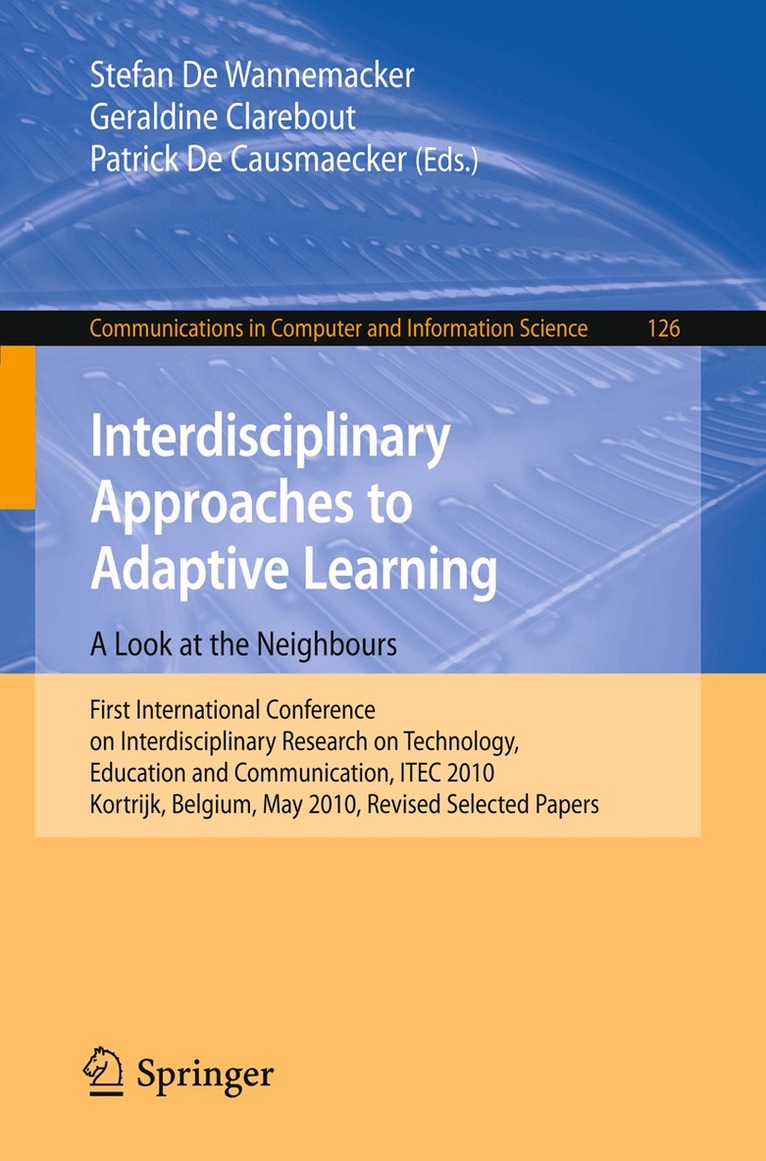
Interdisciplinary Approaches to Adaptive Learning: A Look at the Neighbours
First International Conference on Interdisciplinary Research on Technology, Education and Communication, ITEC 2010, Kortrijk, Belgium, May 25-27, 2010. Revised Selected Papers
Av Stefan De Wannemacker, Geraldine Clarebout m. fl.
Häftad, 2011
535 kr
Lägg i varukorg
This book constitutes the refereed proceedings of the FirstInternational Conference on Interdisciplinary Research on Technology,Education and Communication, ITEC 2010, held in Kortrijk, Belgium, inMay 2010. The 11 revised full papers presented were carefully reviewed andselected from 38 …
Interdisciplinary Approaches to Adaptive Learning: A Look at the Neighbours
First International Conference on Interdisciplinary Research on Technology, Education and Communication, ITEC 2010, Kortrijk, Belgium, May 25-27, 2010. Revised Selected Papers
Av Patrick De Causmaecker, Geraldine Clarebout m. fl.
E-bok, 2011
690 kr
Lägg i varukorg
This book constitutes the refereed proceedings of the FirstInternational Conference on Interdisciplinary Research on Technology,Education and Communication, ITEC 2010, held in Kortrijk, Belgium, inMay 2010. The 11 revised full papers presented were carefully reviewed andselected from 38 …
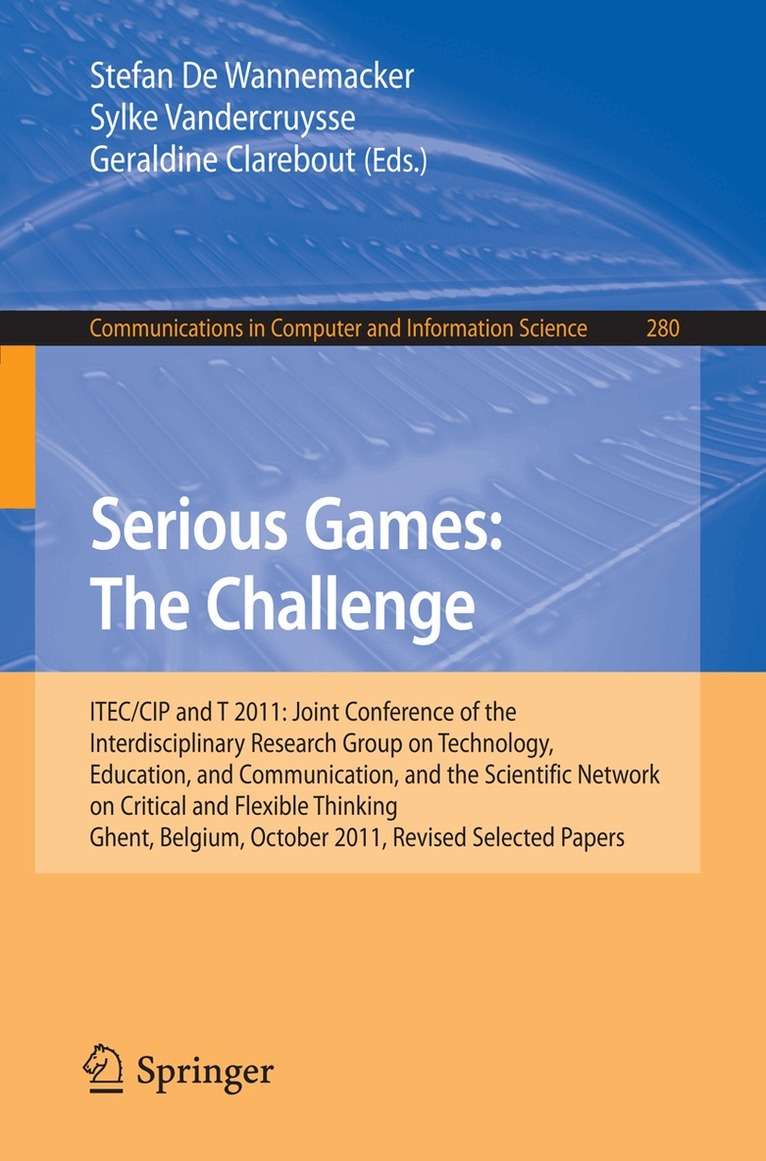
Serious Games: The Challenge
ITEC/CIP/T 2011: Joint Conference of the Interdisciplinary Research Group of Technology, Education, Communication, and the Scientific Network on Critical and Flexible Thinking,Ghent, Belgium, October 19-21, 2011, Revised Selected Papers
Av Stefan De Wannemacker, Sylke Vandercruysse m. fl.
Häftad, 2012
535 kr
Lägg i varukorg
This book constitutes the refereed proceedings of the Joint Conference of the Interdisciplinary Research Group on Technology, Education, Communication, and the Scientific Network on Critical and Flexible Thinking, held in Ghent, Belgium, in October 2011. The 12 papers in this volume represent …
Serious Games: The Challenge
ITEC/CIP/T 2011: Joint Conference of the Interdisciplinary Research Group of Technology, Education, Communication, and the Scientific Network on Critical and Flexible Thinking,Ghent, Belgium, October 19-21, 2011, Revised Selected Papers
Av Geraldine Clarebout, Sylke Vandercruysse m. fl.
E-bok, 2012
713 kr
Lägg i varukorg
This book constitutes the refereed proceedings of the Joint Conference of the Interdisciplinary Research Group on Technology, Education, Communication, and the Scientific Network on Critical and Flexible Thinking, held in Ghent, Belgium, in October 2011. The 12 papers in this volume represent …
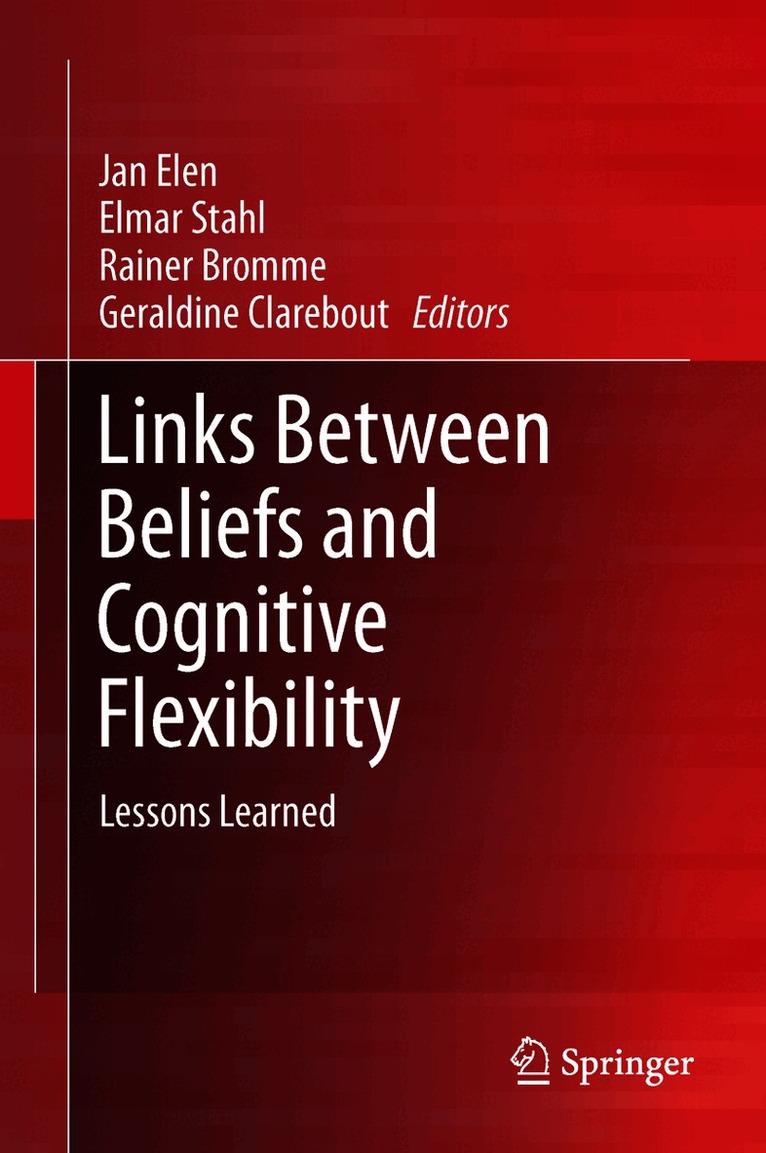
Links Between Beliefs and Cognitive Flexibility
Lessons Learned
Av Jan Elen, Elmar Stahl m. fl.
Inbunden, 2011
1094 kr
Lägg i varukorg
With the world and its structures becoming ever more complex, and the nature of future employment becoming ever more unpredictable, the notion of ‘cognitive flexibility’ has a high profile in educational and psychological debate. The contributions in this volume analyze the nature of cognitive …
Links Between Beliefs and Cognitive Flexibility
Lessons Learned
Av Geraldine Clarebout, Rainer Bromme m. fl.
E-bok, 2011
1459 kr
Lägg i varukorg
With the world and its structures becoming ever more complex, and the nature of future employment becoming ever more unpredictable, the notion of ‘cognitive flexibility’ has a high profile in educational and psychological debate. The contributions in this volume analyze the nature of cognitive …
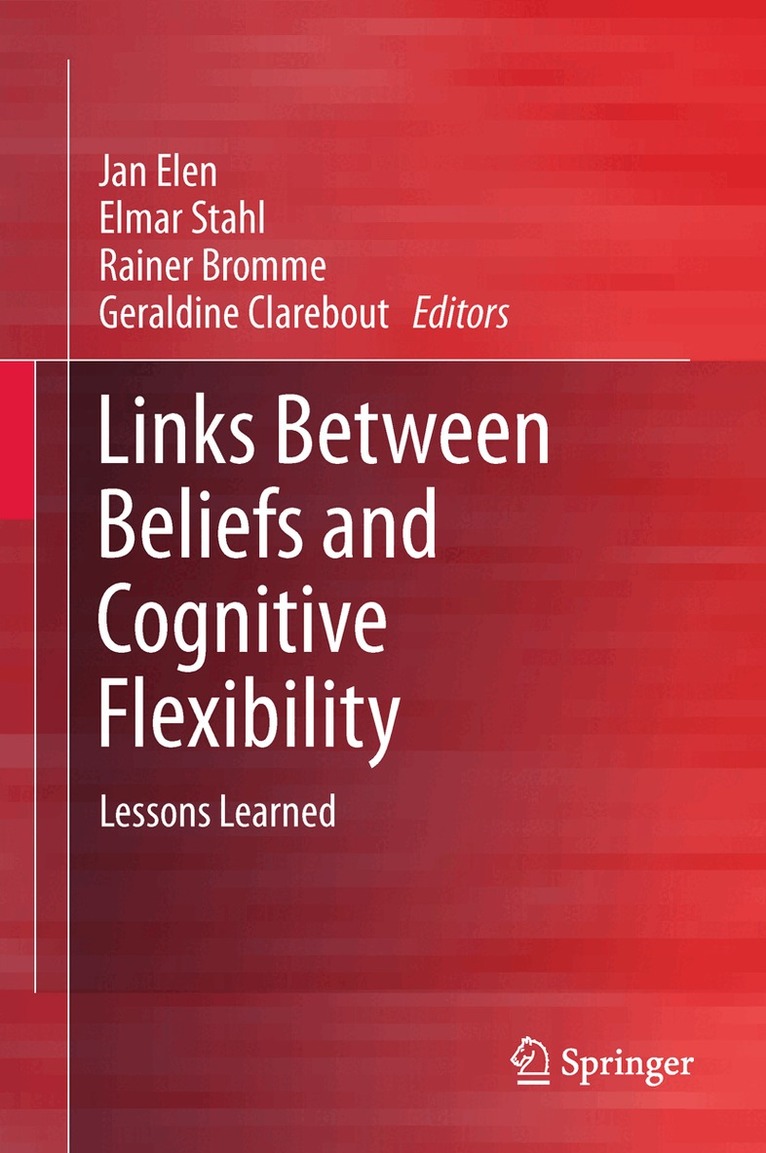
Links Between Beliefs and Cognitive Flexibility
Lessons Learned
Av Jan Elen, Elmar Stahl m. fl.
Häftad, 2014
1094 kr
Lägg i varukorg
With the world and its structures becoming ever more complex, and the nature of future employment becoming ever more unpredictable, the notion of ‘cognitive flexibility’ has a high profile in educational and psychological debate. The contributions in this volume analyze the nature of cognitive …