Geraldine P. Mineau - Böcker
Visar alla böcker från författaren Geraldine P. Mineau. Handla med fri frakt och snabb leverans.
4 produkter
4 produkter
Del 5 - Studies in Demography
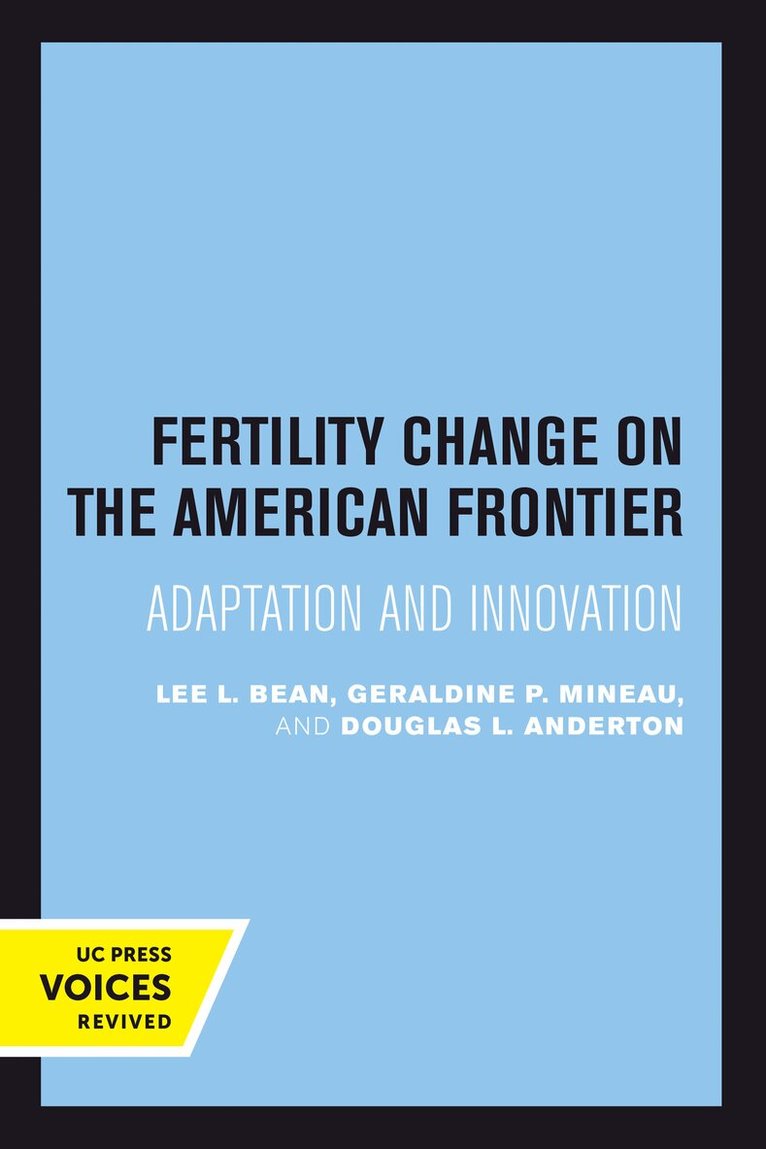
Fertility Change on the American Frontier
Adaptation and Innovation
Häftad, Engelska, 2018
665 kr
Skickas inom 3-6 vardagar
With findings that challenge conventional wisdom, Fertility Change on the American Frontier will interest demographers, sociologists, and historians. Examining the marriage and childbearing behavior of one predominantly L.D.S. (Mormon) population, the book calls into question traditional concepts and methods used to study high fertility populations. Mormons were responsible for the settlement, colonization, and development of one of America's last western frontiers. Availability of detailed information on marriage and childbearing, in a large file of approximately 185,000 family records, makes it possible to study the processes of the decline in fertility more extensively than has ever been done before in a major historical demographic study. The authors examine family formation among cohorts of women born between 1800 and 1899 and contrast two competing explanations of fertility change among Western societies: an adaptation argument versus an innovation argument. They demonstrate that the process of increasing fertility limitation beginning in the later part of the nineteenth century involves more than simply stopping childbearing after a given family size has been achieved. It reflects the adoption of a pattern of child spacing indicating a commitment to family limitation early in the marriage cycle. Clearly we must reexamine earlier studies which assumed that high-fertility populations were not interested in or aware of the possibilities of fertility control. Fertility control can no longer be treated as an innovation of Western industrial societies or as an innovation introduced through national family planning programs. We see that among the Utah frontier population marriage and childbearing represented a rational adaptation to a set of rapidly changing social and economic conditions. Without adequate technologies for family limitation, this population was nevertheless successful in reducing family size quickly and dramatically, once the presumed opportunities of the frontier disappeared. This title is part of UC Press's Voices Revived program, which commemorates University of California Press’s mission to seek out and cultivate the brightest minds and give them voice, reach, and impact. Drawing on a backlist dating to 1893, Voices Revived makes high-quality, peer-reviewed scholarship accessible once again using print-on-demand technology. This title was originally published in 1990.
Del 5 - Studies in Demography
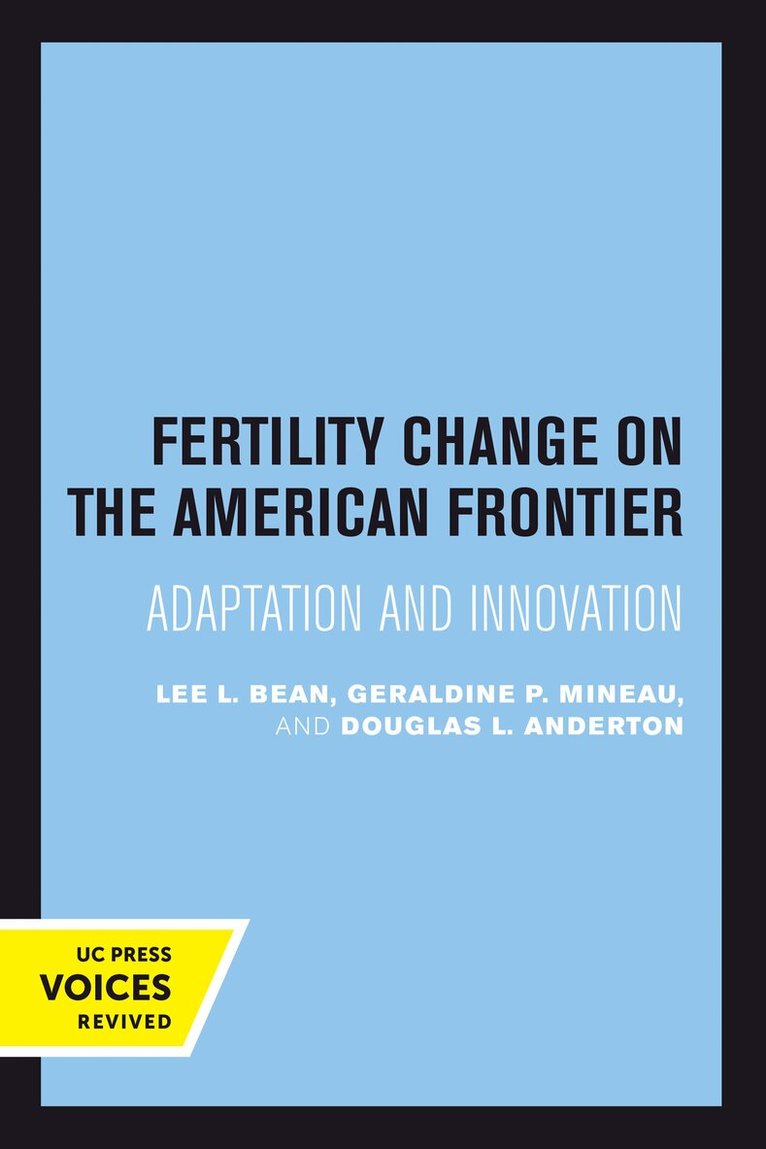
Fertility Change on the American Frontier
Adaptation and Innovation
Inbunden, Engelska, 2024
1 469 kr
Skickas inom 3-6 vardagar
With findings that challenge conventional wisdom, Fertility Change on the American Frontier will interest demographers, sociologists, and historians. Examining the marriage and childbearing behavior of one predominantly L.D.S. (Mormon) population, the book calls into question traditional concepts and methods used to study high fertility populations. Mormons were responsible for the settlement, colonization, and development of one of America's last western frontiers. Availability of detailed information on marriage and childbearing, in a large file of approximately 185,000 family records, makes it possible to study the processes of the decline in fertility more extensively than has ever been done before in a major historical demographic study. The authors examine family formation among cohorts of women born between 1800 and 1899 and contrast two competing explanations of fertility change among Western societies: an adaptation argument versus an innovation argument. They demonstrate that the process of increasing fertility limitation beginning in the later part of the nineteenth century involves more than simply stopping childbearing after a given family size has been achieved. It reflects the adoption of a pattern of child spacing indicating a commitment to family limitation early in the marriage cycle. Clearly we must reexamine earlier studies which assumed that high-fertility populations were not interested in or aware of the possibilities of fertility control. Fertility control can no longer be treated as an innovation of Western industrial societies or as an innovation introduced through national family planning programs. We see that among the Utah frontier population marriage and childbearing represented a rational adaptation to a set of rapidly changing social and economic conditions. Without adequate technologies for family limitation, this population was nevertheless successful in reducing family size quickly and dramatically, once the presumed opportunities of the frontier disappeared. This title is part of UC Press's Voices Revived program, which commemorates University of California Press’s mission to seek out and cultivate the brightest minds and give them voice, reach, and impact. Drawing on a backlist dating to 1893, Voices Revived makes high-quality, peer-reviewed scholarship accessible once again using print-on-demand technology. This title was originally published in 1990.
1 096 kr
Skickas inom 10-15 vardagar
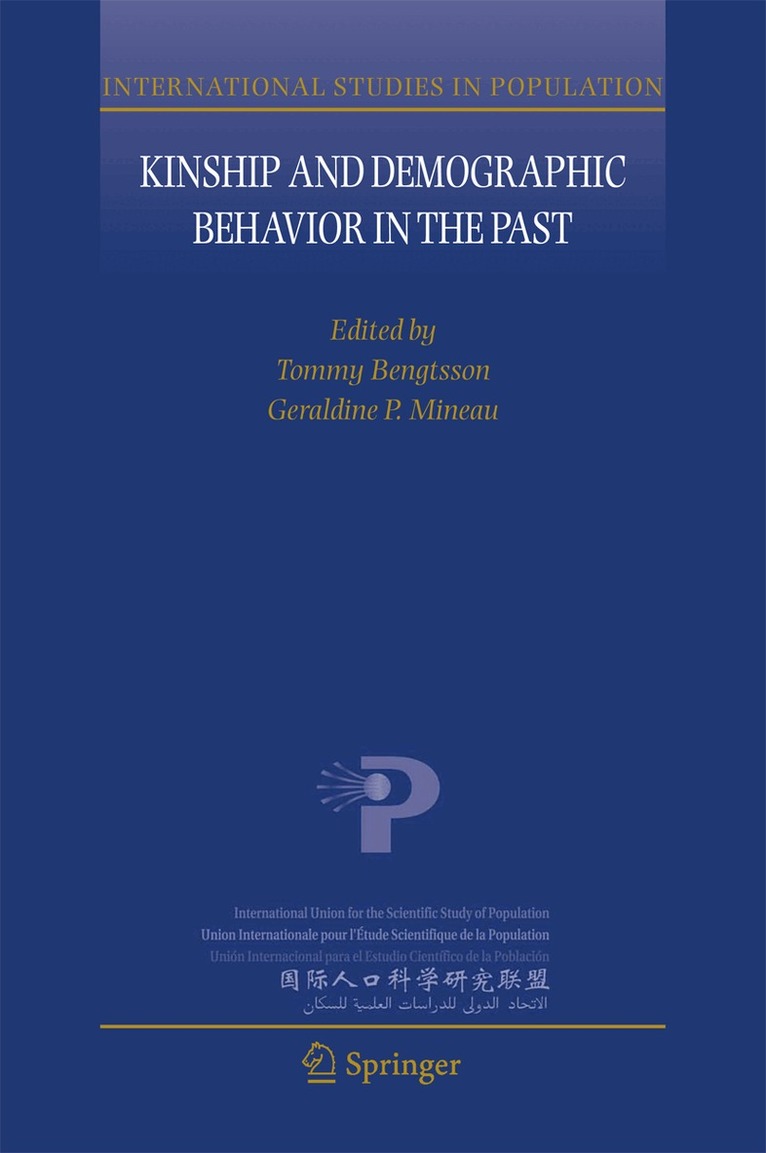
The International Union for the Scientific Study of Population’s Panel on Historical Demography applies a historical perspective, such as the importance of kinship networks for demographic outcomes later in life, to promote work of contemporary relevance. Connections over time, whether across generations or different segments of the life course, are an area of convergent interest among multiple disciplines. Specific topics of common interest are the influence of con- tions earlier in life on outcomes later in life, intergenerational associations in social, economic, and demographic outcomes, socioeconomic differences in health status and demographic outcomes, and the influence of industrialization and modernization on such patterns and relationships. Historical population da- bases, currently under expansion in a variety of locations around the world, provide longitudinal data on individuals across multiple generations and are especially amenable to the examination of such issues. Through a series of workshops sci- tists at the forefront of research on these issues were brought together in order to instigate a new wave of comparative work. Kinship and Demographic Behavior in the Past is intended to extend the disc- sions that occurred at two seminars, cosponsored by the International Union for the Scientific Study of Population, to a broader community of population scientists. Experts from many disciplines have come together in this volume to highlight the convergence of research by demographers, economic historians, historians, anth- pologists, sociologists, and geneticists.
1 064 kr
Skickas inom 10-15 vardagar
The International Union for the Scientific Study of Population’s Panel on Historical Demography applies a historical perspective, such as the importance of kinship networks for demographic outcomes later in life, to promote work of contemporary relevance. Connections over time, whether across generations or different segments of the life course, are an area of convergent interest among multiple disciplines. Specific topics of common interest are the influence of con- tions earlier in life on outcomes later in life, intergenerational associations in social, economic, and demographic outcomes, socioeconomic differences in health status and demographic outcomes, and the influence of industrialization and modernization on such patterns and relationships. Historical population da- bases, currently under expansion in a variety of locations around the world, provide longitudinal data on individuals across multiple generations and are especially amenable to the examination of such issues. Through a series of workshops sci- tists at the forefront of research on these issues were brought together in order to instigate a new wave of comparative work. Kinship and Demographic Behavior in the Past is intended to extend the disc- sions that occurred at two seminars, cosponsored by the International Union for the Scientific Study of Population, to a broader community of population scientists. Experts from many disciplines have come together in this volume to highlight the convergence of research by demographers, economic historians, historians, anth- pologists, sociologists, and geneticists.