Gilad Sharvit - Böcker
Visar alla böcker från författaren Gilad Sharvit. Handla med fri frakt och snabb leverans.
6 produkter
6 produkter
1 021 kr
Skickas inom 10-15 vardagar
Over the last few decades, vibrant debates regarding post-secularism have found inspiration and provocation in the works of Sigmund Freud. A new interest in the interconnection of psychoanalysis, religion and political theory has emerged, allowing Freud's illuminating examination of the religious and mystical practices in "Obsessive Neurosis and Religious Practices," and the exegesis of the origins of ethics in religion in Totem and Taboo, to gain currency in recent debates on modernity. In that context, the pivotal role of Freud's masterpiece, Moses and Monotheism, is widely recognized. Freud and Monotheism brings together fundamental new contributions to discourses on Freud and Moses, as well as new research at the intersections of theology, political theory, and history in Freud's psychoanalytic work. Highlighting the broad impact of Moses and Monotheism across the humanities, the contributors hail from such diverse disciplines as philosophy, comparative literature, cultural studies, German studies, Jewish studies and psychoanalysis. Jan Assmann and Richard Bernstein, whose books pioneered the earlier debate that initiated the Freud and Moses discourse, seize the opportunity to revisit and revise their groundbreaking work. Gabriele Schwab, Gilad Sharvit, Karen Feldman, and Yael Segalovitz engage with the idiosyncratic, eccentric and fertile nature of the book as a Spӓtstil, and explore radical interpretations of Freud's literary practice, theory of religion and therapeutic practice. Ronald Hendel offers an alternative history for the Mosaic discourse within the biblical text, Catherine Malabou reconnects Freud's theory of psychic phylogenesis in Moses and Monotheism to new findings in modern biology and Willi Goetschel relocates Freud in the tradition of works on history that begins with Heine, while Joel Whitebook offers important criticisms of Freud's main argument about the advance in intellectuality that Freud attributes to Judaism.
322 kr
Skickas inom 7-10 vardagar
Over the last few decades, vibrant debates regarding post-secularism have found inspiration and provocation in the works of Sigmund Freud. A new interest in the interconnection of psychoanalysis, religion and political theory has emerged, allowing Freud's illuminating examination of the religious and mystical practices in "Obsessive Neurosis and Religious Practices," and the exegesis of the origins of ethics in religion in Totem and Taboo, to gain currency in recent debates on modernity. In that context, the pivotal role of Freud's masterpiece, Moses and Monotheism, is widely recognized. Freud and Monotheism brings together fundamental new contributions to discourses on Freud and Moses, as well as new research at the intersections of theology, political theory, and history in Freud's psychoanalytic work. Highlighting the broad impact of Moses and Monotheism across the humanities, the contributors hail from such diverse disciplines as philosophy, comparative literature, cultural studies, German studies, Jewish studies and psychoanalysis. Jan Assmann and Richard Bernstein, whose books pioneered the earlier debate that initiated the Freud and Moses discourse, seize the opportunity to revisit and revise their groundbreaking work. Gabriele Schwab, Gilad Sharvit, Karen Feldman, and Yael Segalovitz engage with the idiosyncratic, eccentric and fertile nature of the book as a Spӓtstil, and explore radical interpretations of Freud's literary practice, theory of religion and therapeutic practice. Ronald Hendel offers an alternative history for the Mosaic discourse within the biblical text, Catherine Malabou reconnects Freud's theory of psychic phylogenesis in Moses and Monotheism to new findings in modern biology and Willi Goetschel relocates Freud in the tradition of works on history that begins with Heine, while Joel Whitebook offers important criticisms of Freud's main argument about the advance in intellectuality that Freud attributes to Judaism.
361 kr
Skickas inom 7-10 vardagar
A fine example of the best scholarship that lies at the intersection of philosophy, religion, and history. Dynamic Repetition proposes a new understanding of modern Jewish theories of messianism across the disciplines of history, theology, and philosophy. The book explores how ideals of repetition, return, and the cyclical occasioned a new messianic impulse across an important swath of late nineteenth- and early twentieth-century German Jewish thought. To grasp the complexities of Jewish messianism in modernity, the book focuses on diverse notions of “dynamic repetition” in the works of Franz Rosenzweig, Walter Benjamin, Franz Kafka, and Sigmund Freud, and their interrelations with basic trajectories of twentieth-century philosophy and critical thought.
2 355 kr
Skickas inom 3-6 vardagar
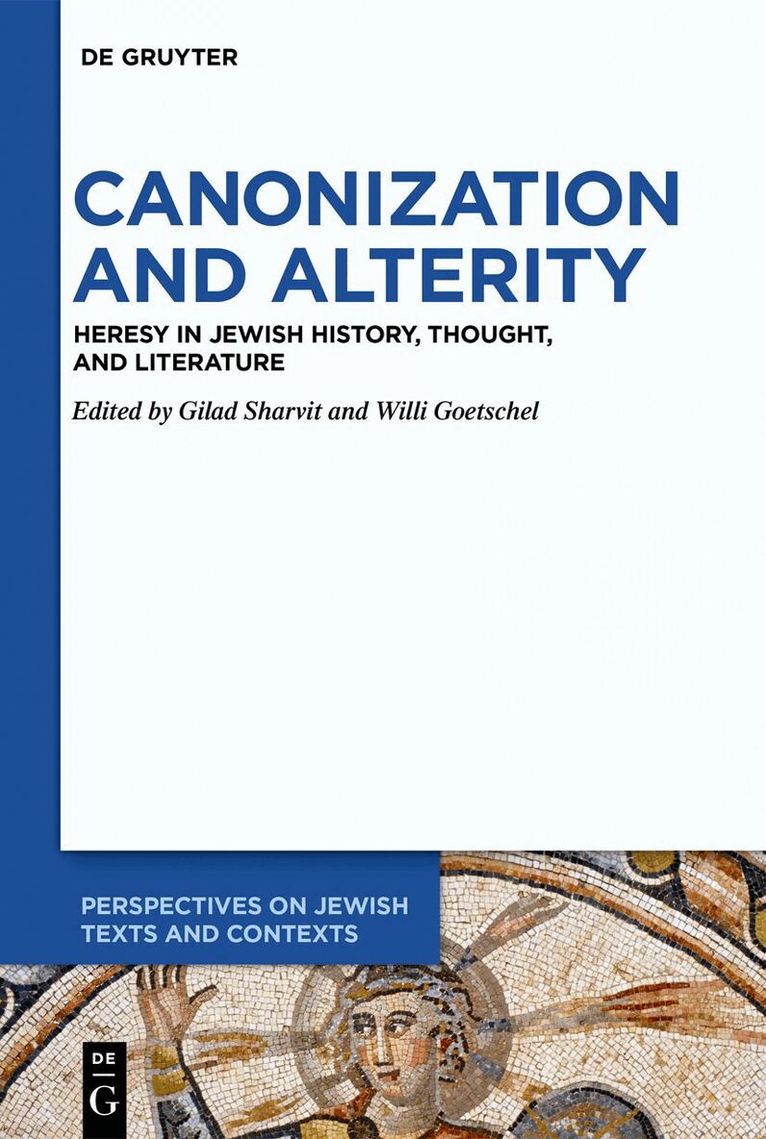
This volume offers an examination of varied forms of expressions of heresy in Jewish history, thought and literature. Contributions explore the formative role of the figure of the heretic and of heretic thought in the development of the Jewish traditions from antiquity to the 20th century. Chapters explore the role of heresy in the Hellenic period and Rabbinic literature; the significance of heresy to Kabbalah, and the critical and often formative importance the challenge of heresy plays for modern thinkers such as Spinoza, Freud, and Derrida, and literary figures such as Kafka, Tchernikhovsky, and I.B. Singer. Examining heresy as a boundary issue constitutive for the formation of Jewish tradition, this book contributes to a better understanding of the significance of the figure of the heretic for tradition more generally.
313 kr
Skickas inom 5-8 vardagar
This volume offers an examination of varied forms of expressions of heresy in Jewish history, thought and literature. Contributions explore the formative role of the figure of the heretic and of heretic thought in the development of the Jewish traditions from antiquity to the 20th century. Chapters explore the role of heresy in the Hellenic period and Rabbinic literature; the significance of heresy to Kabbalah, and the critical and often formative importance the challenge of heresy plays for modern thinkers such as Spinoza, Freud, and Derrida, and literary figures such as Kafka, Tchernikhovsky, and I.B. Singer. Examining heresy as a boundary issue constitutive for the formation of Jewish tradition, this book contributes to a better understanding of the significance of the figure of the heretic for tradition more generally.
1 376 kr
Skickas inom 5-8 vardagar
This volume brings together scholars from a range of disciplines to explore the intersections between crisis, scholarship, and action. The aim of this book is to think about the “moment of crisis,” through the concepts, writings, and methodologies awarded to us by Jewish thinkers in modernity. This book offers a broad gallery of accounts on the notion of crisis in Jewish modernity while emphasizing three terms: interpretation, heresy, and messianism. The main thesis of the volume is that the diasporic and exilic experience of the Jewish people turned their philosophers and theologians into “experts in crisis management” who had to find resources within their own religion, culture and traditions in order to react, endure and overcome short- and long-term historical crises. The underlining assumption of this book is therefore that Jewish thought obtains resources for conceptualizing and reacting to the current forms of crisis in the global, European, and Israeli spheres. The volume addresses a large readership in humanities, social and political sciences and religious studies, taking as its assumption that scholars in modern Jewish thought have an extended responsibility to engage in contemporary debates.