Karen S. Feldman - Böcker
Visar alla böcker från författaren Karen S. Feldman. Handla med fri frakt och snabb leverans.
6 produkter
6 produkter
1 021 kr
Skickas inom 10-15 vardagar
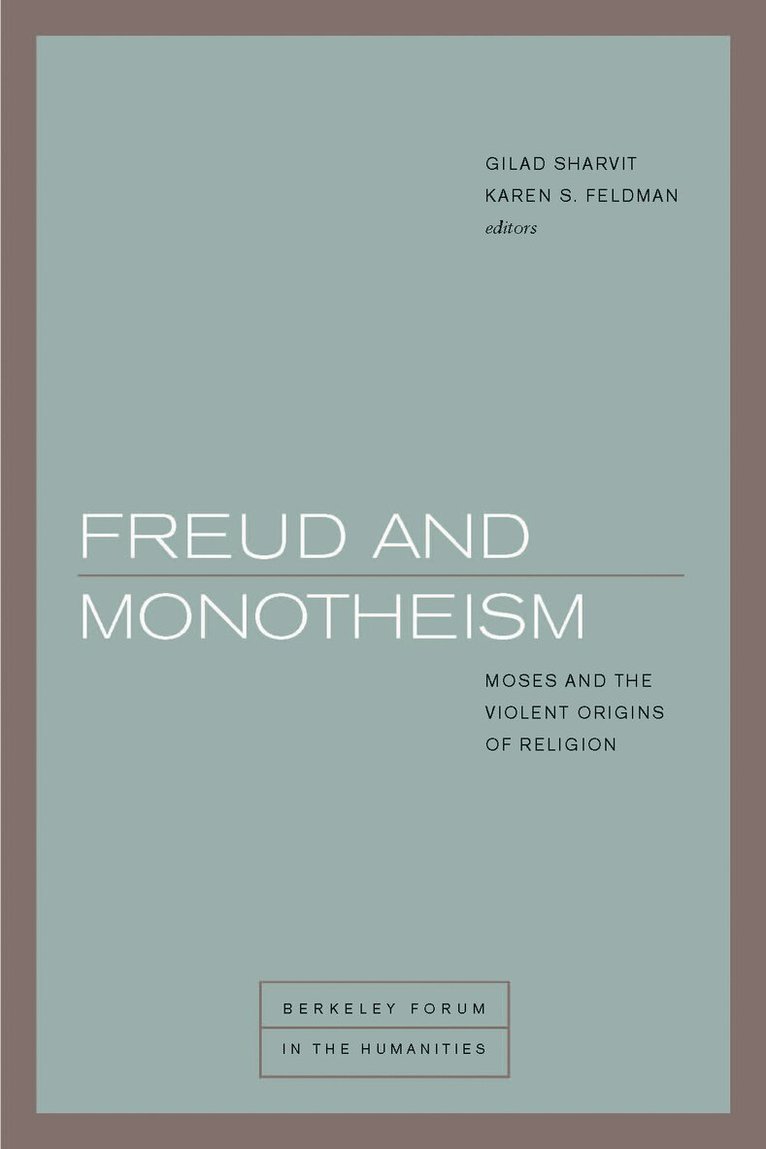
Over the last few decades, vibrant debates regarding post-secularism have found inspiration and provocation in the works of Sigmund Freud. A new interest in the interconnection of psychoanalysis, religion and political theory has emerged, allowing Freud's illuminating examination of the religious and mystical practices in "Obsessive Neurosis and Religious Practices," and the exegesis of the origins of ethics in religion in Totem and Taboo, to gain currency in recent debates on modernity. In that context, the pivotal role of Freud's masterpiece, Moses and Monotheism, is widely recognized. Freud and Monotheism brings together fundamental new contributions to discourses on Freud and Moses, as well as new research at the intersections of theology, political theory, and history in Freud's psychoanalytic work. Highlighting the broad impact of Moses and Monotheism across the humanities, the contributors hail from such diverse disciplines as philosophy, comparative literature, cultural studies, German studies, Jewish studies and psychoanalysis. Jan Assmann and Richard Bernstein, whose books pioneered the earlier debate that initiated the Freud and Moses discourse, seize the opportunity to revisit and revise their groundbreaking work. Gabriele Schwab, Gilad Sharvit, Karen Feldman, and Yael Segalovitz engage with the idiosyncratic, eccentric and fertile nature of the book as a Spӓtstil, and explore radical interpretations of Freud's literary practice, theory of religion and therapeutic practice. Ronald Hendel offers an alternative history for the Mosaic discourse within the biblical text, Catherine Malabou reconnects Freud's theory of psychic phylogenesis in Moses and Monotheism to new findings in modern biology and Willi Goetschel relocates Freud in the tradition of works on history that begins with Heine, while Joel Whitebook offers important criticisms of Freud's main argument about the advance in intellectuality that Freud attributes to Judaism.
322 kr
Skickas inom 7-10 vardagar
Over the last few decades, vibrant debates regarding post-secularism have found inspiration and provocation in the works of Sigmund Freud. A new interest in the interconnection of psychoanalysis, religion and political theory has emerged, allowing Freud's illuminating examination of the religious and mystical practices in "Obsessive Neurosis and Religious Practices," and the exegesis of the origins of ethics in religion in Totem and Taboo, to gain currency in recent debates on modernity. In that context, the pivotal role of Freud's masterpiece, Moses and Monotheism, is widely recognized. Freud and Monotheism brings together fundamental new contributions to discourses on Freud and Moses, as well as new research at the intersections of theology, political theory, and history in Freud's psychoanalytic work. Highlighting the broad impact of Moses and Monotheism across the humanities, the contributors hail from such diverse disciplines as philosophy, comparative literature, cultural studies, German studies, Jewish studies and psychoanalysis. Jan Assmann and Richard Bernstein, whose books pioneered the earlier debate that initiated the Freud and Moses discourse, seize the opportunity to revisit and revise their groundbreaking work. Gabriele Schwab, Gilad Sharvit, Karen Feldman, and Yael Segalovitz engage with the idiosyncratic, eccentric and fertile nature of the book as a Spӓtstil, and explore radical interpretations of Freud's literary practice, theory of religion and therapeutic practice. Ronald Hendel offers an alternative history for the Mosaic discourse within the biblical text, Catherine Malabou reconnects Freud's theory of psychic phylogenesis in Moses and Monotheism to new findings in modern biology and Willi Goetschel relocates Freud in the tradition of works on history that begins with Heine, while Joel Whitebook offers important criticisms of Freud's main argument about the advance in intellectuality that Freud attributes to Judaism.
506 kr
Skickas inom 7-10 vardagar
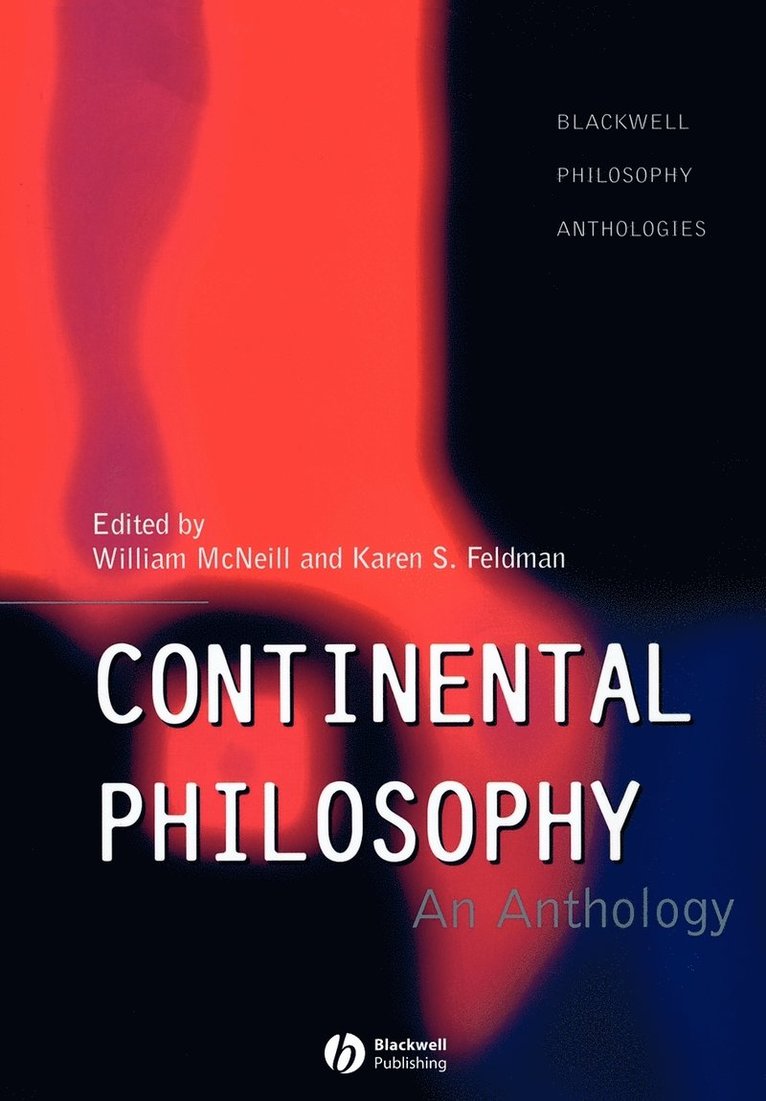
From Immanuel Kant to Postmodernism, this volume provides an unparalleled student resource: a wide-ranging collection of the essential works of more than 50 seminal thinkers in modern European philosophy. Areas covered include Kant and German Idealism, Existentialism, Phenomenology, Hermeneutics, Marxism and the Frankfurt School, Structuralism, Psychoanalysis, Feminism, Deconstruction, and Postmodernism. Each section begins with a concise and helpful introduction, and all the texts have been selected for accessibility as well as significance, making the volume ideal for introductory and advanced levels in philosophy, cultural studies, literary theory, and the history of modern thought.
1 803 kr
Skickas inom 7-10 vardagar
From Immanuel Kant to Postmodernism, this volume provides an unparalleled student resource: a wide-ranging collection of the essential works of more than 50 seminal thinkers in modern European philosophy. Areas covered include Kant and German Idealism, Existentialism, Phenomenology, Hermeneutics, Marxism and the Frankfurt School, Structuralism, Psychoanalysis, Feminism, Deconstruction, and Postmodernism. Each section begins with a concise and helpful introduction, and all the texts have been selected for accessibility as well as significance, making the volume ideal for introductory and advanced levels in philosophy, cultural studies, literary theory, and the history of modern thought.
1 467 kr
Skickas inom 5-8 vardagar
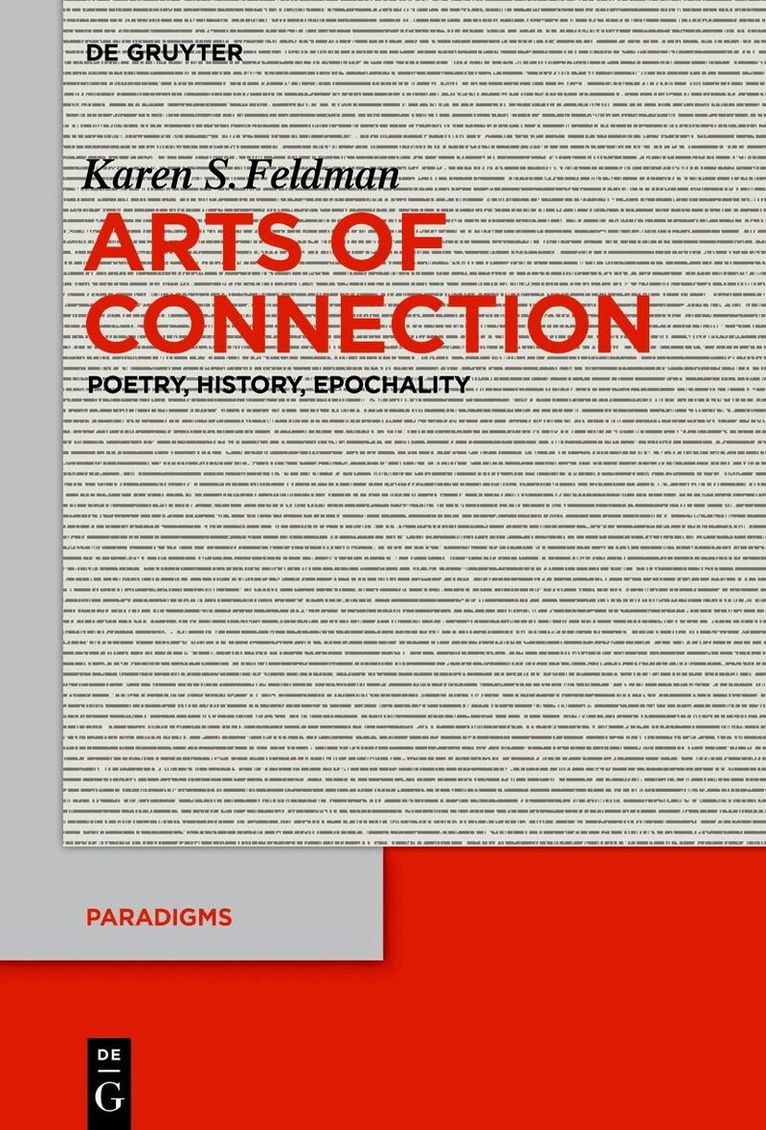
At the intersection of literary theory, philosophy of history and phenomenology, Arts of Connection: Poetry, History, Epochality explores the representation of connections between events in literary, historical and philosophical narratives. Events in a story can be seen as ordered according to proximate causation, which leads diachronically from one event to the next; and they can also be understood in view of the structure of the narrative as a whole – for instance in terms of the unity of plot. Feldman argues that there exists an essential narrative tension between these two kinds of connection, i.e. between the overarching arrangement or plot that holds together events from "outside," as it were, in order to produce an intelligible whole; and the portrayal of one-by-one, "interstitial" connections between events within the narrative. Arts of Connection demonstrates, by means of exemplary moments in Aristotle and classical German poetics, eighteenth-century philosophy of history, and twentieth-century phenomenology, that the task of connection is a fraught one, insofar as the formal unity of narrative competes or interferes with the representation of one-by-one connections between events, and vice versa.
328 kr
Skickas inom 5-8 vardagar
At the intersection of literary theory, philosophy of history and phenomenology, Arts of Connection: Poetry, History, Epochality explores the representation of connections between events in literary, historical and philosophical narratives. Events in a story can be seen as ordered according to proximate causation, which leads diachronically from one event to the next; and they can also be understood in view of the structure of the narrative as a whole – for instance in terms of the unity of plot. Feldman argues that there exists an essential narrative tension between these two kinds of connection, i.e. between the overarching arrangement or plot that holds together events from "outside," as it were, in order to produce an intelligible whole; and the portrayal of one-by-one, "interstitial" connections between events within the narrative. Arts of Connection demonstrates, by means of exemplary moments in Aristotle and classical German poetics, eighteenth-century philosophy of history, and twentieth-century phenomenology, that the task of connection is a fraught one, insofar as the formal unity of narrative competes or interferes with the representation of one-by-one connections between events, and vice versa.