William McNeill - Böcker
Visar alla böcker från författaren William McNeill. Handla med fri frakt och snabb leverans.
9 produkter
9 produkter
1 057 kr
Tillfälligt slut
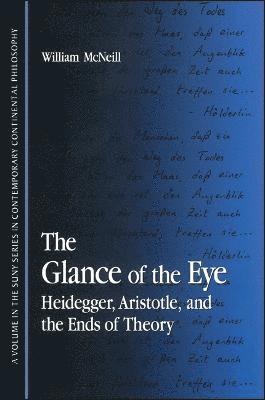
Argues that Heidegger's early reading of Aristotle provides him with a critical resource for addressing the problematic domination of theoretical knowledge in Western civilization.William McNeill explores the phenomenon of the Augenblick, or "glance of the eye," in Heidegger's thought, and in particular its relation to the primacy of seeing and of theoretical apprehending (theoria) both in Aristotle and in the philosophical and scientific tradition of Western thought. McNeill argues that Heidegger's early reading of Aristotle, which identifies the experience of the Augenblick at the heart of ethical and practical knowledge (phronesis), proves to be a decisive encounter for Heidegger's subsequent understanding and critique of the history of philosophy, science, and technology. It provides him with a critical resource for addressing the problematic domination of theoretical knowledge in Western civilization. Such knowledge, the author shows, always remains in a peculiar tension (itself historically determined and changing) with ethical or "protoethical" knowledge, which is bound to the finite, "ecstatic" temporality of the lived and living moment, and inevitably exposed to the presence of the sensuous.
402 kr
Tillfälligt slut
Argues that Heidegger's early reading of Aristotle provides him with a critical resource for addressing the problematic domination of theoretical knowledge in Western civilization.William McNeill explores the phenomenon of the Augenblick, or "glance of the eye," in Heidegger's thought, and in particular its relation to the primacy of seeing and of theoretical apprehending (theoria) both in Aristotle and in the philosophical and scientific tradition of Western thought. McNeill argues that Heidegger's early reading of Aristotle, which identifies the experience of the Augenblick at the heart of ethical and practical knowledge (phronesis), proves to be a decisive encounter for Heidegger's subsequent understanding and critique of the history of philosophy, science, and technology. It provides him with a critical resource for addressing the problematic domination of theoretical knowledge in Western civilization. Such knowledge, the author shows, always remains in a peculiar tension (itself historically determined and changing) with ethical or "protoethical" knowledge, which is bound to the finite, "ecstatic" temporality of the lived and living moment, and inevitably exposed to the presence of the sensuous.
1 057 kr
Tillfälligt slut
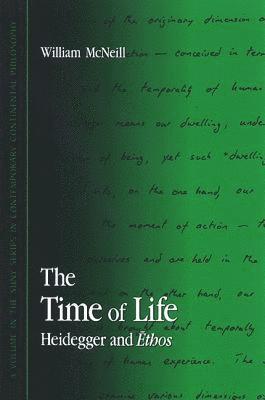
Explores the notion of ēthos in Heidegger's thought.The Time of Life explores Heidegger's rethinking of ethics and of the ethical in terms of an understanding of the original Greek notion of ēthos. Engaging the ethical in Heidegger's thought in relation to Aristotle, Michel Foucault, and Friedrich Hölderlin, William McNeill examines the way in which Heidegger's thought shifts our understanding of ethics away from a set of theoretically constructed norms, principles, or rules governing practice toward an understanding of the ethical as our concrete way of Being in the world.Central to this study is the consideration of the ethical in relation to time: the time of biological life, the time of human life as biographical and historical, the temporality of human action, and the historicality of human thought. In addition, this book critically examines the predicament of ethical responsibility in a scientific-technological era, considering how the world of modern science and technology call upon us to rethink the nature of ethical responsibilities.
382 kr
Tillfälligt slut
Explores the notion of ēthos in Heidegger's thought.The Time of Life explores Heidegger's rethinking of ethics and of the ethical in terms of an understanding of the original Greek notion of ēthos. Engaging the ethical in Heidegger's thought in relation to Aristotle, Michel Foucault, and Friedrich Hölderlin, William McNeill examines the way in which Heidegger's thought shifts our understanding of ethics away from a set of theoretically constructed norms, principles, or rules governing practice toward an understanding of the ethical as our concrete way of Being in the world.Central to this study is the consideration of the ethical in relation to time: the time of biological life, the time of human life as biographical and historical, the temporality of human action, and the historicality of human thought. In addition, this book critically examines the predicament of ethical responsibility in a scientific-technological era, considering how the world of modern science and technology call upon us to rethink the nature of ethical responsibilities.
506 kr
Skickas inom 7-10 vardagar
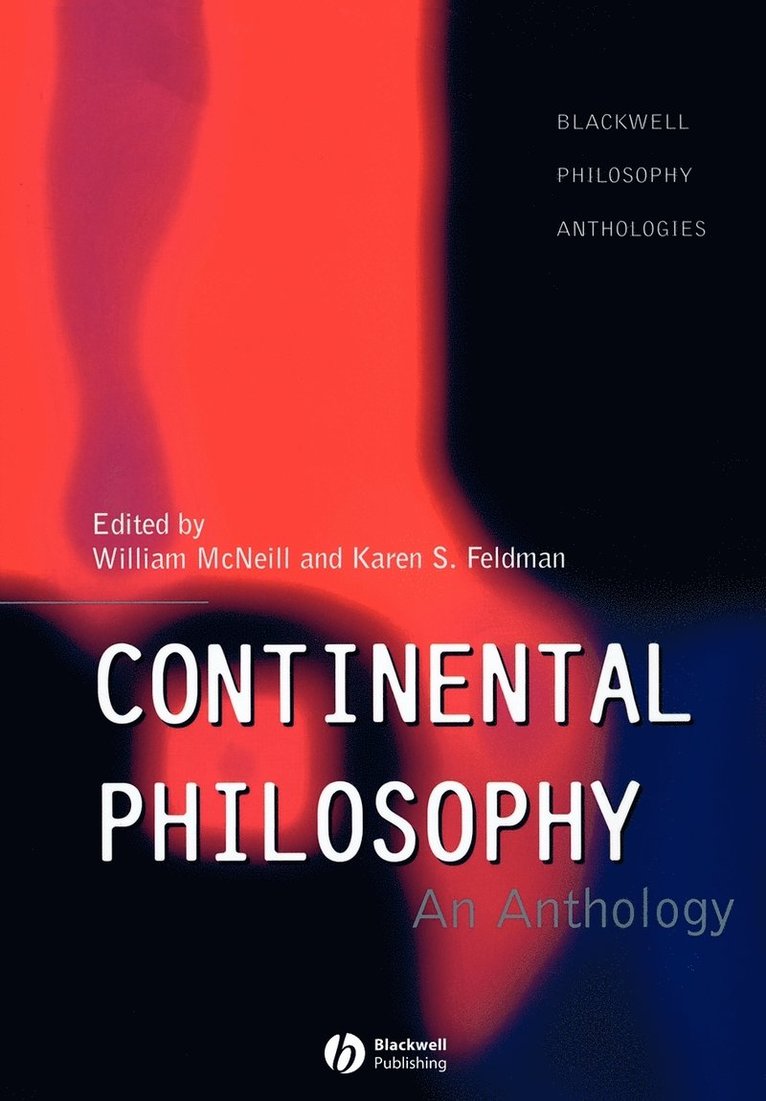
From Immanuel Kant to Postmodernism, this volume provides an unparalleled student resource: a wide-ranging collection of the essential works of more than 50 seminal thinkers in modern European philosophy. Areas covered include Kant and German Idealism, Existentialism, Phenomenology, Hermeneutics, Marxism and the Frankfurt School, Structuralism, Psychoanalysis, Feminism, Deconstruction, and Postmodernism. Each section begins with a concise and helpful introduction, and all the texts have been selected for accessibility as well as significance, making the volume ideal for introductory and advanced levels in philosophy, cultural studies, literary theory, and the history of modern thought.
1 804 kr
Skickas inom 7-10 vardagar
From Immanuel Kant to Postmodernism, this volume provides an unparalleled student resource: a wide-ranging collection of the essential works of more than 50 seminal thinkers in modern European philosophy. Areas covered include Kant and German Idealism, Existentialism, Phenomenology, Hermeneutics, Marxism and the Frankfurt School, Structuralism, Psychoanalysis, Feminism, Deconstruction, and Postmodernism. Each section begins with a concise and helpful introduction, and all the texts have been selected for accessibility as well as significance, making the volume ideal for introductory and advanced levels in philosophy, cultural studies, literary theory, and the history of modern thought.
1 476 kr
Skickas inom 10-15 vardagar
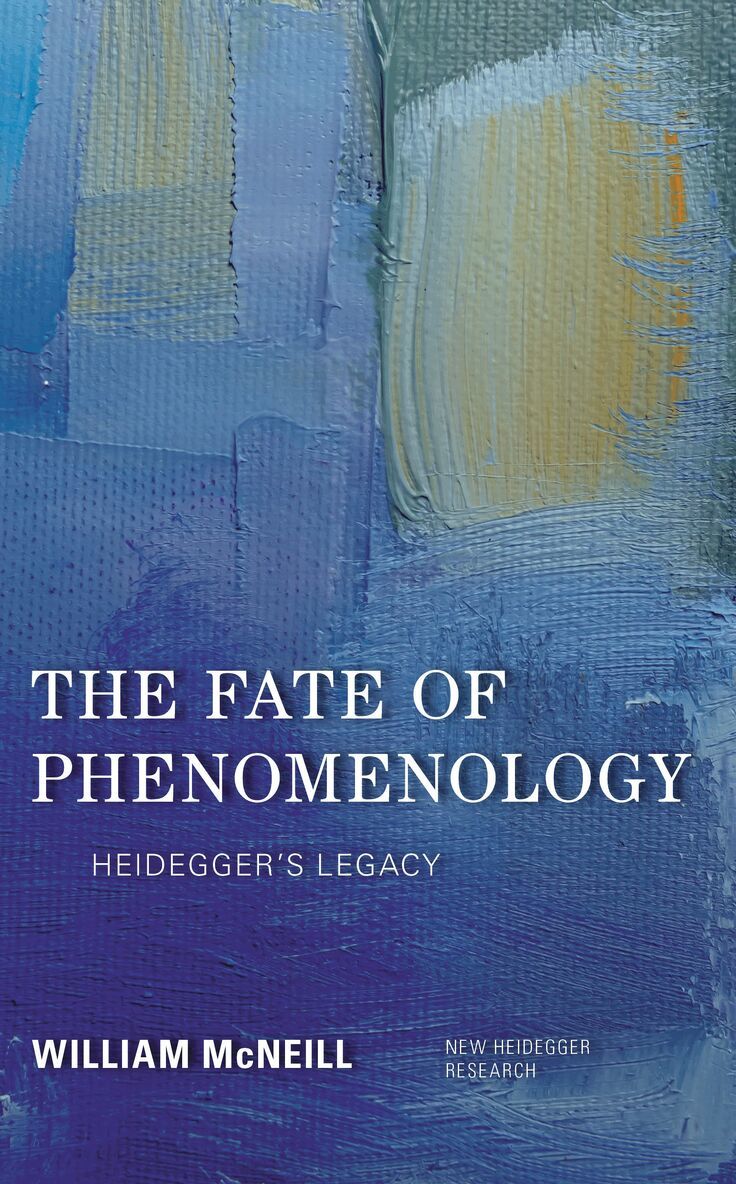
It can be easily argued that the radical nature and challenge of Heidegger’s thinking is grounded in his early embrace of the phenomenological method as providing an access to concrete lived experience (or “factical life,” as he called it) beyond the imposition of theoretical constructs such as “subject” and “object,” “mind” and “body.” Yet shortly after the publication of his groundbreaking work Being and Time, Heidegger appeared to abandon phenomenology as the method of philosophy. Why? Heidegger was conspicuously quiet on this issue. Here, William McNeill examines the question of the fate of phenomenology in Heidegger’s thinking and its transformation into a “thinking of Being” that regards its task as that of “letting be.” The relation between phenomenology and “letting be,” McNeill argues, is by no means a straightforward one. It poses the question of whether, and to what extent, Heidegger’s thought of his middle and late periods still needs phenomenology in order to accomplish its task—and if so, what kind of phenomenology. What becomes of phenomenology in the course of Heidegger’s thinking?
515 kr
Skickas inom 10-15 vardagar
It can be easily argued that the radical nature and challenge of Heidegger’s thinking is grounded in his early embrace of the phenomenological method as providing an access to concrete lived experience (or “factical life,” as he called it) beyond the imposition of theoretical constructs such as “subject” and “object,” “mind” and “body.” Yet shortly after the publication of his groundbreaking work Being and Time, Heidegger appeared to abandon phenomenology as the method of philosophy. Why? Heidegger was conspicuously quiet on this issue. Here, William McNeill examines the question of the fate of phenomenology in Heidegger’s thinking and its transformation into a “thinking of Being” that regards its task as that of “letting be.” The relation between phenomenology and “letting be,” McNeill argues, is by no means a straightforward one. It poses the question of whether, and to what extent, Heidegger’s thought of his middle and late periods still needs phenomenology in order to accomplish its task—and if so, what kind of phenomenology. What becomes of phenomenology in the course of Heidegger’s thinking?
1 406 kr
Kommande
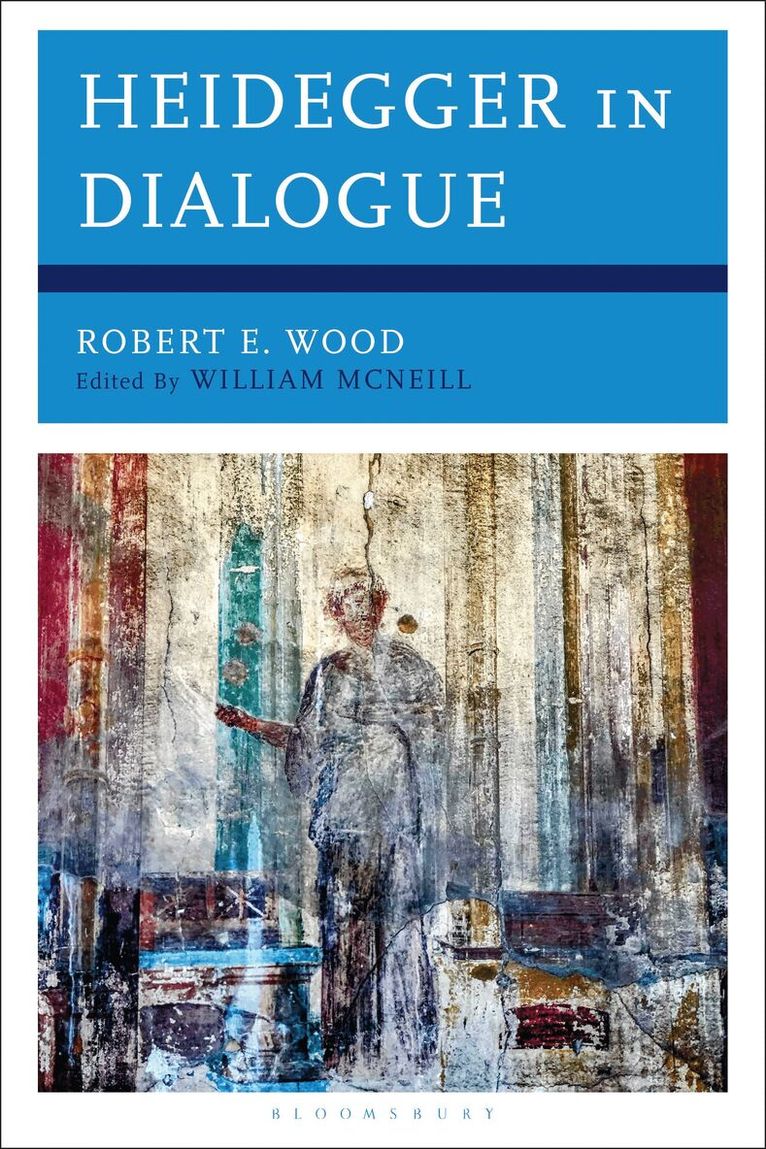
Comparative readings offer an accessible introduction and shed light on Heidegger’s thought by examining it in the context of the work of other philosophers.This collection of comparative essays by the late Robert E. Wood puts Martin Heidegger in dialogue with a number of other thinkers, such as Martin Buber, Max Scheler, Edith Stein, John Dewey, and Maurice Merleau-Ponty, as well as thinkers whose relation to Heidegger has been more commonly examined (Plato, Hegel, Jean-Paul Sartre). A number of recurrent themes stand out, indicative of the issues that anchor the author’s general interpretation of Heidegger. These include: the distinction between meditative and calculative thinking; Heidegger as a thinker of the heart; releasement (Gelassenheit); the prominence of concealment (lethe) and the mystery of Being; the importance of art and poetic thinking; the relation to the Other; mortals and the divine; and the significance of attunements or dispositions, ranging from shock and horror to wonder and awe. Wood’s perspective emerges as a distinctively Catholic reading of Heidegger, emphasizing common ground and a relation to the whole throughout.