Giles Pearson - Böcker
Visar alla böcker från författaren Giles Pearson. Handla med fri frakt och snabb leverans.
4 produkter
4 produkter
1 613 kr
Skickas inom 5-8 vardagar
This book provides the first systematic interpretation of what Aristotle thinks occurrent emotions are and points to some philosophical merits of his account. It is argued that he holds that emotions are representational pleasures or distresses that are formed in response to other intentional states that apprehend their objects. Even this bare formulation of his view is notable in several respects. First, the idea that the pleasures or distresses of emotions are representational--directed at objects in the world (or ourselves)--contrasts sharply with accounts that identify emotions with non-representational sensations or feelings. Second, the notion that emotions are pleasurable or distressful responses to other intentional states that apprehend their objects provides a fundamental contrast with many current accounts which instead view emotions as (in part) modes of apprehension or kinds of epistemic state themselves. Third, Aristotle's view stands in opposition to motivational accounts of emotions, insofar as while he thinks that emotions interact with desires or motivational states in important ways, he does not think they are themselves (even in part) motivational states. They are representational pleasures or distresses alone. Together, these three points give Aristotle a novel understanding of the representational role emotions play; namely, neither descriptive, nor prescriptive, but reactive. Besides developing these ideas, both textually and philosophically, the book also explores how Aristotle individuates emotion types; his understanding of the material dimension of emotions; and how his view can provide a novel explanation of recalcitrant emotions, a notoriously problematic phenomenon for many recent accounts of emotions.
1 287 kr
Skickas inom 5-8 vardagar
Both Aristotle and moral psychology have been flourishing areas of philosophical inquiry in recent years. This volume aims to bring the two streams of research together, offering a fresh infusion of Aristotelian insights into moral psychology and philosophy of action, and the application of developed philosophical sensibility as regards the reading of Aristotelian texts. The contributors offer stimulating new examinations of Aristotle's understanding of the various psychological states, dispositions, processes, and acts -- including reasoning and deliberation -- that contribute to the understanding of human action and its ethical appraisal.
1 245 kr
Skickas inom 7-10 vardagar
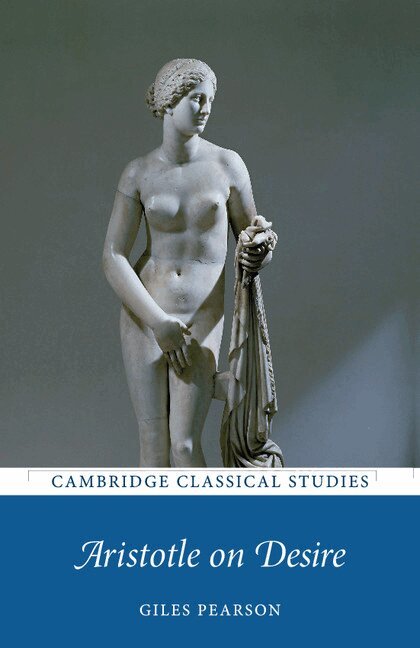
Desire is a central concept in Aristotle's ethical and psychological works, but he does not provide us with a systematic treatment of the notion itself. This book reconstructs the account of desire latent in his various scattered remarks on the subject and analyses its role in his moral psychology. Topics include: the range of states that Aristotle counts as desires (orexeis); objects of desire (orekta) and the relation between desires and envisaging prospects; desire and the good; Aristotle's three species of desire: epithumia (pleasure-based desire), thumos (retaliatory desire) and boulêsis (good-based desire - in a narrower notion of 'good' than that which connects desire more generally to the good); Aristotle's division of desires into rational and non-rational; Aristotle and some current views on desire; and the role of desire in Aristotle's moral psychology. The book will be of relevance to anyone interested in Aristotle's ethics or psychology.
428 kr
Skickas inom 7-10 vardagar
Desire is a central concept in Aristotle's ethical and psychological works, but he does not provide us with a systematic treatment of the notion itself. This book reconstructs the account of desire latent in his various scattered remarks on the subject and analyses its role in his moral psychology. Topics include: the range of states that Aristotle counts as desires (orexeis); objects of desire (orekta) and the relation between desires and envisaging prospects; desire and the good; Aristotle's three species of desire: epithumia (pleasure-based desire), thumos (retaliatory desire) and boulêsis (good-based desire - in a narrower notion of 'good' than that which connects desire more generally to the good); Aristotle's division of desires into rational and non-rational; Aristotle and some current views on desire; and the role of desire in Aristotle's moral psychology. The book will be of relevance to anyone interested in Aristotle's ethics or psychology.