• Fri frakt över 249 kr
  • •
  • Snabba leveranser
  • •
  • Billiga böcker
Kundservice

Du är på sajten för privatpersoner.

Företag, bibliotek eller offentlig verksamhet?

Du handlar på classic.bokus.com, där alla dina funktioner finns intakta.
Till classic.bokus.com
Bokus logotyp. Gå till startsidan.
  • Erbjudanden
  • Nyheter
  • Student
  • Topplistor
  • Barn & ungdom
  • Bokus Play
  • E-böcker
  • Pocketböcker
  • Spel & pussel

10% rabatt på allt med kod NYSTART10 →

Sidfot

Mina sidor

    Hjälp

    • Kundservice
    • Vanliga frågor och svar
    • Frakt och leverans
    • Retur vid ångerrätt
    • Reklamera vara
    • Betalning
    • Köpvillkor
    • Allmänna villkor
    • Information om webbplatsens tillgänglighet

    Om Bokus

    • Om oss
    • Pressrum
    • För studenter
    • För företag
    • För bibliotek och offentlig verksamhet
    • För leverantörer
    • Hållbarhet

    Populärt

    • Aktuella erbjudanden
    • Presentkort
    • Studentlitteratur
    • Nya böcker
    • Topplistor
    • Signerade böcker
    • Engelska böcker

    Inspiration

    • Boktips
    • BookTok
    • Populära bokserier
    • Barnbokskaraktärer
    • Populära författare
    Logotyp för Bokus
    Följ oss på Facebook (extern länk)Följ oss på Instagram (extern länk)Följ oss på YouTube (extern länk)Följ oss på TikTok (extern länk)
    bokus @ CookiesAnpassa cookiesIntegritetspolicyKöpvillkor
    Till Citymail hemsida (extern länk)Till Budbee hemsida (extern länk)Till Postnord hemsida (extern länk)Till Schenker hemsida (extern länk)Till Early Bird hemsida (extern länk)Till Walleys hemsida (extern länk)
    1. Filosofi och religion
    2. Filosofi
    3. Filosofiska discipliner

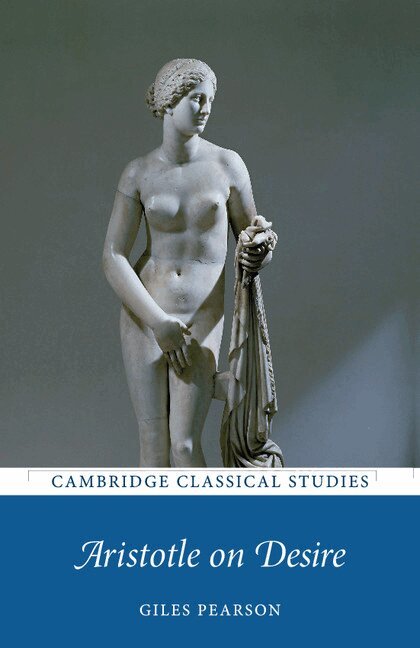
    Aristotle on Desire

    AvGiles Pearson

    Inbunden, Engelska, 2012

    Del i serien Cambridge Classical Studies

    1 335 kr

    Beställningsvara. Skickas inom 10-15 vardagar. Fri frakt över 249 kr.

    Fler format och utgåvor

    Häftad

    463 kr

    Beskrivning

    Desire is a central concept in Aristotle's ethical and psychological works, but he does not provide us with a systematic treatment of the notion itself. This book reconstructs the account of desire latent in his various scattered remarks on the subject and analyses its role in his moral psychology. Topics include: the range of states that Aristotle counts as desires (orexeis); objects of desire (orekta) and the relation between desires and envisaging prospects; desire and the good; Aristotle's three species of desire: epithumia (pleasure-based desire), thumos (retaliatory desire) and boulêsis (good-based desire - in a narrower notion of 'good' than that which connects desire more generally to the good); Aristotle's division of desires into rational and non-rational; Aristotle and some current views on desire; and the role of desire in Aristotle's moral psychology. The book will be of relevance to anyone interested in Aristotle's ethics or psychology.

    Produktinformation

    • Utgivningsdatum:2012-08-30
    • Mått:144 x 222 x 20 mm
    • Vikt:470 g
    • Format:Inbunden
    • Språk:Engelska
    • Serie:Cambridge Classical Studies
    • Antal sidor:288
    • Förlag:Cambridge University Press
    • ISBN:9781107023918

    Utforska kategorier

    • Filosofiska discipliner inom Filosofi och religion

    Mer om författaren

    Giles Pearson is a lecturer in philosophy at Bristol University. He has published a number of articles on Aristotle's ethics and philosophical psychology and is co-editor of Moral Psychology and Human Action in Aristotle (with Michael Pakaluk, 2011).

    Innehållsförteckning

    • Introduction; Part I. Desires and Objects of Desire: 1. The range of states Aristotle counts as desires (orexeis); 2. Some general considerations about objects of desire (orekta) for Aristotle; 3. Desire (orexis) and the good; Part II. Aristotle's Classifications of Desire: 4. Species of desire I: epithumia (pleasure-based desire); 5. Species of desire II: thumos (retaliatory desire); 6. Species of desire III: boulêsis (good-based desire); 7. Rational and non-rational desire; Part III. Further Reflections: 8. Some reflections about Aristotle's broad and narrow notions of desire; 9. Aristotle's moral psychology.