Gina L Barnes - Böcker
Visar alla böcker från författaren Gina L Barnes. Handla med fri frakt och snabb leverans.
5 produkter
5 produkter
1 148 kr
Skickas inom 5-8 vardagar
253 kr
Skickas inom 7-10 vardagar
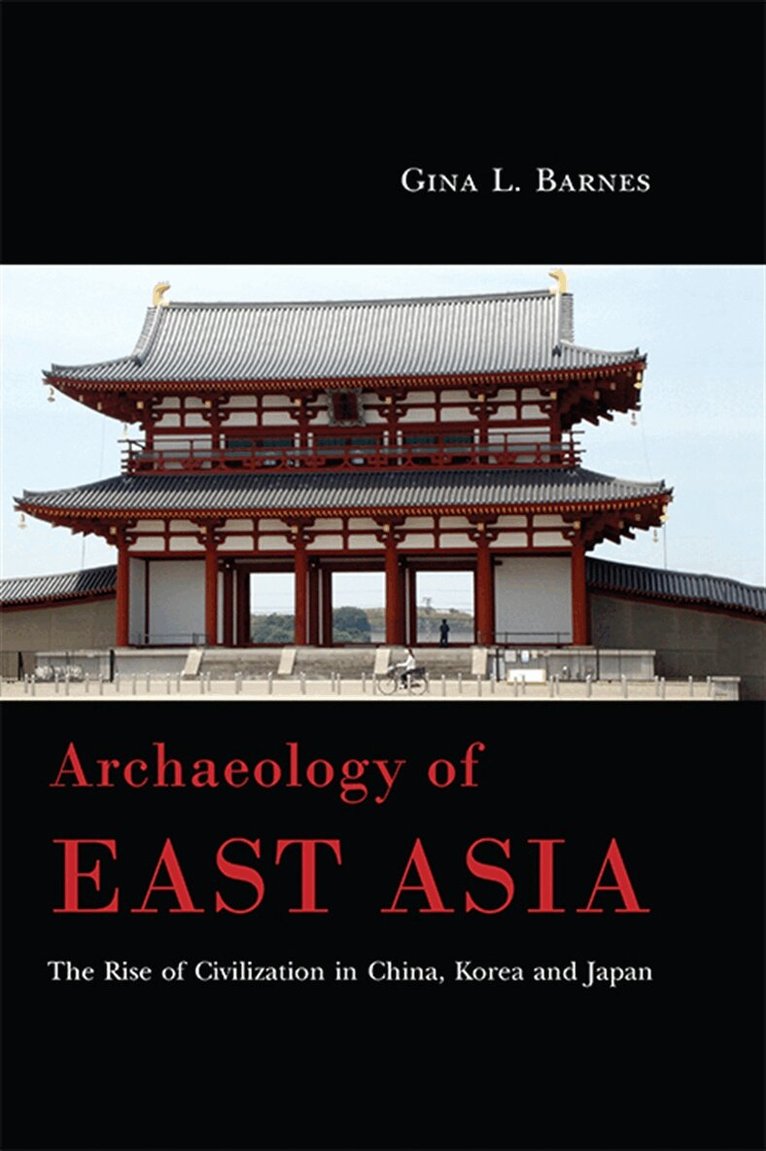
Nara is located in the center of what is known today as the Kinai region of Japan. The ancient name for the region was the Go-Kinai ("five-within the royal domain"), referring to the five provinces of which it was composed: Settsu, Kawachi, Izumi, Yamato and Yamashiro. The name Yamato, presented above variously as a provincial unit (corresponding to the present-day Nara Prefecture), or geographical unit (the Nara Basin only), is also sometimes expanded and applied on a regional scale to mean the Kinai region. This is particularly true in scholarship dealing with the fifth and sixth centuries when Yamato was in ascendance. Therefore, the Nara Basin and its archeology are the keys to unlocking the mysteries of the emergence of Japanese civilization and the early state in Japan. These mysteries are entailed in the earliest recorded history of Japan--references to Japanese island "countries" and "queens" in the Chinese dynastic histories of the third to fifth centuries A.D., and references to "kings" and "emperors" in two late fifth- to early sixth-century sword inscriptions and in the extant chronicles of Japan compiled in the early eighth century.
905 kr
Skickas
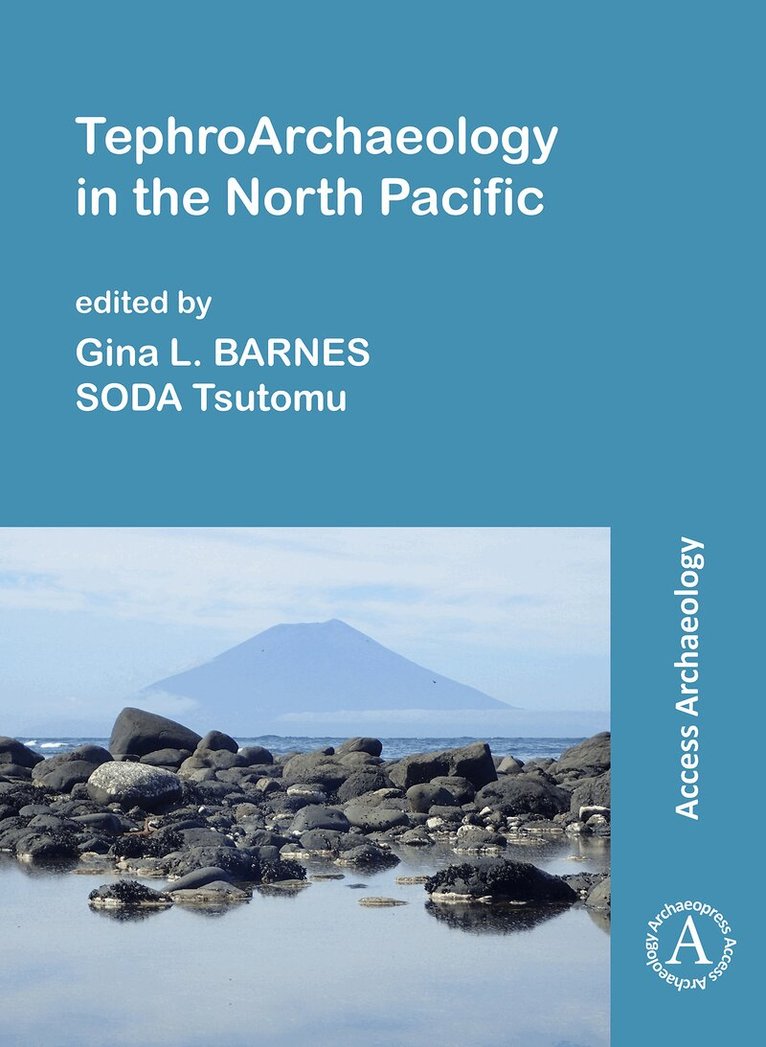
‘TephroArchaeology’ is a translation of the Japanese word kazanbai kōkogaku (lit. volcanic ash archaeology), referring to a sub-discipline of archaeology that has developed in Japan in the last few decades. The first book compilation using the term, edited by the doyen of tephroarchaeology, geologist ARAI Fusao, appeared in 1993; chapters were written by 5 geologists, 3 archaeologists, 3 geographers, an engineer, and a historian. From its beginning, this subdiscipline has been interdisciplinary in approach and applied to all time periods throughout the Japanese Islands. Honouring this tradition, a panel on TephroArchaeology was organized by Barnes & Soda at the World Archaeology Congress 8 meetings in Kyoto (August–September 2016). The scope of concern was broadened to include other parts of the world and further disciplines. Several of the papers presented at WAC8 are included here together with other invited papers that complete the North Pacific focus. Most of the chapters are case-studies written by their excavators in Japan, Canada, and the United States, but a historian and a behavioural psychologist contribute important perspectives and add world-wide content. The volume is rounded out by an extensive Preface, Introduction and Appendices by co-editor Barnes, and a historic contextualization of TephroArchaeology by co-editor Soda. A final appendix consists of a translation of the techniques of tephra identification by MACHIDA Hiroshi & ARAI Fusao, to whom the volume is dedicated. The strengths of this book are many. It was primarily designed to bring into the English-speaking world the work being done by local archaeologists in Japan whose results are usually only accessible in Japanese. In addition to the meticulous excavation methodologies, innovative analytical techniques and interpretive analyses represented herein by all the authors are the variety of problems in human history that can be addressed through tephroarchaeological investigation. This subdiscipline may spawn a more general Volcanic Archaeology or Archaeological Volcanology as adherents grow and as volcanologists themselves take heed of the archaeological record to inform on eruption processes and products.
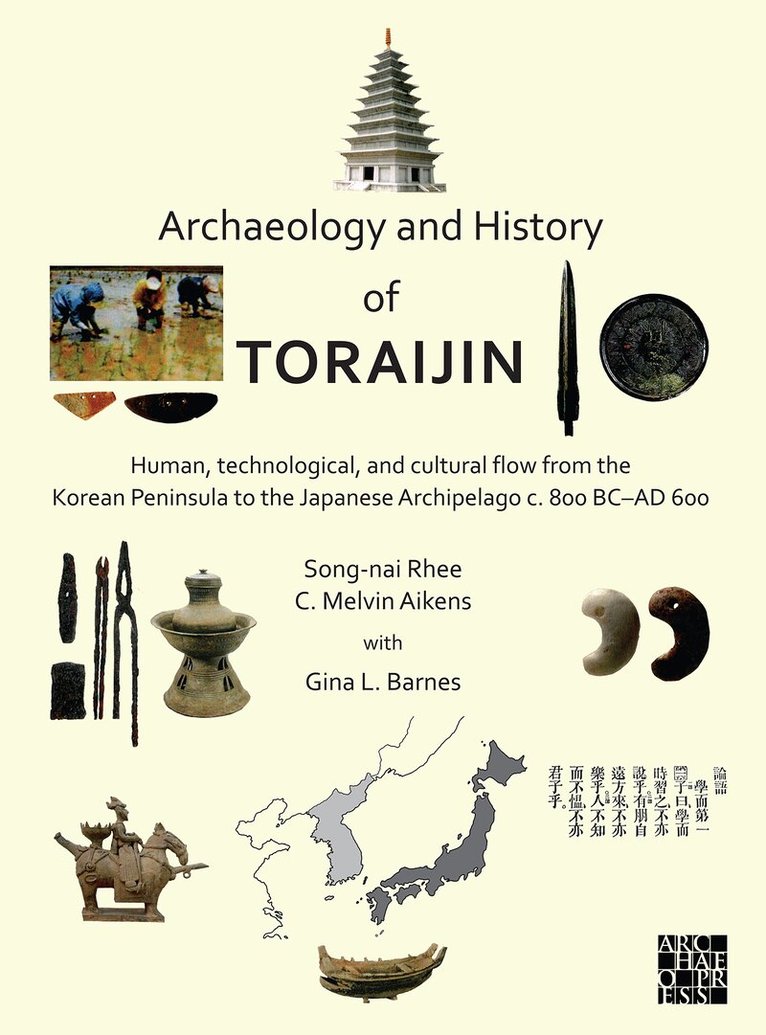
Archaeology and History of Toraijin
Human, Technological, and Cultural Flow from the Korean Peninsula to the Japanese Archipelago c. 800 BC–AD 600
Häftad, Engelska, 2021
576 kr
Skickas
Archaeology and History of Toraijin: Human, technological, and cultural flow from the Korean Peninsula to the Japanese Archipelago c. 800 BC–AD 600 explores the fundamental role in the history of the Japanese archipelago played by Toraijin – immigrants mainly from the Korean Peninsula – during this formative period. The arrival of immigrant rice-agriculturalists from the peninsula in the early first millennium BC was the first of three major waves of technological transfer between the continent and the islands. The second brought bronze and iron-working to the archipelago around the 4th century BC, and the third brought elite crafts and administrative technology as well as Confucianism and Buddhism in the 5th and 6th centuries AD. In light of the recently uncovered archaeological data and ancient historical records, this book presents a panoramic bird’s eye view of the fourteen centuries-long Toraijin story, from c. 800~600 BC to AD 600 or thereabouts by answering the following seven questions: Where did the Toraijin come from? What was their historical and socio-cultural background? Why did they leave their homeland? Where did they settle in the Archipelago? What did they do in the Archipelago? How did the Archipelago people treat the Toraijin? What contributions did the Toraijin make to the ancient Japanese society?
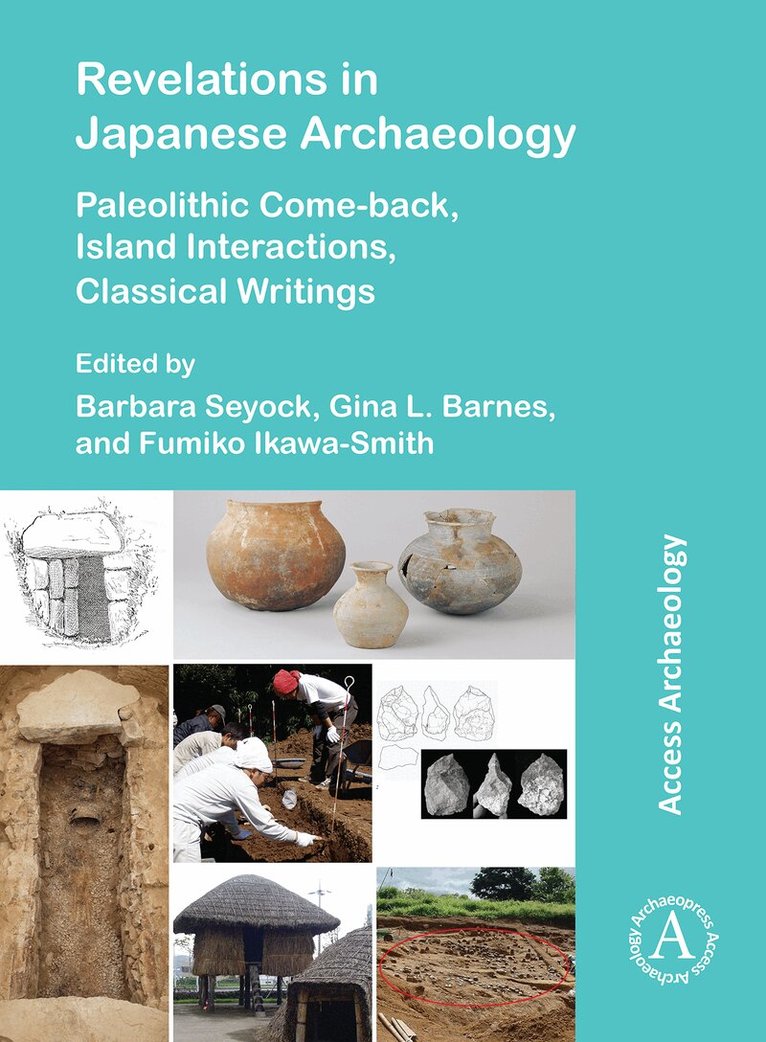
Revelations in Japanese Archaeology
Paleolithic Come-back, Island Interactions, Classical Writings
Häftad, Engelska, 2025
802 kr
Skickas
Revelations in Japanese Archaeology presents a selection of articles from the BSEAA (Bulletin of the Society for East Asian Archaeology). All articles represent important research questions that have retained their relevance to the present day. Many have been updated for inclusion in this volume. Especially important are the chapters on the Japanese Paleolithic, with data presented in Part I to counter the devastating impact of the ‘Paleolithic Hoax’ uncovered in 2000. These are crucial to re-evaluating the peopling of the Japanese Islands in the Pleistocene and the relationships with continental finds. Part II focuses on the protohistoric periods of Yayoi and Kofun in Japan, with an additional perspective on adjacent regions and intercultural relations in the macro-region during the Iron Age. Unlike mainstream treatments, these articles tend to deal with peripheral regions that are important as cultural transmitters between islands and between island and mainland. They provide different perspectives on the development of dominant subsistence practices and centralized societies. Part III returns to the beginnings of Japanese archaeology, with a history as deep as that in Britain, by elucidating the work of Edward S. Morse.The editors are leaders in the field of Japanese Archaeology, covering periods from the Palaeolithic (Ikawa-Smith), Yayoi (Seyock), and Kofun (Barnes). They have been seminal in the development of the Society for East Asian Archaeology (SEAA), which aims at the dissemination of research in East Asian languages to the English-speaking world. The Society was founded by Barnes, who served together with Ikawa-Smith as Presidents, while Seyock initiated the Bulletin of Society for East Asian Archaeology (BSEAA) and served as Editor. Ikawa-Smith and Barnes are both Professor Emeritae after long careers teaching at their respective universities, while Seyock is an Independent Researcher who has worked closely with archaeologists in Japan throughout her career.