Ginette Verstraete – författare
Visar alla böcker från författaren Ginette Verstraete. Handla med fri frakt och snabb leverans.
4 produkter
Tracking Europe
Mobility, Diaspora, and the Politics of Location
Häftad, 2010
344 kr
Lägg i varukorg
Tracking Europe is a bold interdisciplinary critique of claims regarding the free movement of goods, people, services, and capital throughout Europe. Ginette Verstraete interrogates European discourses on unlimited movement for everyone and a utopian unity-in-diversity in light of contemporary …
Tracking Europe
Mobility, Diaspora, and the Politics of Location
E-bok, 2010
537 kr
Lägg i varukorg
Tracking Europe is a bold interdisciplinary critique of claims regarding the free movement of goods, people, services, and capital throughout Europe. Ginette Verstraete interrogates European discourses on unlimited movement for everyone and a utopian unity-in-diversity in light of contemporary …
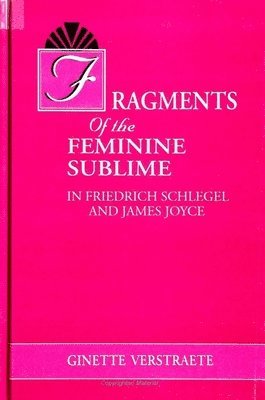
Fragments of the Feminine Sublime in Friedrich Schlegel and James Joyce
Häftad, 1998
462 kr
Tillfälligt slut
Traces the early German Romantic origins of Joyce's modern and postmodern innovation of the novel.This is the first book to extensively study Joyce's work in the context of Germanic Romantic literary theory. It illustrates how Joyce's modern and postmodern innovation of the novel finds its …
Tracking Europe
Mobility, Diaspora, and the Politics of Location
Inbunden, 2010
1270 kr
Tillfälligt slut
Tracking Europe is a bold interdisciplinary critique of claims regarding the free movement of goods, people, services, and capital throughout Europe. Ginette Verstraete interrogates European discourses on unlimited movement for everyone and a utopian unity-in-diversity in light of contemporary …