Glenda Carpio - Böcker
Visar alla böcker från författaren Glenda Carpio. Handla med fri frakt och snabb leverans.
3 produkter
3 produkter
391 kr
Skickas inom 7-10 vardagar
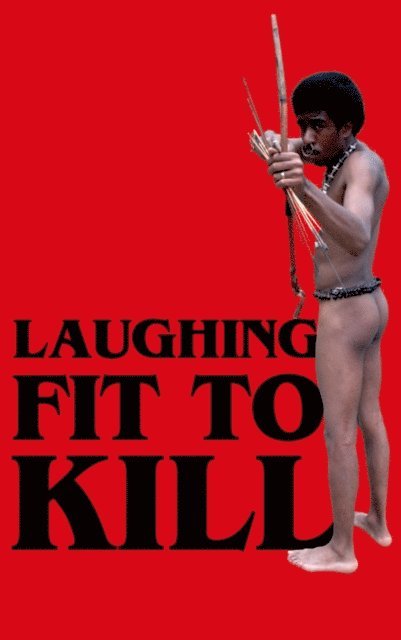
Modern black humor represents a rich history of radical innovation stretching back to the antebellum period. Laughing Fit to Kill reveals how black writers, artists, and comedians have used humor across two centuries as a uniquely powerful response to forced migration and enslavement. Glenda Carpio traces how, through various modes of "conjuring," through gothic, grotesque and absurdist slapstick, through stinging satire, hyperbole, and burlesque, and through the strategic expression of racial stereotype itself, black humorists of all sorts have enacted "rituals of redress." In highlighting the tradition and tropes of black humorists, Carpio illuminates the reach of slavery's long arm into our contemporary popular culture. She convincingly demonstrates the ways that, for instance, Richard Pryor and Dave Chappelle's modes of post-Civil Rights tragicomedy are deeply indebted to that of William Wells Brown and Charles Chesnutt's 19th-century comedic conjuring. Likewise, she reveals how contemporary iconoclasts such as Ishmael Reed and Suzan-Lori Parks owe much to the intricate satiric grammar of black linguistic expression rooted in slavery. Carpio also demonstrates how Robert Colescott's 1970s paintings and Kara Walker's silhouette installations use a visual vocabulary to extend comedy in a visual register. The jokes in this tradition are bawdy, brutal, horrific and insurgent, and they have yet to be fully understood. Laughing Fit to Kill provides a new critical lexicon for understanding the jabbing punch-lines that have followed slavery's long legacy.
1 684 kr
Skickas inom 7-10 vardagar
Modern black humour represents a rich history of radical innovation stretching back to the antebellum period. Laughing Fit to Kill reveals how black writers, artists, and comedians have used humour across two centuries as a uniquely powerful response to forced migration and enslavement. Glenda Carpio traces how, through various modes of "conjuring," through gothic, grotesque and absurdist slapstick, through stinging satire, hyperbole, and burlesque, and through the strategic expression of racial stereotype itself, black humourists of all sorts have enacted "rituals of redress." In highlighting the tradition and tropes of black humourists, Carpio illuminates the reach of slavery's long arm into our contemporary popular culture. She convincingly demonstrates the ways that, for instance, Richard Pryor and Dave Chappelle's modes of post-Civil Rights tragicomedy are deeply indebted to that of William Wells Brown and Charles Chesnutt's 19th-century comedic conjuring. Likewise, she reveals how contemporary iconoclasts such as Ishmael Reed and Suzan-Lori Parks owe much to the intricate satiric grammar of black linguistic expression rooted in slavery. Carpio also demonstrates how Robert Colescott's 1970s paintings and Kara Walker's silhouette installations use a visual vocabulary to extend comedy in a visual register. The jokes in this tradition are bawdy, brutal, horrific and insurgent, and they have yet to be fully understood. Laughing Fit to Kill provides a new critical lexicon for understanding the jabbing punch-lines that have followed slavery's long legacy.
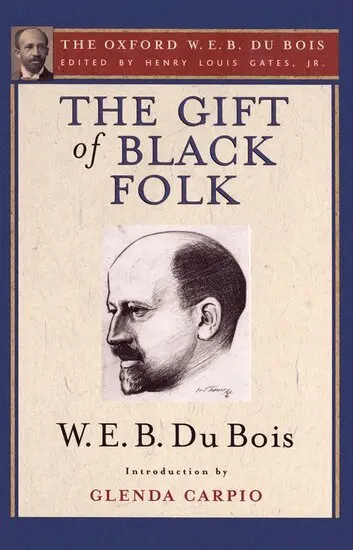
The Gift of Black Folk (The Oxford W. E. B. Du Bois)
The Negroes in the Making of America
Häftad, Engelska, 2014
300 kr
Skickas inom 7-10 vardagar
W. E. B. Du Bois was a public intellectual, sociologist, and activist on behalf of the African American community. He profoundly shaped black political culture in the United States through his founding role in the NAACP, as well as internationally through the Pan-African movement. Du Bois's sociological and historical research on African-American communities and culture broke ground in many areas, including the history of the post-Civil War Reconstruction period. Du Bois was also a prolific author of novels, autobiographical accounts, innumerable editorials and journalistic pieces, and several works of history.Published in 1924 in response to growing racial tensions, W. E. B. Du Bois's The Gift of Black Folk explores the contributions African Americans have made to American society, detailing the importance of racial diversity to the United States. Writing for a general audience, Du Bois employs a sweeping scope for his argument, covering the European discovery of America to the twentieth century. In doing so he works to prove that through African Americans' struggle for freedom and equality, they have most fully realized the goal of democracy. With a series introduction by editor Henry Louis Gates, Jr., and an introduction by Glenda Carpio, this edition is essential for anyone interested in African American history.