Gökçe Günel – författare
Visar alla böcker från författaren Gökçe Günel. Handla med fri frakt och snabb leverans.
7 produkter
7 produkter
1 254 kr
Kommande
Offers an accessible new way to think critically and transparently about how researchers, especially those doing ethnographic work, can balance their personal commitments with long-term research.For ethnographers, spending a year or longer in a faraway place conducting fieldwork is becoming increasingly untenable due to competing life responsibilities and rising workloads, as well as disability, precarity, and geopolitical factors. If ethnographic methods are to remain relevant and viable for a diverse group of people in anthropology and beyond, Gökçe Günel and Chika Watanabe argue, we need to examine how our personal and professional lives intersect and shape one another.In Patchwork Ethnography, Günel and Watanabe take seriously the conditions that render long-term fieldwork difficult for so many. Without being prescriptive, the book offers concrete ways for scholars to unpack the competing commitments in their lives and make those challenges feel more manageable. Blending theoretical analysis with practical exercises, the authors guide readers to rethink the relationship between their personal lives and their scholarship. Ultimately, they point to ways for transforming limitations into catalysts for fresh insights. By highlighting how shifting labor and living conditions profoundly alter knowledge production, Patchwork Ethnography calls for a paradigm shift in ethnographic research.
278 kr
Kommande
Offers an accessible new way to think critically and transparently about how researchers, especially those doing ethnographic work, can balance their personal commitments with long-term research.For ethnographers, spending a year or longer in a faraway place conducting fieldwork is becoming increasingly untenable due to competing life responsibilities and rising workloads, as well as disability, precarity, and geopolitical factors. If ethnographic methods are to remain relevant and viable for a diverse group of people in anthropology and beyond, Gökçe Günel and Chika Watanabe argue, we need to examine how our personal and professional lives intersect and shape one another.In Patchwork Ethnography, Günel and Watanabe take seriously the conditions that render long-term fieldwork difficult for so many. Without being prescriptive, the book offers concrete ways for scholars to unpack the competing commitments in their lives and make those challenges feel more manageable. Blending theoretical analysis with practical exercises, the authors guide readers to rethink the relationship between their personal lives and their scholarship. Ultimately, they point to ways for transforming limitations into catalysts for fresh insights. By highlighting how shifting labor and living conditions profoundly alter knowledge production, Patchwork Ethnography calls for a paradigm shift in ethnographic research.
295 kr
Skickas inom 5-8 vardagar
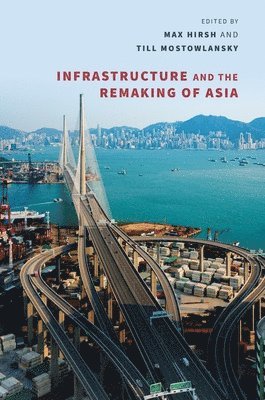
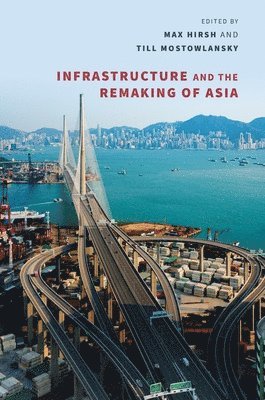
Infrastructure and the Remaking of Asia offers a new understanding of how technological innovation, geopolitical ambitions, and social change converge and cross-fertilize one another through infrastructure projects in Asia. This volume powerfully illustrates the multifaceted connections between infrastructure and three global paradigm shifts: climate change, digitalization, and China’s emergence as a superpower. Drawing on fine-grained analyses of airports, highways, pipelines, and digital communication systems, the book investigates infrastructure both "from above," as perceived by experts and decision makers, and "from below," as experienced by middlemen, laborers, and everyday users. In so doing, it provides groundbreaking insights into infrastructure’s planning, production, and operation.Focusing on cities and regions across Asia, the volume combines ten tightly interwoven case studies, from the Bosphorus to Beijing and from the Indonesian archipelago to the Arctic. Written by leading global infrastructure experts in the fields of anthropology, architecture, geography, history, science and technology studies, and urban planning, the book establishes a dialogue between scholarly approaches to infrastructure and the more operational perspective of the professionals who design and build it. This multidisciplinary method sheds light on the practitioners’ mindset, while also attending to the materiality and agency of the infrastructures that they create. Infrastructure and the Remaking of Asia is conceived as an act of translation: linking up related—yet thus far disconnected—research across a variety of academic disciplines, while making those insights accessible to a wider audience of students, infrastructure professionals, and the general public.
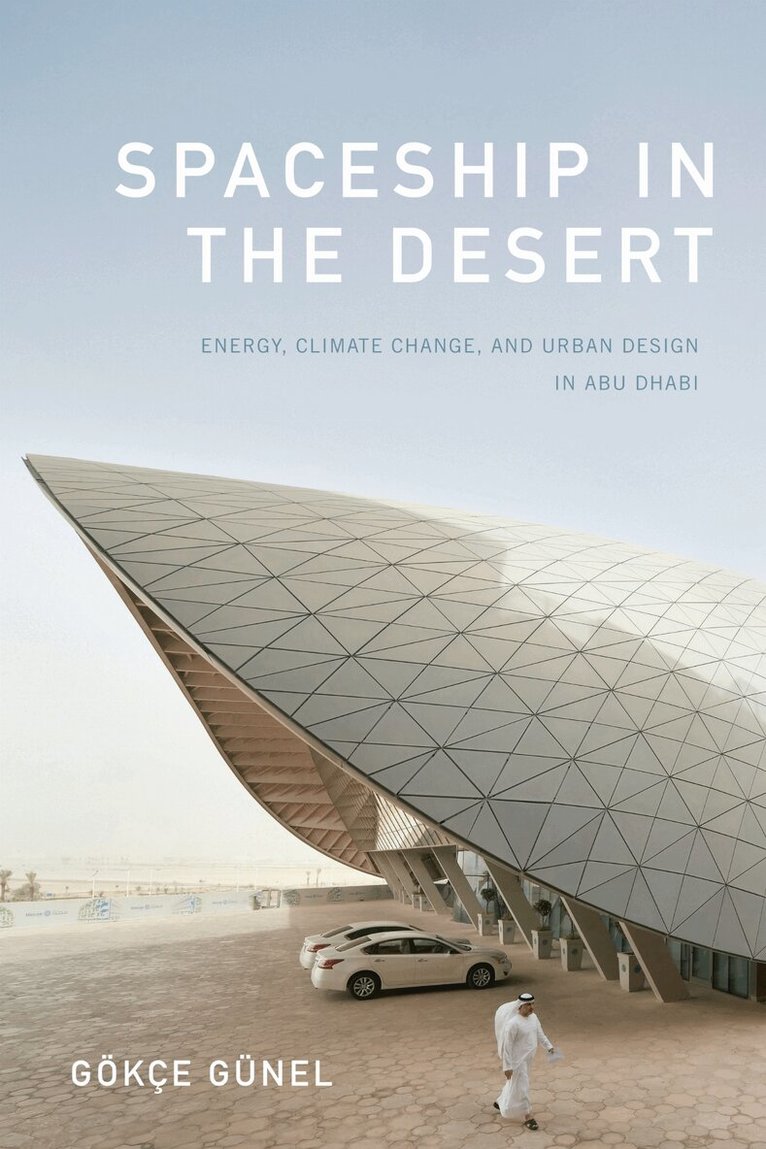
Spaceship in the Desert
Energy, Climate Change, and Urban Design in Abu Dhabi
Inbunden, Engelska, 2019
1 130 kr
Skickas inom 5-8 vardagar
In 2006 Abu Dhabi launched an ambitious project to construct the world’s first zero-carbon city: Masdar City. In Spaceship in the Desert GÖkÇe GÜnel examines the development and construction of Masdar City's renewable energy and clean technology infrastructures, providing an illuminating portrait of an international group of engineers, designers, and students who attempted to build a post-oil future in Abu Dhabi. While many of Masdar's initiatives-such as developing a new energy currency and a driverless rapid transit network-have stalled or not met expectations, GÜnel analyzes how these initiatives contributed to rendering the future a thinly disguised version of the fossil-fueled present. Spaceship in the Desert tells the story of Masdar, at once a “utopia” sponsored by the Emirati government, and a well-resourced company involving different actors who participated in the project, each with their own agendas and desires.
295 kr
Skickas inom 5-8 vardagar
In 2006 Abu Dhabi launched an ambitious project to construct the world’s first zero-carbon city: Masdar City. In Spaceship in the Desert GÖkÇe GÜnel examines the development and construction of Masdar City's renewable energy and clean technology infrastructures, providing an illuminating portrait of an international group of engineers, designers, and students who attempted to build a post-oil future in Abu Dhabi. While many of Masdar's initiatives-such as developing a new energy currency and a driverless rapid transit network-have stalled or not met expectations, GÜnel analyzes how these initiatives contributed to rendering the future a thinly disguised version of the fossil-fueled present. Spaceship in the Desert tells the story of Masdar, at once a “utopia” sponsored by the Emirati government, and a well-resourced company involving different actors who participated in the project, each with their own agendas and desires.
1 283 kr
Skickas inom 5-8 vardagar
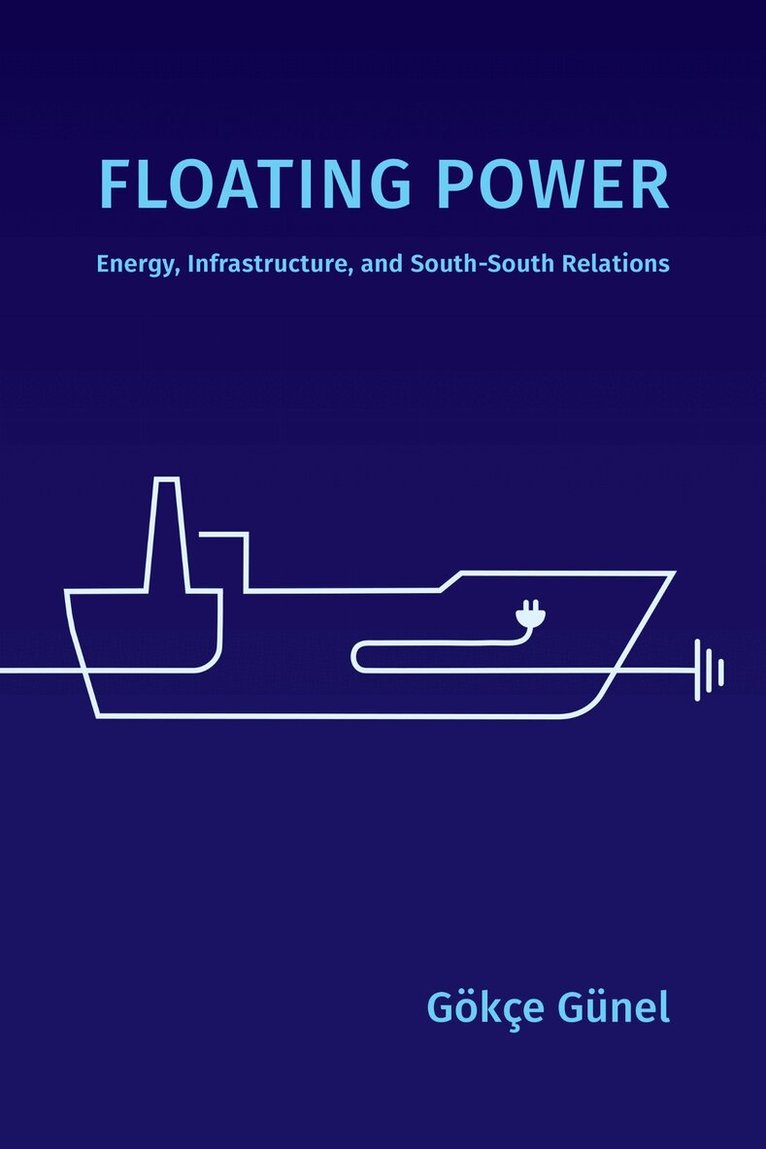
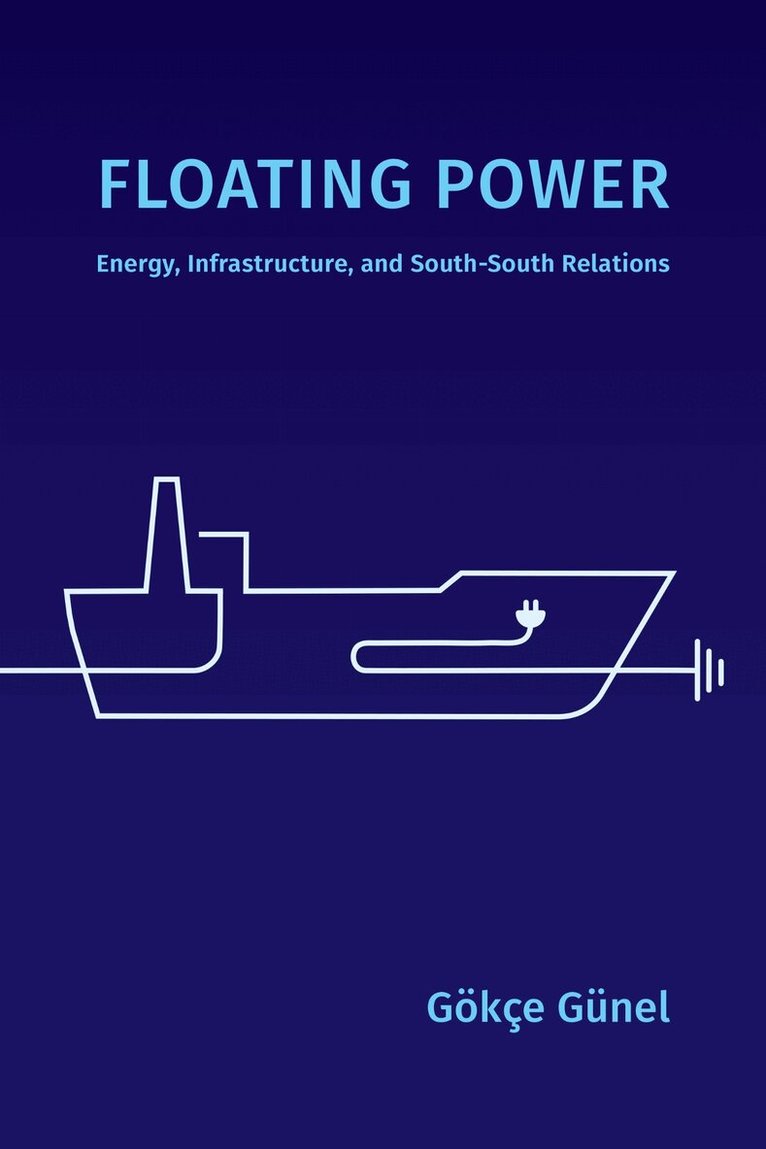
Floating Power considers the role of energy production on an international scale, challenging the idea that new infrastructures wholly replace older sources of energy. Shifting the discussion from energy transition to energy accumulation, Gökçe Günel engages with a range of electricity producers including hydroelectric, heavy fuel oil, natural gas, and solar power plants, noting their intersections as societies work to expand their supply at large rather than focus on one type of source. Günel uses the Ayşegül Sultan, a Turkish-built floating power plant in Ghana, as a prime example and vehicle to explore how state and corporate intervention impact energy technologies as every nation strives toward infrastructural expansion. Floating Power challenges the linear thinking and substitutive logic of mainstream energy discourse, instead showing how various power sources often expand and grow symbiotically.
295 kr
Skickas
Floating Power considers the role of energy production on an international scale, challenging the idea that new infrastructures wholly replace older sources of energy. Shifting the discussion from energy transition to energy accumulation, Gökçe Günel engages with a range of electricity producers including hydroelectric, heavy fuel oil, natural gas, and solar power plants, noting their intersections as societies work to expand their supply at large rather than focus on one type of source. Günel uses the Ayşegül Sultan, a Turkish-built floating power plant in Ghana, as a prime example and vehicle to explore how state and corporate intervention impact energy technologies as every nation strives toward infrastructural expansion. Floating Power challenges the linear thinking and substitutive logic of mainstream energy discourse, instead showing how various power sources often expand and grow symbiotically.