Graham Butler - Böcker
Visar alla böcker från författaren Graham Butler. Handla med fri frakt och snabb leverans.
10 produkter
10 produkter
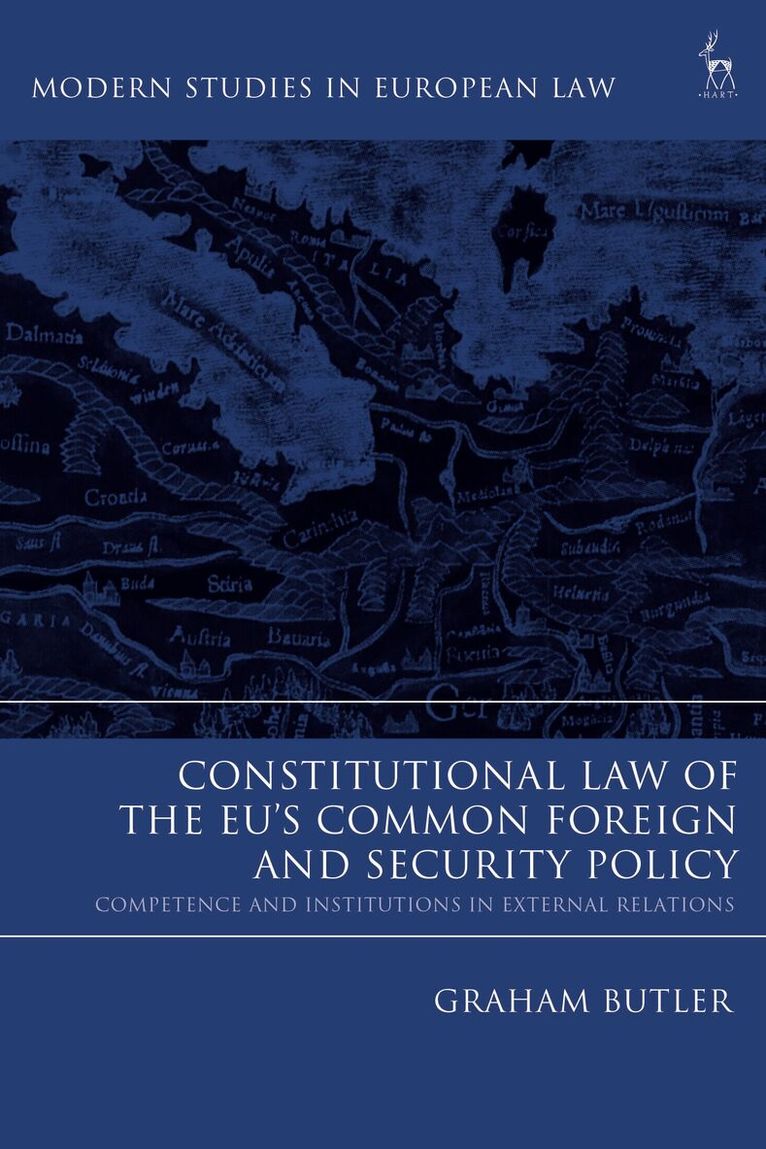
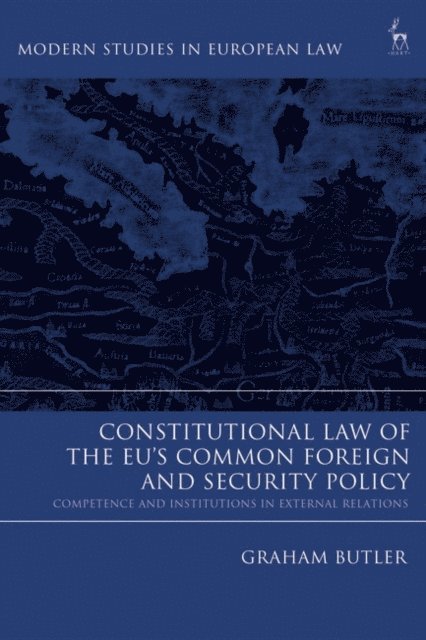
Constitutional Law of the EU’s Common Foreign and Security Policy
Competence and Institutions in External Relations
Inbunden, Engelska, 2019
1 235 kr
Skickas inom 10-15 vardagar
The Common Foreign and Security Policy (CFSP) of the European Union is a highly exceptional component of the EU legal order. This constitutionalised foreign policy regime, with legal, diplomatic, and political DNA woven throughout its fabric, is a distinct sub-system of law on the outermost sphere of European supranationalism. When contrasted against other Union policies, it is immediately clear that EU foreign policy has a special decision-making mechanism, making it highly exceptional. In the now depillarised framework of the EU treaties, issues of institutional division arise from the legacy of the former pillar system. This is due to the reality that of prime concern in EU external relations is the question of ‘who decides?’ By engaging a number of legal themes that cut across foreign affairs exceptionalism, executive prerogatives, parliamentary accountability, judicial review, and the constitutionalisation of European integration, the book lays bare how EU foreign affairs have become highly legalised, leading to ever-greater coherence in how Europe exerts itself on the global stage.In this first monograph dedicated exclusively to the law of the EU’s Common Foreign and Security Policy in modern times, the author argues that the legal framework for EU foreign affairs must adapt in a changing world so as to ensure the EU treaties can cater for a more assertive Europe in the wider world.Cited in Opinion of Advocate General Evgeni Tanchev, Case C-730/18 P, SC v Eulex Kosovo, ECLI:EU:C:2020:176, Court of Justice of the European Union (First Chamber), 5 March 2020; Opinion of Advocate General Gerard Hogan, Case C-134/19 P, Bank Refah Kargaran v Council of the European Union, ECLI:EU:C:2020:396, Court of Justice of the European Union (Grand Chamber), 28 May 2020; Opinion of Advocate General Evgeni Tanchev, Case C-283/20, CO, ME, GC and 42 Others v MJ (Head of Mission), European Commission, European External Action Service (EEAS), Council of the European Union, Eulex Kosovo, ECLI:EU:C:2021:781, Court of Justice of the European Union (Fifth Chamber), 30 September 2021; and, Opinion of Advocate General Tamara Capeta in Joined Cases C-29/22 P and C-44/22 P, KS, KD v Council of the European Union, European Commission, and European External Action Service (EEAS), and European Commission v KS, KD, Council of the European Union, and European External Action Service (EEAS), ECLI:EU:C:2023:901, Court of Justice of the European Union (Grand Chamber), 23 November 2023.
3 513 kr
Skickas inom 10-15 vardagar
Marking the 50th anniversary of the influential ERTA doctrine, this book analyses and contextualises the entire breadth of the jurisprudence of EU external relations law through a systematic, case-by-case account of the field. The entire framework of EU external relations law has been built from the ground up by the jurisprudence of the Court of Justice of the European Union. At the beginning of the field’s emergence, the legal questions to be answered concerned the division of powers and competence between, firstly, the Member States and that of the Union; and secondly, the division of powers and competence between the different institutions of the Union. Questions on such matters continue to be asked, but more contemporarily, new legal questions have arisen that have been in need of adjudication, including questions concerning the autonomy of Union law; the relationship between the Union and other international organisations; the relationship between Union law and international law; the scope and breadth of international agreements; amongst others. The book features established academic scholars, judges, agents of institutions and Member States, and legal practitioners in the field of EU external relations law, analysing over 90 cases in which the Court has legally shaped the theory and practice of the external dimension of legal Europe.Cited in Opinion of Advocate General Nicholas Emiliou in Case C-516/22, European Commission v United Kingdom of Great Britain and Northern Ireland, ECLI:EU:C:2023:857 (Judgment of the UK Supreme Court), Court of Justice of the European Union, 9 November 2023; and, Opinion of Advocate General Nicholas Emiliou in Case C 728/23 P, Kingdom of Spain v Robert Stockdale, Council of the European Union, European Commission, European External Action Service (EEAS), European Union Special Representative in Bosnia and Herzegovina, ECLI:EU:C:2025:710, Court of Justice of the European Union, 18 September 2025.
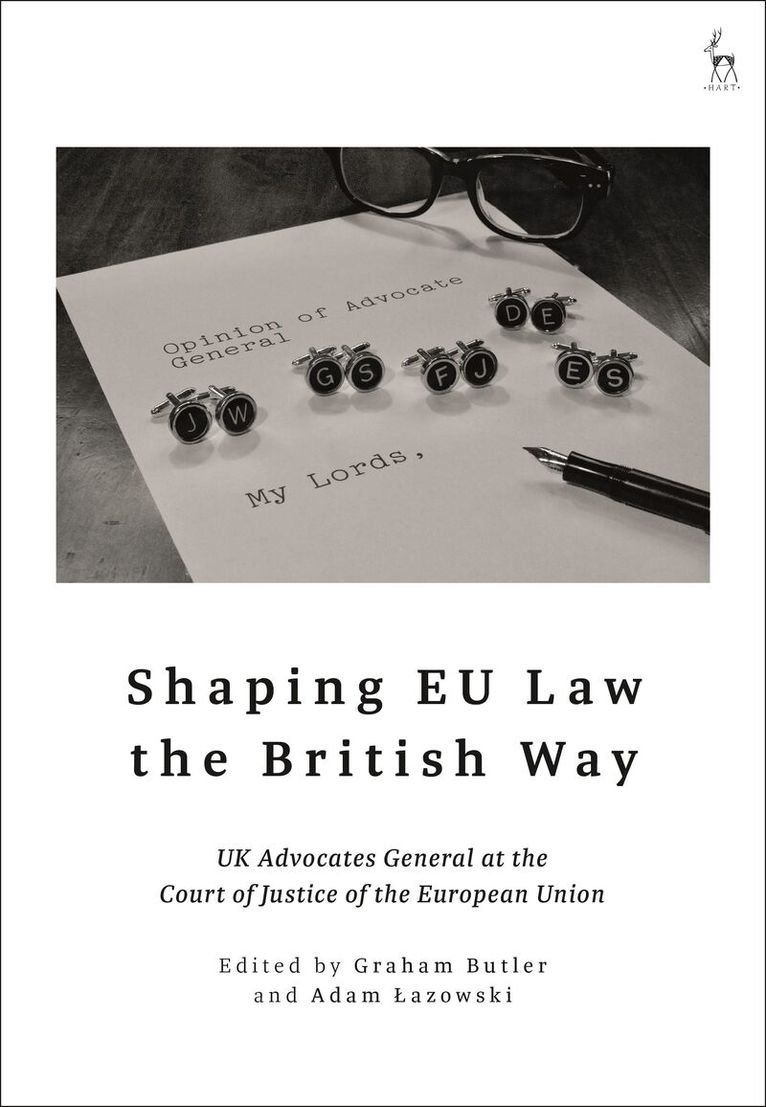
Shaping EU Law the British Way
UK Advocates General at the Court of Justice of the European Union
Inbunden, Engelska, 2022
2 047 kr
Skickas inom 10-15 vardagar
In this book, leading scholars of EU law, judges, and practitioners unpack the judicial reasoning offered by the UK Advocates General in over forty cases at the Court of Justice, which have influenced the shape of EU law. The authors place the Opinions in the wider context of the EU legal order, and mix praise with critique in order to determine the true contribution of the UK Advocates General, before hearing the concluding reflections by the UK Advocates General themselves. The role of Advocates General at the Court of Justice of the European Union remains notoriously under-researched. With a few notable exceptions, not much ink has been spilled on analysing their contribution to the judicial discourse that emerges from the Court’s Palais in Luxembourg. More generally, their impact on the shaping of EU law is only sporadically explored. This book fills the lacunae by offering an in-depth analysis of the way in which the UK Advocates General contributed to development of EU law during 47 years of the UK’s membership of the EU.During their terms of office, Advocates General Jean-Pierre Warner (1973-1981), Gordon Slynn (1981-1988), Francis Jacobs (1988-2006), and Eleanor Sharpston (2006-2020) delivered over 1400 Opinions. This staggering contribution of the four individuals and their cabinets of legal secretaries was supplemented by an Opinion of a then Judge of the Court of First Instance, David Edward, who was called to act as an Advocate General in two joined cases in what is now the General Court. With the last UK Advocate General departing from the Court of Justice in September 2020, an important era has ended. With this watershed moment, it is apt to take a look back and critically analyse the contribution to development of EU law made by the UK Advocates General, and to elucidate the lasting impact they have had on the nature of EU law.
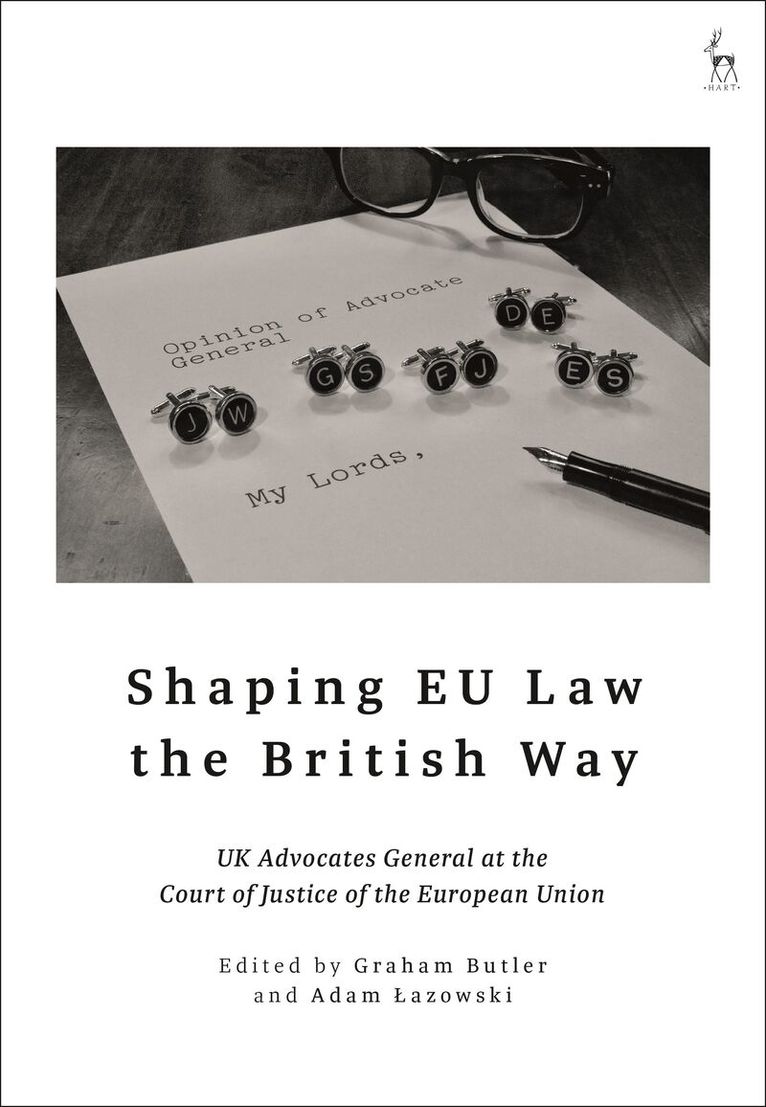
Shaping EU Law the British Way
UK Advocates General at the Court of Justice of the European Union
Häftad, Engelska, 2024
990 kr
Skickas inom 10-15 vardagar
In this book, leading scholars of EU law, judges, and practitioners unpack the judicial reasoning offered by the UK Advocates General in over forty cases at the Court of Justice, which have influenced the shape of EU law. The authors place the Opinions in the wider context of the EU legal order, and mix praise with critique in order to determine the true contribution of the UK Advocates General, before hearing the concluding reflections by the UK Advocates General themselves. The role of Advocates General at the Court of Justice of the European Union remains notoriously under-researched. With a few notable exceptions, not much ink has been spilled on analysing their contribution to the judicial discourse that emerges from the Court’s Palais in Luxembourg. More generally, their impact on the shaping of EU law is only sporadically explored. This book fills the lacunae by offering an in-depth analysis of the way in which the UK Advocates General contributed to development of EU law during 47 years of the UK’s membership of the EU.During their terms of office, Advocates General Jean-Pierre Warner (1973-1981), Gordon Slynn (1981-1988), Francis Jacobs (1988-2006), and Eleanor Sharpston (2006-2020) delivered over 1400 Opinions. This staggering contribution of the four individuals and their cabinets of legal secretaries was supplemented by an Opinion of a then Judge of the Court of First Instance, David Edward, who was called to act as an Advocate General in two joined cases in what is now the General Court. With the last UK Advocate General departing from the Court of Justice in September 2020, an important era has ended. With this watershed moment, it is apt to take a look back and critically analyse the contribution to development of EU law made by the UK Advocates General, and to elucidate the lasting impact they have had on the nature of EU law.
Constitutional Law of the EU’s Common Foreign and Security Policy
Competence and Institutions in External Relations
Häftad, Engelska, 2021
559 kr
Skickas inom 10-15 vardagar
The Common Foreign and Security Policy (CFSP) of the European Union is a highly exceptional component of the EU legal order. This constitutionalised foreign policy regime, with legal, diplomatic, and political DNA woven throughout its fabric, is a distinct sub-system of law on the outermost sphere of European supranationalism. When contrasted against other Union policies, it is immediately clear that EU foreign policy has a special decision-making mechanism, making it highly exceptional. In the now depillarised framework of the EU treaties, issues of institutional division arise from the legacy of the former pillar system. This is due to the reality that of prime concern in EU external relations is the question of ‘who decides?’ By engaging a number of legal themes that cut across foreign affairs exceptionalism, executive prerogatives, parliamentary accountability, judicial review, and the constitutionalisation of European integration, the book lays bare how EU foreign affairs have become highly legalised, leading to ever-greater coherence in how Europe exerts itself on the global stage.In this first monograph dedicated exclusively to the law of the EU’s Common Foreign and Security Policy in modern times, the author argues that the legal framework for EU foreign affairs must adapt in a changing world so as to ensure the EU treaties can cater for a more assertive Europe in the wider world.Cited in Opinion of Advocate General Evgeni Tanchev, Case C-730/18 P, SC v Eulex Kosovo, ECLI:EU:C:2020:176, Court of Justice of the European Union (First Chamber), 5 March 2020; Opinion of Advocate General Gerard Hogan, Case C-134/19 P, Bank Refah Kargaran v Council of the European Union, ECLI:EU:C:2020:396, Court of Justice of the European Union (Grand Chamber), 28 May 2020; Opinion of Advocate General Evgeni Tanchev, Case C-283/20, CO, ME, GC and 42 Others v MJ (Head of Mission), European Commission, European External Action Service (EEAS), Council of the European Union, Eulex Kosovo, ECLI:EU:C:2021:781, Court of Justice of the European Union (Fifth Chamber), 30 September 2021; and, Opinion of Advocate General Tamara Capeta in Joined Cases C-29/22 P and C-44/22 P, KS, KD v Council of the European Union, European Commission, and European External Action Service (EEAS), and European Commission v KS, KD, Council of the European Union, and European External Action Service (EEAS), ECLI:EU:C:2023:901, Court of Justice of the European Union (Grand Chamber), 23 November 2023.
1 567 kr
Skickas inom 10-15 vardagar
Marking the 50th anniversary of the influential ERTA doctrine, this book analyses and contextualises the entire breadth of the jurisprudence of EU external relations law through a systematic, case-by-case account of the field. The entire framework of EU external relations law has been built from the ground up by the jurisprudence of the Court of Justice of the European Union. At the beginning of the field’s emergence, the legal questions to be answered concerned the division of powers and competence between, firstly, the Member States and that of the Union; and secondly, the division of powers and competence between the different institutions of the Union. Questions on such matters continue to be asked, but more contemporarily, new legal questions have arisen that have been in need of adjudication, including questions concerning the autonomy of Union law; the relationship between the Union and other international organisations; the relationship between Union law and international law; the scope and breadth of international agreements; amongst others. The book features established academic scholars, judges, agents of institutions and Member States, and legal practitioners in the field of EU external relations law, analysing over 90 cases in which the Court has legally shaped the theory and practice of the external dimension of legal Europe.Cited in Opinion of Advocate General Nicholas Emiliou in Case C-516/22, European Commission v United Kingdom of Great Britain and Northern Ireland, ECLI:EU:C:2023:857 (Judgment of the UK Supreme Court), Court of Justice of the European Union, 9 November 2023; and, Opinion of Advocate General Nicholas Emiliou in Case C 728/23 P, Kingdom of Spain v Robert Stockdale, Council of the European Union, European Commission, European External Action Service (EEAS), European Union Special Representative in Bosnia and Herzegovina, ECLI:EU:C:2025:710, Court of Justice of the European Union, 18 September 2025.
1 617 kr
Kommande
Nordic Cooperation and the European Union: 50 Years of Legal Integration explores the transformation of Nordic cooperation over the past half-century, shaped by the dynamics of European integration. Initially rooted in informal, intergovernmental dialogue among Denmark, Finland, Iceland, Norway, and Sweden, Nordic cooperation now finds itself amidst deeper developments taking place in EU law and EEA law. After the Second World War, Europe embraced binding legal commitments vis-à-vis individuals and each other, beginning with human rights under the European Convention on Human Rights (ECHR), and later economic integration through the European Coal and Steel Community (ECSC) and then the European Economic Communities (EEC), which is today, the EU, and by extension, the European Economic Area (EEA). For the Nordic states, such developments have created dual loyalties: to each other, in the form of cooperation; but also, to wider Europe, in the form of integration. Given the differentiated form of legal integration with Europe in the Nordic states, and how the EU has transformed well beyond a mere form of economic integration, Nordic cooperation has taken on new meaning. Nordic Cooperation and the European Union: 50 Years of Legal Integration brings together academics, scholars, and judges to understand, elucidate, and explain the interplay of legal regimes, including the complex processes of legal systems and legal cultures adapting to each other over a time span of fifty years. It brings forth a new way of thinking about Nordic cooperation amidst wider European legal integration, adopting a comprehensive, comparative approach. It examines both the upward influence of the Nordic states on EU and EEA law, and the downward impact of EU and EEA law on the national legal orders of the Nordic states. Spanning five decades of developments, it offers a panoramic view of legal developments and anticipates the future role of Nordic cooperation when classical forms of such international cooperation are operating in parallel with EU and EEA law.
1 113 kr
Skickas inom 10-15 vardagar
This open access book examines how Europe’s traditionally open investment landscape has, over the past decade, shifted towards a more protectionist stance in response to evolving geopolitical factors.Featuring contributions from leading scholars, civil servants, and practitioners, it offers a comprehensive analysis through four key themes: investment frameworks, arbitration, sustainability, and future developments. With its expert insights and broad scope, this collection is an invaluable resource for investment lawyers both within and beyond the European Union.The eBook editions of this book are available open access under a CC BY-NC-ND 4.0 licence on bloomsburycollections.com. Open access was funded by the Swedish Studies Network.
853 kr
Kommande
3 367 kr
Skickas inom 7-10 vardagar
This Research Handbook focuses on the internal market aspects of the European Free Trade Association (EFTA) pillar of the European Economic Area (EEA). Leading academics, judges, and practitioners examine the EEA internal market in a structured and systematic manner. Throughout, they provide an in-depth analysis of the free movement and horizontal aspects of the EFTA pillar of the EEA.Contributing authors in this Research Handbook firstly address the free movement of goods, persons (including workers and social security), services, establishment, capital and payments within the EFTA pillar. Secondly, they dissect the flanking policies that apply, including competition, state aid, banking, insurance, transport, intellectual property, consumer protection, and the environment. Third, the Research Handbook contains a number of critical reflections. Overall, it is a comprehensive examination based on EEA primary law, EEA secondary law, EFTA Surveillance Authority practice, and the EFTA Court’s case-law.The Research Handbook on EEA Internal Market Law, providing authoritative and informative coverage, is essential reading for academics, judges, and students in all areas of European law across both the EU and EFTA pillars of the EEA. It is also a valuable resource for national and international civil servants, law firms, national courts, domestic policymakers, and private practitioners.