Gregory A. Waller - Böcker
Visar alla böcker från författaren Gregory A. Waller. Handla med fri frakt och snabb leverans.
6 produkter
6 produkter
2 504 kr
Skickas inom 3-6 vardagar
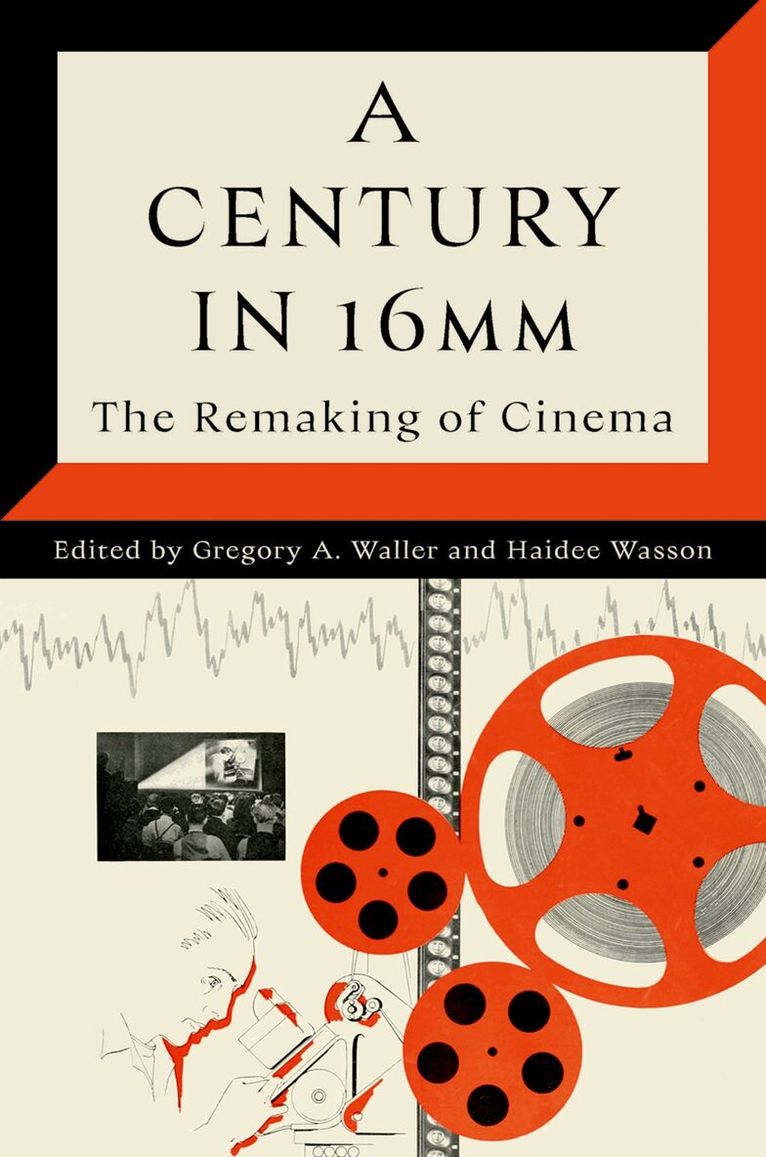
When the small cameras and portable projectors that used 16mm film stock emerged in 1923, they allowed--for the first time in history--the possibility that anyone could make, show, and watch movies. A foundational but largely forgotten film format that offered a suite of technologies, 16mm was a democratic alternative to the larger and more expensive 35mm technology used by the commercial film industries around the world. With the remarkable ubiquity and utility of 16mm, moving images came to be integral to the way we play, learn, fight, work, and document the world, seeding the path to our current world of portable technologies and personal media.To mark 16mm's first 100 years, the essays in this book consolidate and catalyse considerations of the uniquely important--but still surprisingly underestimated and understudied--role that 16mm has played in film and media theory, history, and practice. It has long been known that artists and activists relied on 16mm cameras and projectors as tools of experimentation, organization, upheaval, and advocacy. Chapters here revisit these assumptions but also survey its many varied and additional uses: delivering public service messages, promoting corporate public relations, boosting church attendance, preaching good hygiene, instilling efficiency, popularizing political candidates, spreading propaganda, exploring sexuality, and encouraging community dialogue. In short, tis innovative film format facilitated new forms of hobby, play, work, learning and creativity. From the local to the transnational, small gauge filmmaking and showing also became integral to colonialist, imperialist, nationalist, and multi-nationalist institutions and efforts. In effect, for 100 years now, this uniquely important film format upended and shaped creative, political, governmental, juridical, sexual, educational, recreational, informational, televisual, industrial, promotional, and experimental practices and activities. It was integral to the expansion and evolution of the audio-visual languages that are a common-sense element of our mediated world. Its histories serve as a crucial and telling bridge from past media practices to our present wherein mobile, adaptable, and flexible moving image and sounds continue to thrive.
749 kr
Skickas inom 3-6 vardagar
When the small cameras and portable projectors that used 16mm film stock emerged in 1923, they allowed--for the first time in history--the possibility that anyone could make, show, and watch movies. A foundational but largely forgotten film format that offered a suite of technologies, 16mm was a democratic alternative to the larger and more expensive 35mm technology used by the commercial film industries around the world. With the remarkable ubiquity and utility of 16mm, moving images came to be integral to the way we play, learn, fight, work, and document the world, seeding the path to our current world of portable technologies and personal media.To mark 16mm's first 100 years, the essays in this book consolidate and catalyse considerations of the uniquely important--but still surprisingly underestimated and understudied--role that 16mm has played in film and media theory, history, and practice. It has long been known that artists and activists relied on 16mm cameras and projectors as tools of experimentation, organization, upheaval, and advocacy. Chapters here revisit these assumptions but also survey its many varied and additional uses: delivering public service messages, promoting corporate public relations, boosting church attendance, preaching good hygiene, instilling efficiency, popularizing political candidates, spreading propaganda, exploring sexuality, and encouraging community dialogue. In short, tis innovative film format facilitated new forms of hobby, play, work, learning and creativity. From the local to the transnational, small gauge filmmaking and showing also became integral to colonialist, imperialist, nationalist, and multi-nationalist institutions and efforts. In effect, for 100 years now, this uniquely important film format upended and shaped creative, political, governmental, juridical, sexual, educational, recreational, informational, televisual, industrial, promotional, and experimental practices and activities. It was integral to the expansion and evolution of the audio-visual languages that are a common-sense element of our mediated world. Its histories serve as a crucial and telling bridge from past media practices to our present wherein mobile, adaptable, and flexible moving image and sounds continue to thrive.
301 kr
Skickas inom 7-10 vardagar
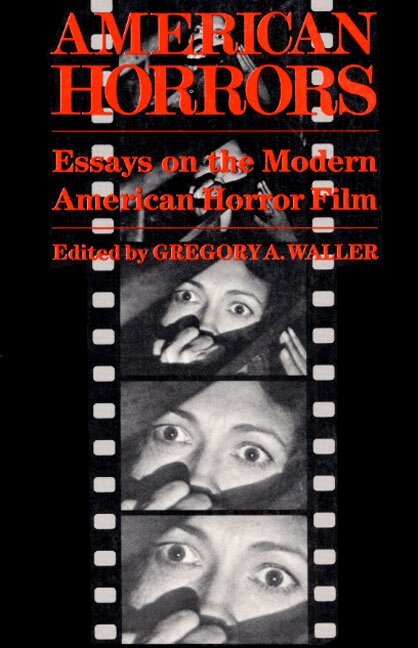
Since the release of Rosemary's Baby in 1968, the American horror film has become one of the most diverse, commercially successful, widely discussed, and culturally significant film genres. Drawing on a wide range of critical methods---from close textual readings and structuralist genre criticism to psychoanalytical, feminist, and ideological analyses---the authors examine individual films, directors, and subgenres.In this collection of twelve essays, Gregory Waller balances detailed studies of both popular films (Night of the Living Dead, The Exorcist, and Halloween) and particularly problematic films (Don't Look Now and Eyes of Laura Mars) with discussions of such central thematic preoccupations as the genre's representation of violence and female victims, its reflexivity and playfulness, and its ongoing redefinition of the monstrous and the normal.In addition, American Horrors includes a filmography of movies and telefilms and an annotated bibliography of books and articles about horror since 1968.
326 kr
Skickas inom 7-10 vardagar
With a legacy stretching back into legend and folklore, the vampire in all its guises haunts the film and fiction of the twentieth century and remains the most enduring of all the monstrous threats that roam the landscapes of horror. In The Living and the Undead, Gregory A. Waller shows why this creature continues to fascinate us and why every generation reshapes the story of the violent confrontation between the living and the undead to fit new times. Examining a broad range of novels, stories, plays, films, and made-for-television movies, Waller focuses upon a series of interrelated texts: Bram Stoker's Dracula (1897); several film adaptations of Stoker's novel; F. W. Murnau's Nosferatu, A Symphony of Horror (1922); Richard Matheson's I Am Legend (1954); Stephen King's 'Salem's Lot (1975); Werner Herzog's Nosferatu the Vampyre (1979); and George Romero's Night of the Living Dead (1968) and Dawn of the Dead (1979). All of these works, Waller argues, speak to our understanding and fear of evil and chaos, of desire and egotism, of slavish dependence and masterful control. This paperback edition of The Living and the Undead features a new preface in which Waller positions his analysis in relation to the explosion of vampire and zombie films, fiction, and criticism in the past twenty-five years.
290 kr
Skickas inom 7-10 vardagar
A free ebook version of this title is available through Luminos, University of California Press's Open Access publishing program. Visit www.luminosoa.org to learn more.Beyond the Movie Theater excavates the history of non-theatrical cinema before 1920, exploring where and how moving pictures of the 1910s were used in ways distinct from and often alternative to typical theatrical cinema. Unlike commercial cinema, non-theatrical cinema was multi-purpose in its uses and multi-sited in where it could be shown, targeted at particular audiences and, in some manner, sponsored. Relying on contemporary print sources and ephemera of the era to articulate how non-theatrical cinema was practiced and understood in the US during the 1910s, historian Gregory A. Waller charts a heterogeneous, fragmentary, and rich field that cannot be explained in terms of a master narrative concerning origin or institutionalization, progress or decline. Uncovering how and where films were put to use beyond the movie theater, this book complicates and expands our understanding of the history of American cinema, underscoring the myriad roles and everyday presence of moving pictures during the early twentieth century.
578 kr
Skickas inom 7-10 vardagar
Pairing significant research with primary documents, Moviegoing in America charts the evolution of film exhibition and reception as a function of changing patterns of American community, identity, consumption, and the fabric of everyday life."Moviegoing in America is an important, groundbreaking book." -- The Moving Image "Waller assembles an impressive collection that should become a key resource in the teaching of film exhibition history." -- Screen