Gregory F. Tague - Böcker
Visar alla böcker från författaren Gregory F. Tague. Handla med fri frakt och snabb leverans.
11 produkter
11 produkter
281 kr
Skickas inom 3-6 vardagar
281 kr
Skickas inom 3-6 vardagar
281 kr
Skickas inom 3-6 vardagar
281 kr
Skickas inom 3-6 vardagar
246 kr
Skickas inom 3-6 vardagar
549 kr
Skickas inom 10-15 vardagar
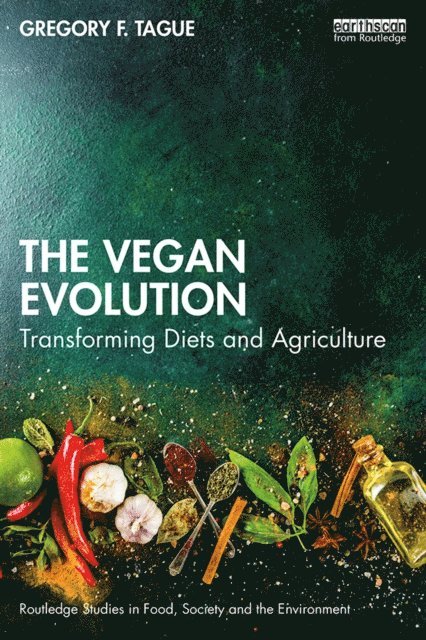
Arguing for a vegan economy, this book explains how we can and should alter our eating habits away from meat and dairy through sociocultural evolution.Using the latest research and ideas about the cultural ecology of food, this book makes the case that through biological and, especially, cultural evolution, the human diet can gravitate away from farmed meat and dairy products. The thrust of the writing demonstrates that because humans are a cultural species, and since we are evolving more culturally than biologically, it stands to reason for health and environmental reasons that we develop a vegan economy. The book shows that for many good reasons we don’t need a diet of meat and dairy and a call is made to legislative leaders, policy makers, and educators to shift away from animal farming and inform people about the advantages of a vegan culture. The bottom line is that we have to start thinking collectively about smarter ways of growing and processing plant foods, not farming animals as food, to generate good consequences for health, the environment, and, therefore, animals. This is an attainable and worthy goal given the mental and physical plasticity of humans through cooperative cultural evolution.This book is essential reading for all interested in veganism, whether for ethical, environmental, or health reasons, and those studying the human diet from a range of disciplines, including cultural evolution, food ecology, animal ethics, food and nutrition, and evolutionary studies.
2 088 kr
Skickas inom 10-15 vardagar
Arguing for a vegan economy, this book explains how we can and should alter our eating habits away from meat and dairy through sociocultural evolution.Using the latest research and ideas about the cultural ecology of food, this book makes the case that through biological and, especially, cultural evolution, the human diet can gravitate away from farmed meat and dairy products. The thrust of the writing demonstrates that because humans are a cultural species, and since we are evolving more culturally than biologically, it stands to reason for health and environmental reasons that we develop a vegan economy. The book shows that for many good reasons we don’t need a diet of meat and dairy and a call is made to legislative leaders, policy makers, and educators to shift away from animal farming and inform people about the advantages of a vegan culture. The bottom line is that we have to start thinking collectively about smarter ways of growing and processing plant foods, not farming animals as food, to generate good consequences for health, the environment, and, therefore, animals. This is an attainable and worthy goal given the mental and physical plasticity of humans through cooperative cultural evolution.This book is essential reading for all interested in veganism, whether for ethical, environmental, or health reasons, and those studying the human diet from a range of disciplines, including cultural evolution, food ecology, animal ethics, food and nutrition, and evolutionary studies.
1 142 kr
Skickas inom 10-15 vardagar
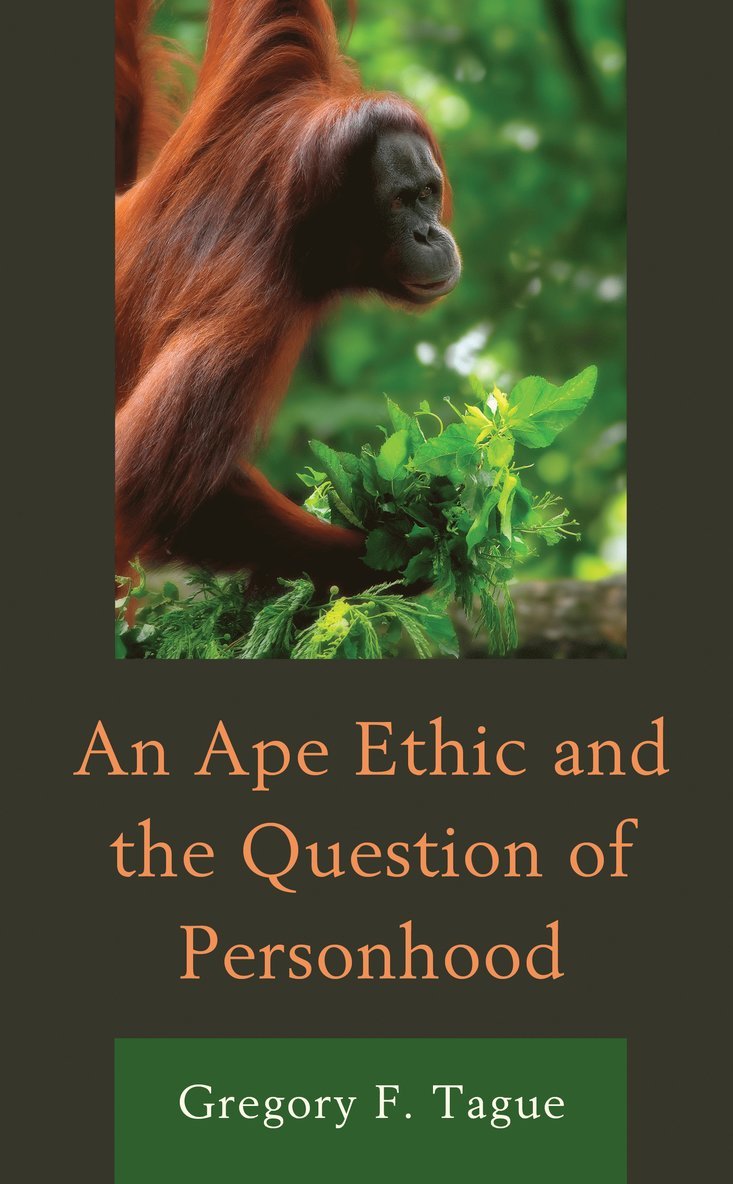
Gregory F. Tague’s An Ape Ethic and the Question of Personhood argues that great apes are moral individuals because they engage in a land ethic as ecosystem engineers to generate ecologically sustainable biomes for themselves and other species. Tague shows that we need to recognize apes as eco-engineers in order to save them and their habitats, and that in so doing, we will ultimately save earth’s biosphere. The book draws on extensive empirical research from the ecology and behavior of great apes and synthesizes past and current understanding of the similarities in cognition, social behavior, and culture found in apes. Importantly, this book proposes that differences between humans and apes provide the foundation for the call to recognize forest personhood in the great apes. While all ape species are alike in terms of cognition, intelligence, and behaviors, there is a vital contrast: unlike humans, great apes are efficient ecological engineers. Therefore, simian forest sovereignty is critical to conservation efforts in controlling global warming, and apes should be granted dominion over their tropical forests. Weaving together philosophy, biology, socioecology, and elements from eco-psychology, this book provides a glimmer of hope for future acknowledgment of the inherent ethic that ape species embody in their eco-centered existence on this planet.
Del 1 - Plants and Animals
Forest Sovereignty
Wildlife Sustainability and Ethics
Inbunden, Engelska, 2025
557 kr
Skickas inom 5-8 vardagar
"Forest Sovereignty is a startling new book reconsidering our relationship to nature. Tague has written a nonfiction version of Richard Powers's novel The Overstory. His careful, confident textual dismantling of the liberal-conventional account of private property gives way to something more elemental. Tague speaks for the trees." - Clayton Shoppa, Ph.D., Associate Professor of Philosophy, St. Francis College "Forest Sovereignty rereads political philosophy from Hobbes to Marx to advance an incisive theory of forest freedom recognizing the mutualistic self-governance of fungi, flora, and fauna. Passionately argued, the book issues a timely call for preserving and expanding the planet's remaining great forests while radically greening humankind's increasingly urban future." - John C. Ryan, Ph.D., Nulungu Institute, University of Notre Dame, AustraliaThe book examines plants, animals, and political philosophy in a claim for a forest state of Gaia. It argues that humans should set aside and leave to their growth vast tracts of forests, wetlands, and grasslands. Biologists surmise that immense and undisturbed interlocking networks of forests, wetlands, grasslands, seas, oceans, etc. constitute a thermodynamic system of atmospheric integrity maintaining environmental health. Modern human mechanical intrusion into nature’s realm has upset planetary homeostasis. One path to reestablishing climate fitness would not only be to preserve what remains but also to rewild additional forest, wetland, and grassland areas. There’s an ethical claim in saying forests have incalculable value because their intrinsic qualities of growth, metamorphosis, and decay are instrumental in creating and maintaining healthy ecosystems that constitute earth’s biosphere.
1 164 kr
Skickas inom 5-8 vardagar
Evolution and Human Culture argues that values, beliefs, and practices are expressions of individual and shared moral sentiments. Much of our cultural production stems from what in early hominins was a caring tendency, both the care to share and a self-care to challenge others. Topics cover prehistory, mind, biology, morality, comparative primatology, art, and aesthetics. The book is valuable to students and scholars in the arts, including moral philosophers, who would benefit from reading about scientific developments that impact their fields. For biologists and social scientists the book provides a window into how scientific research contributes to understanding the arts and humanities. The take-home point is that culture does not transcend nature; rather, culture is an evolved moral behavior.
Del 52 - Consciousness, Literature and the Arts
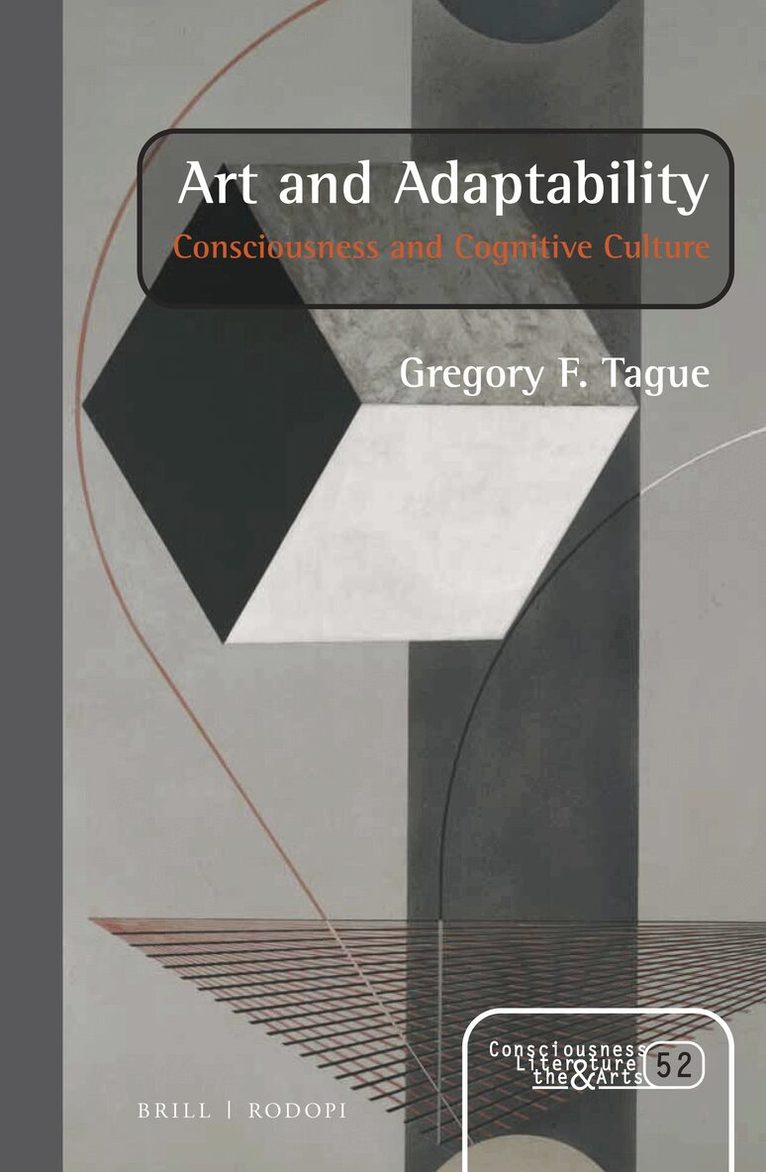
Art and Adaptability
Consciousness and Cognitive Culture
Inbunden, Engelska, 2017
2 021 kr
Skickas inom 5-8 vardagar
Art and Adaptability argues for a co-evolution of theory of mind and material/art culture. The book covers relevant areas from great ape intelligence, hominin evolution, Stone Age tools, Paleolithic culture and art forms, to neurobiology. We use material and art objects, whether painting or sculpture, to modify our own and other people’s thoughts so as to affect behavior. We don’t just make judgments about mental states; we create objects about which we make judgments in which mental states are inherent. Moreover, we make judgments about these objects to facilitate how we explore the minds and feelings of others. The argument is that it’s not so much art because of theory of mind but art as theory of mind.