• Fri frakt över 249 kr
  • •
  • Snabba leveranser
  • •
  • Billiga böcker
Kundservice

Du är på sajten för privatpersoner.

Företag, bibliotek eller offentlig verksamhet?

Du handlar på classic.bokus.com, där alla dina funktioner finns intakta.
Till classic.bokus.com
Bokus logotyp. Gå till startsidan.
  • Erbjudanden
  • Nyheter
  • Student
  • Topplistor
  • Barn & ungdom
  • Bokus Play
  • E-böcker
  • Pocketböcker
  • Spel & pussel

10% rabatt på allt med kod NYSTART10 →

Sidfot

Mina sidor

    Hjälp

    • Kundservice
    • Vanliga frågor och svar
    • Frakt och leverans
    • Retur vid ångerrätt
    • Reklamera vara
    • Betalning
    • Köpvillkor
    • Allmänna villkor
    • Information om webbplatsens tillgänglighet

    Om Bokus

    • Om oss
    • Pressrum
    • För studenter
    • För företag
    • För bibliotek och offentlig verksamhet
    • För leverantörer
    • Hållbarhet

    Populärt

    • Aktuella erbjudanden
    • Presentkort
    • Studentlitteratur
    • Nya böcker
    • Topplistor
    • Signerade böcker
    • Engelska böcker

    Inspiration

    • Boktips
    • BookTok
    • Populära bokserier
    • Barnbokskaraktärer
    • Populära författare
    Logotyp för Bokus
    Följ oss på Facebook (extern länk)Följ oss på Instagram (extern länk)Följ oss på YouTube (extern länk)Följ oss på TikTok (extern länk)
    bokus @ CookiesAnpassa cookiesIntegritetspolicyKöpvillkor
    Till Citymail hemsida (extern länk)Till Budbee hemsida (extern länk)Till Postnord hemsida (extern länk)Till Schenker hemsida (extern länk)Till Early Bird hemsida (extern länk)Till Walleys hemsida (extern länk)
    1. Kultur
    2. Konstböcker

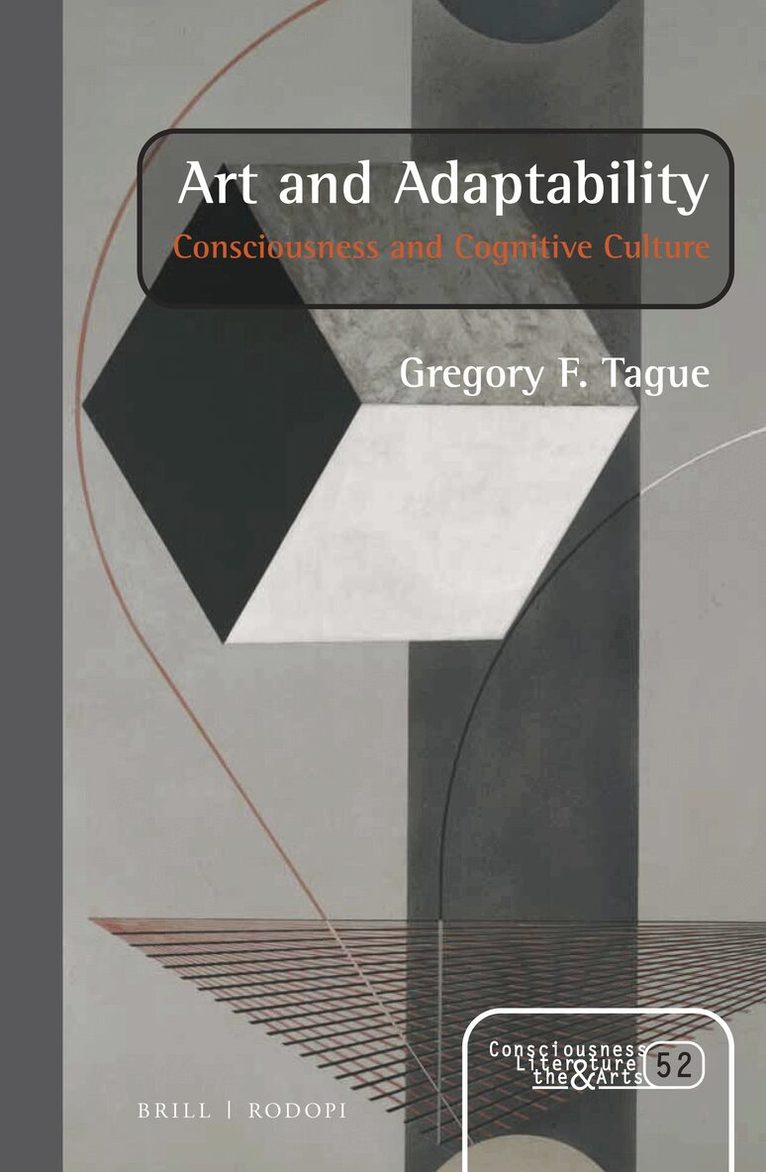
    Art and Adaptability

    Consciousness and Cognitive Culture

    AvGregory F. Tague

    Inbunden, Engelska, 2017

    Del 52 i serien Consciousness, Literature and the Arts

    2 131 kr

    Beställningsvara. Skickas inom 5-8 vardagar. Fri frakt över 249 kr.

    Beskrivning

    Art and Adaptability argues for a co-evolution of theory of mind and material/art culture. The book covers relevant areas from great ape intelligence, hominin evolution, Stone Age tools, Paleolithic culture and art forms, to neurobiology. We use material and art objects, whether painting or sculpture, to modify our own and other people’s thoughts so as to affect behavior. We don’t just make judgments about mental states; we create objects about which we make judgments in which mental states are inherent. Moreover, we make judgments about these objects to facilitate how we explore the minds and feelings of others. The argument is that it’s not so much art because of theory of mind but art as theory of mind.

    Produktinformation

    • Utgivningsdatum:2017-11-23
    • Mått:155 x 235 x 18 mm
    • Vikt:477 g
    • Format:Inbunden
    • Språk:Engelska
    • Serie:Consciousness, Literature and the Arts
    • Antal sidor:204
    • Förlag:Brill
    • ISBN:9789004354524

    Utforska kategorier

    • Konstböcker inom Kultur
    • Konsthistoria inom Kultur
    • Litteraturvetenskap inom Skönlitteratur

    Mer om författaren

    Gregory F. Tague, Ph.D. (1998), New York University, is Professor of English and founder and senior developer of The Evolutionary Studies Collaborative at St. Francis College, N.Y. Recent, relevant books include Evolution and Human Culture (Brill|Rodopi, 2016) and Making Mind: Moral Sense and Consciousness (Rodopi, 2014).

    Recensioner i media

    “The text is said to offer a novel hypothesis on the evolutionary roots of art, based on theory of mind. In itself, this proposal is compelling...” – Larissa Mendoza Straffon, Leiden University Centre for the Arts in Society“The general argument of the book is interesting and sound, and is well developed with different layer of explanation.... The manuscript fits within an upcoming and ongoing tendency to study the origins of art from a cognitive perspective that specifically emphasizes theory of mind...doing so from a similarly interdisciplinary point of view. As such, the contents are both innovative and fitting within actual developments in this field.” – Eveline Seghers, Department of Art, Music and Theatre Studies, Ghent University“Gregory F. Tague approaches two ancient questions, what is art and what does it do, in a new and intriguing way. Drawing on science, specifically evolution through natural selection, he proposes that art, like other forms of social behavior, is in part genetic, creative or imaginative impulse, and part environmental, social interaction. Support for this proposal comes from primate studies and current studies in neurobiology, cognition, intelligence and communication. He proposes, and I agree, that culture is common among great apes with whom we share social and mental abilities. Modern humans, however, unlike other primates, have a more highly degreed theory of mind. This ability to make predictions based on the perceived mental states of others facilitated our ancestors’ ability to competitively cooperate. Culture, which would include art, was, as he explains, “part of a predictive attempt to affect another’s emotional or cognitive outcome, often in subtle ways.” As influence is a critical part of social behavior, art, which has costs that can be quite high, provides social benefits.In sum, the road Tague takes to answering the questions – what is art and what does it do, how might it be connected to health, pleasure, play, sociality, and emotions – is complex; however, art is not a simple thing to explain. While he draws on many variables to build and support his argument, he provides the reader with a provocative and enlightening journey. Art and Adaptability is an excellent book – a fabulous search through many fields for an explanation of the curious behavior we call art.” – Kathryn Coe, Ph.D., Professor and Lilly Scholar in the Social and Behavioral Sciences, Indiana University-Purdue University. Author, The Ancestress Hypothesis: Visual Art as Adaptation

    Innehållsförteckning

    • AcknowledgementsSimplified Radiations of Select Primate SpeciesSimplified Radiations of Select Hominin SpeciesThe Long PleistoceneIntroduction: Setting Boundaries1 Intelligence: Communication and Theory of MindGreat Ape Intelligence and CommunicationSymbolic Communication and ConsciousnessInter-Subjectivity and EvolutionGreat Ape Theory of MindHuman Theory of MindArtificial IntelligenceThe Anthropocentric AttitudeChapter One Dovetail2 Culture: The Adapted MindHuman Network: Scope and ScaleSymbolic CultureCulture and the Adapted MindGene/Culture Co-EvolutionCulture and Social SelectionCulture and EpigeneticsMind SharingChapter Two Dovetail3 Adaptive Functions: Selection and the Human PsycheAdaptation and Natural Selection DefinedPhenomenal ConsciousnessAdaptive Problems and QuestionsDarwin and Natural SelectionDarwin and Sexual SelectionSelection and ToolsCognition, Cooperation, and Extended EvolutionMaking SpecialPleistocene Landscape PreferencesCan We Define Art?Neanderthals and ArtCave Painting and SuperstitionArt and Altered States of ConsciousnessCave Art and ImagesArt and the Human PsycheBeauty, the Brain, and the BodyChapter Three Dovetail4 Objections: Philosophy and ByproductsPhilosophy and ArtPinker’s Cheesecake for the MindAn Art Instinct?Corrective to Art as Sexual SelectionHumanologySocial Selection Over Sexual Selection?The Biology of Art as Speculative?Two HypothesesExplanatory DilemmaChapter Four Dovetail5 Neurobiology and Cognition: Consciousness and RepresentationArtistic Behavior and the Social BrainThe Subject of AestheticsOrienting Creative CognitionArt, Ambiguity, and Making MeaningRepresentation and MetarepresentationBodily and Cultural ConsciousnessLine or Color?Seeing Reality AbstractlyKnowledge, Beauty, and NeutralityFrom Discontinuity to EssenceBrain Sight and InsightBeauty and Cognitive EmotionsRitual ArtChapter Five DovetailConclusion: The Arts and SciencesBibliographyIndex