Gregory R. Smulewicz-Zucker - Böcker
Visar alla böcker från författaren Gregory R. Smulewicz-Zucker. Handla med fri frakt och snabb leverans.
6 produkter
6 produkter
675 kr
Skickas inom 10-15 vardagar
Strangers to Nature challenges a reading public that has grown complacent with the standard framework of the animal ethics debate. Human influence on, and the control of, the natural world has greater consequences than ever, making the human impact on the lives of animals more evident. We cannot properly interrogate our conduct in the world without a deeper understanding of how our actions affect animals. It is crucial that the human-animal relationship become more central to ethical inquiry. This volume brings together many of the leading scholars who work to redefine and expand the discourse on animal ethics. The contributors examine the radical developments that change how we think about the status of non-human animals in our society and our moral obligations. Strangers to Nature will engage both scholars and lay-people by revealing the breadth of theorizing about current human/non-human animal relationships.
1 251 kr
Skickas inom 10-15 vardagar
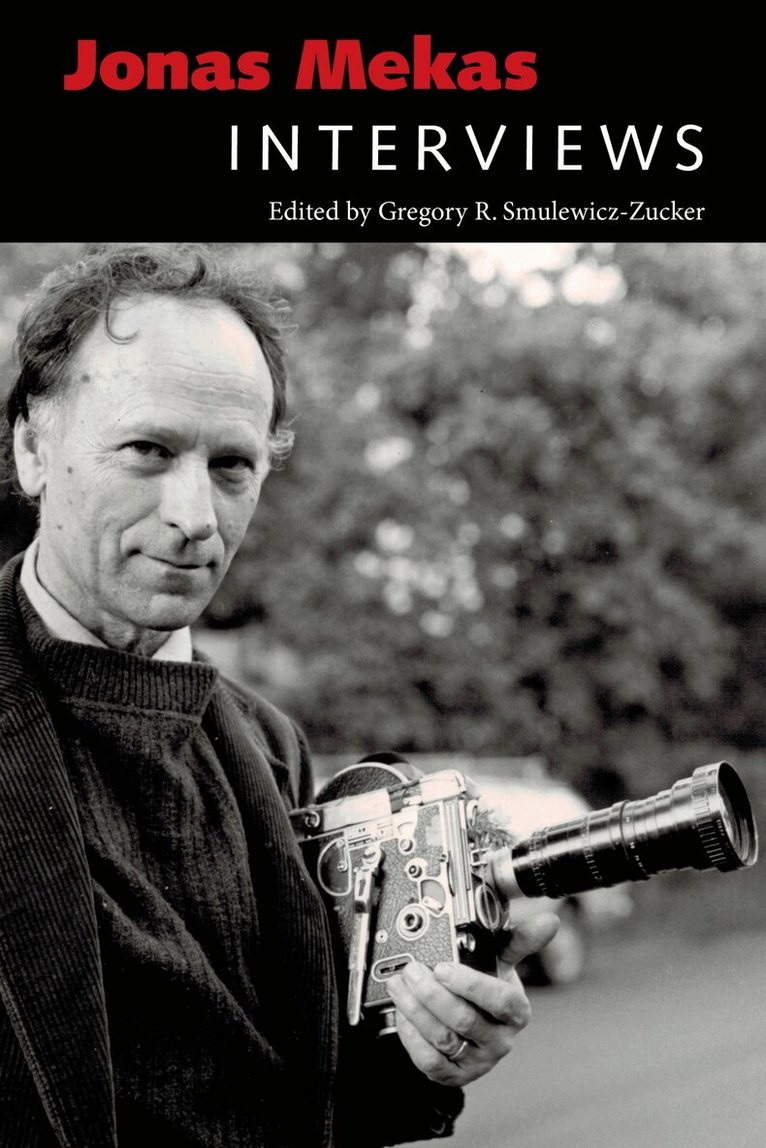
A refugee from post-World War II Europe who emigrated to the US in 1949, Jonas Mekas (1922-2019) became one of America's foremost champions of independent cinema and one of its most innovative filmmakers. An admired poet in his native Lithuania, Mekas began recording his life on film shortly after his arrival in New York. Through his work as the author of the Village Voice's "Movie Journal" column, editor of Film Culture magazine, and founder of Anthology Film Archives and the Film-Makers' Cooperative, Mekas played a vital role in the promotion of avant-garde and independent films. His early films, Guns of the Trees and The Brig, challenged the structure of traditional narrative filmmaking. He is best known for his "diary films," including Walden (Diaries, Notes, and Sketches); Reminiscences of a Journey to Lithuania; and As I Was Moving Ahead Occasionally I Saw Brief Glimpses of Beauty. His films, writings, and the institutions he built have influenced generations of filmmakers, poets, artists, musicians, critics, and scholars. In Jonas Mekas: Interviews, volume editor Gregory R. Smulewicz-Zucker collects eighteen interviews covering almost sixty years of the filmmaker's career. Mekas discusses his remarkable life as a refugee from Nazi- and Soviet-occupied Lithuania, his role as one of the major figures in the development of the American avant-garde, and his thoughts about his own work. In conversation with scholars, journalists, and other prominent artists, Mekas speaks of his passion for artistic expression and uncompromising vision for a liberated cinema. These interviews preserve Mekas's voice so that it might speak to future generations of artists and intellectuals.
332 kr
Skickas inom 10-15 vardagar
A refugee from post-World War II Europe who emigrated to the US in 1949, Jonas Mekas (1922-2019) became one of America's foremost champions of independent cinema and one of its most innovative filmmakers. An admired poet in his native Lithuania, Mekas began recording his life on film shortly after his arrival in New York. Through his work as the author of the Village Voice's "Movie Journal" column, editor of Film Culture magazine, and founder of Anthology Film Archives and the Film-Makers' Cooperative, Mekas played a vital role in the promotion of avant-garde and independent films. His early films, Guns of the Trees and The Brig, challenged the structure of traditional narrative filmmaking. He is best known for his "diary films," including Walden (Diaries, Notes, and Sketches); Reminiscences of a Journey to Lithuania; and As I Was Moving Ahead Occasionally I Saw Brief Glimpses of Beauty. His films, writings, and the institutions he built have influenced generations of filmmakers, poets, artists, musicians, critics, and scholars. In Jonas Mekas: Interviews, volume editor Gregory R. Smulewicz-Zucker collects eighteen interviews covering almost sixty years of the filmmaker's career. Mekas discusses his remarkable life as a refugee from Nazi- and Soviet-occupied Lithuania, his role as one of the major figures in the development of the American avant-garde, and his thoughts about his own work. In conversation with scholars, journalists, and other prominent artists, Mekas speaks of his passion for artistic expression and uncompromising vision for a liberated cinema. These interviews preserve Mekas's voice so that it might speak to future generations of artists and intellectuals.
461 kr
Skickas inom 11-20 vardagar
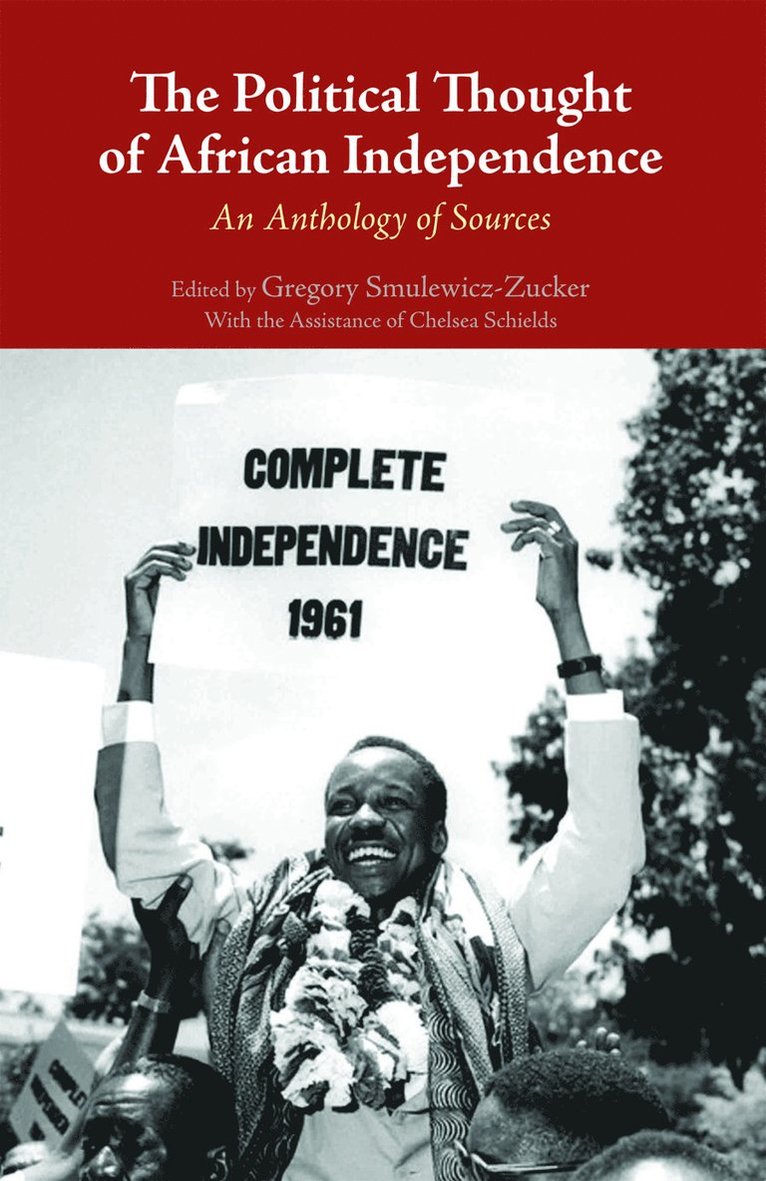
The Political Thought of African Independence: An Anthology of Sources brilliantly frames the debates that captivated the world as former European colonies in Africa began their transition to sovereign rule in the 1950s and ’60s. Its wealth of key documents are enhanced by Gregory Smulewicz-Zucker's General Introduction, part introductions, headnotes, and annotations, providing needed contextual information and supports for readers.
282 kr
Tillfälligt slut
Defending the role that science must play in democratic society--science defined not just in terms of technology but as a way of approaching problems and viewing the world.In this collection of original essays, experts in political science, the hard sciences, philosophy, history, and other disciplines examine contemporary anti-science trends, and make a strong case that respect for science is essential for a healthy democracy.The editors note that a contradiction lies at the heart of modern society. On the one hand, we inhabit a world increasingly dominated by science and technology. On the other, opposition to science is prevalent in many forms--from arguments against the teaching of evolution and the denial of climate change to the promotion of alternative medicine and outlandish claims about the effects of vaccinations. Adding to this grass-roots hostility toward science are academics espousing postmodern relativism, which equates the methods of science with regimes of "power-knowledge."While these cultural trends are sometimes marketed in the name of "democratic pluralism," the contributors contend that such views are actually destructive of a broader culture appropriate for a democratic society. This is especially true when facts are degraded as "fake news" and scientists are dismissed as elitists. Rather than enhancing the capacity for rational debate and critical discourse, the authors view such anti-science stances on either the right or the left as a return to premodern forms of subservience to authority and an unwillingness to submit beliefs to rational scrutiny. Beyond critiquing attitudes hostile to science, the essays in this collection put forward a positive vision for how we might better articulate the relation between science and democracy and the benefits that accrue from cultivating this relationship.
346 kr
Skickas inom 5-8 vardagar
Georg Lukács (1885-1971) was one of the most original Marxist philosophers and literary critics of the twentieth century. His work was a major influence on what we now know as critical theory. Almost fifty years after his death, Lukács's legacy has come under attack by right-wing extremists in his native Hungary. Despite efforts to erase his memory, Lukács remains a philosophical gadfly.In Confronting Reification, an international team of fourteen scholars explicate, reassess, and apply one of Lukács's most significant philosophical contributions, his theory of reification. Based on papers presented at the 2017 Legacy of Georg Lukács conference held in Budapest, the essays in this volume demonstrate the vitality of Lukács's thought and its relevance.Contributors include: Rüdiger Dannemann, Frank Engster, Andrew Feenberg, Joseph Grim Feinberg, Andraž Jež, Christian Lotz, Csaba Olay, Tom Rockmore, Gregory R. Smulewicz-Zucker, Mariana Teixeira, Michael J. Thompson, Tivadar Vervoort, Richard Westerman, and Sean Winkler.