Gregory T. Doolan - Böcker
Visar alla böcker från författaren Gregory T. Doolan. Handla med fri frakt och snabb leverans.
3 produkter
3 produkter
796 kr
Skickas inom 7-10 vardagar
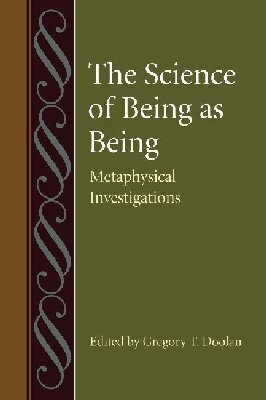
Metaphysics, the science of being as being, is the subject of this volume composed in honour of John F. Wippel, the Theodore Basselin Professor of Philosophy at the Catholic University of America, and an internationally prominent metaphysician and expert in medieval philosophy. Scholars present studies on key philosophical and historical issues in the field. Though varied, the investigations address three major metaphysical themes: the subject matter of metaphysics, metaphysical aporiae, and philosophical theology.Robert Sokolowski considers the historical recapitulation of the phrase ""the science of being as being""; Dominic O'Meara focuses on the development of this science in late antiquity; Jan A. Aertsen asks why the medievals called it ""First Philosophy""; and Andreas Speer returns to the origins of metaphysical discourse for a better understanding of contemporary metaphysical issues. Gregory T. Doolan examines difficulties concerning Aquinas's metaphysics of substance; Jorge Gracia looks to the tradition of scholastic philosophy to examine the individuality and individuation of race; and James Ross argues against the modal ontologies of the twentieth century, showing that metaphysical possibility depends on the existence of a free, divine creator. Stephen F. Brown considers Godfrey of Fontaines on the role of metaphysics in revealed theology; John F. Wippel examines Aquinas on the ""preambles of faith,"" those doctrines presupposed by faith that can also be proven philosophically; Brian J. Shanley addresses Aquinas's philosophical views on providence; Eleonore Stump, looking to Aquinas as well, shows how God can be personally present to human beings; and Marilyn McCord Adams offers a metaphysical consideration of the Christian doctrine of resurrection.
367 kr
Skickas inom 10-15 vardagar
Gregory T. Doolan provides here the first detailed consideration of the divine ideas as causal principles. He examines Thomas Aquinas's philosophical doctrine of the divine ideas and convincingly argues that it is an essential element of his metaphysics.According to Thomas, the ideas in the mind of God are not only principles of his knowledge, but they are productive principles as well. In this role, God's ideas act as exemplars for things that he creates. As Doolan shows, this theory of exemplarism is an integral part of Thomas's account of the existence and order of the created universe. It also accounts in part for the freedom of God's creative act.The volume begins with an introduction to Thomas's doctrine of exemplarism and then addresses his arguments for the existence of exemplar ideas within the mind of God. Having established the existence of divine ideas, Doolan considers how Thomas reconciles their multiplicity with God's simplicity. The work identifies the various things for which Thomas posits divine ideas.As Doolan is careful to show, Thomas does not consider all of these ideas to be exemplars because not all of them act as causal principles. After identifying the ideas that do act in this way, Doolan considers how such exemplars can be causes of natural things without compromising the causality of natural agents. The volume culminates with a consideration of the role that the divine ideas play within the structure of Thomas's theory of participation.
820 kr
Skickas
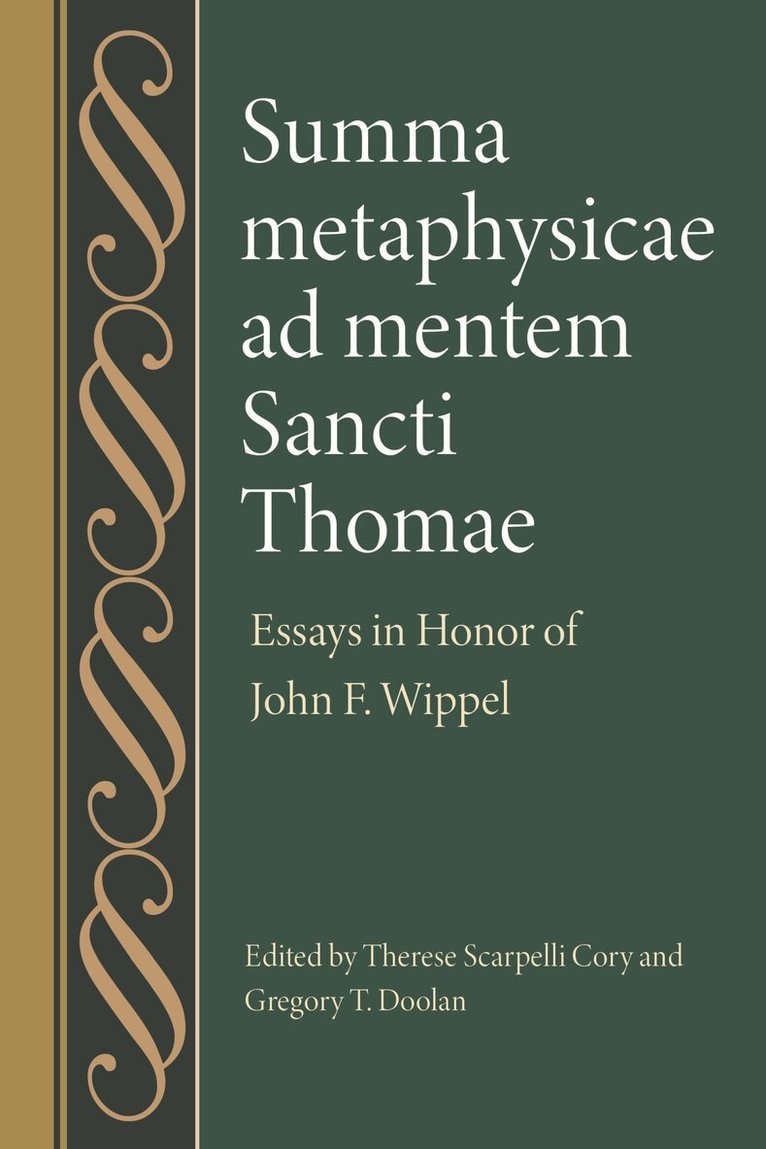
This volume is a tribute to Fr. John F. Wippel. Following the philosophical order that Aquinas might have adopted ""had he chosen to write a Summa metaphysicae""--an order that Wippel himself lays out in his Metaphysical Thought of Thomas Aquinas--these essays unfold new research on some of the most intriguing topics in Aquinas's metaphysics, from the most recent generation of scholars formed by Wippel's pioneering work.The contributors address the discovery of being qua being via separation (Gregory T. Doolan), propter quid metaphysical demonstrations (Philip Neri Reese), the origins of the controversies about the real distinction between essence and esse (Mark Gossiaux), a defense of essence-realism as a key to the real distinction (David Twetten), the relationship of likeness and agency (Therese Scarpelli Cory), created form as act and potency (Stephen Brock), the variation of accidental forms (Gloria Frost), the possibility of angelic judgment (Francis Feingold), argumentation for the existence of God (Gaven Kerr), the propriety of "" Qui Est"" as a Divine Name (Brian Carl), 'Beauty' as a Divine Name (Michael Rubin), and God's application of creaturely powers to action (Jason Mitchell).