

Inbunden, Engelska, 1983
843 kr
Skickas inom 10-15 vardagar
843 kr
Skickas inom 10-15 vardagar
732 kr
Skickas inom 10-15 vardagar

464 kr
Skickas inom 5-8 vardagar

1 564 kr
Skickas inom 5-8 vardagar
2 937 kr
Skickas inom 10-15 vardagar

816 kr
Skickas inom 10-15 vardagar
948 kr
Läs direkt efter köp
Until the 70s and 80s anthropologists studying different cultures had mainly confined themselves to the behaviour and idea systems of adults. Psychologists, on the other hand, working mainly in Europe and America, had studied child development in their own settings and simply assumed the universality of their findings. Thus both disciplines had largely ignored a crucial problem area: the way in which children from birth onwards learn to become competent members of their culture. This process, which has been called ‘the quintessential human adaptation’, constitutes the theme of this volume, originally published in 1988.
It derives from a workshop held at the London School of Economics which brought together fieldworkers who in their studies had paid more than usual attention to children in their cultures. Their experience and foci of interest were varied but this very diversity serves to illuminate different facets of the acquisition of culture by children, ranging in age from pre-verbal infants to adolescents.
Evolutionarily primed for culture-learning, children are responsive to a rich web of influences from subtle and indirect as in their music and dance to direct teaching in the family guided by culture-specific ideas about child psychology. Some of the salient things they learn relate to gender, status and power, critical for the functioning of all societies.
The introductory essay provides the necessary historical background of the development of child study in both anthropology and psychology and outlined how future research in the ethnography of childhood should proceed. The book concludes with an annotated bibliography providing a guide to the literature from 1970 onwards.
955 kr
Läs direkt efter köp
Until the 70s and 80s anthropologists studying different cultures had mainly confined themselves to the behaviour and idea systems of adults. Psychologists, on the other hand, working mainly in Europe and America, had studied child development in their own settings and simply assumed the universality of their findings. Thus both disciplines had largely ignored a crucial problem area: the way in which children from birth onwards learn to become competent members of their culture. This process, which has been called ‘the quintessential human adaptation’, constitutes the theme of this volume, originally published in 1988.
It derives from a workshop held at the London School of Economics which brought together fieldworkers who in their studies had paid more than usual attention to children in their cultures. Their experience and foci of interest were varied but this very diversity serves to illuminate different facets of the acquisition of culture by children, ranging in age from pre-verbal infants to adolescents.
Evolutionarily primed for culture-learning, children are responsive to a rich web of influences from subtle and indirect as in their music and dance to direct teaching in the family guided by culture-specific ideas about child psychology. Some of the salient things they learn relate to gender, status and power, critical for the functioning of all societies.
The introductory essay provides the necessary historical background of the development of child study in both anthropology and psychology and outlined how future research in the ethnography of childhood should proceed. The book concludes with an annotated bibliography providing a guide to the literature from 1970 onwards.
855 kr
Läs direkt efter köp
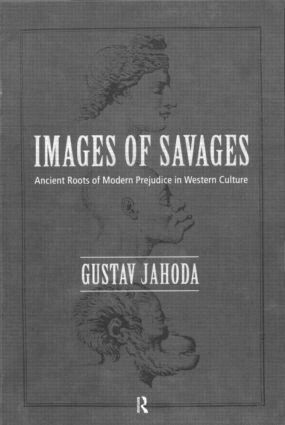
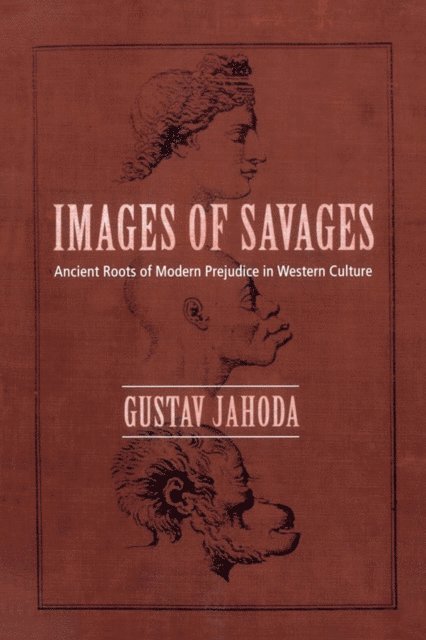
In Images of Savages, the distinguished psychologist Gustav Jahoda advances the provocative thesis that racism and the perpetual alienation of a racialized ''other'' are a central leagacy of the Western tradition. Finding the roots of these demonizations deep in the myth and traditions of classical antiquity, he examines how the monstrous humanoid creatures of ancient myth and the fabulous "wild men" of the medieval European woods shaped early modern explorers'' interpretations of the New World they encountered. Drawing on a global scale the schematic of the Western imagination of its "others," Jahoda locates the persistent identification of the racialized other with cannibalism, sexual abandon and animal drives. Turning to Europe''s scientific tradition, Jahoda traces this imagery through the work of 18th century scientists on the relationship between humans and apes, the new racist biology of the 19th century studies of "savagery" as an arrested evolutionary state, and the assignment, especially of blacks, to a status intermediate between humans and animals, or that of children in need of paternal protection from Western masters. Finding in these traditional tropes a central influence upon the most current psychological theory, Jahoda presents a startling historical continuity of racial figuration that persists right up to the present day. Far from suggesting a program for the eradication of racial stereotypes, this remarkable effort nevertheless isolates the most significant barriers to equality buried deep within the Western tradition, and proposes a potentially redemptive self-awareness that will contribute to the gradual dismantling of racial injustice and alienation. Gustav Jahoda demonstrates how deeply rooted Western perceptions going back more than a thousand years are still feeding racial prejudice today. This highly original socio-historical contextualisation will be invaluable to scholars of psychology, sociology and anthropology, and to all those interested in the sources of racial prejudice.
855 kr
Läs direkt efter köp
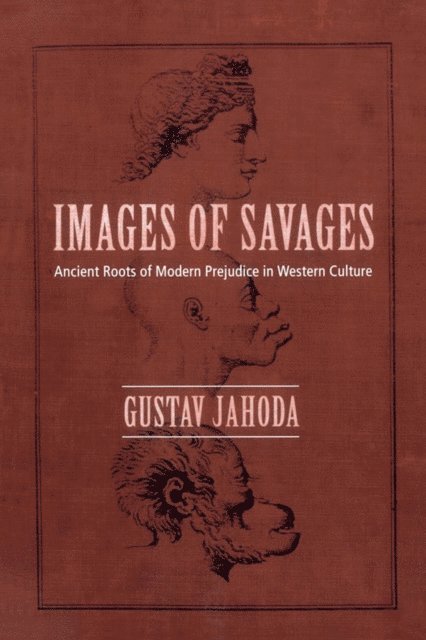
In Images of Savages, the distinguished psychologist Gustav Jahoda advances the provocative thesis that racism and the perpetual alienation of a racialized ''other'' are a central leagacy of the Western tradition. Finding the roots of these demonizations deep in the myth and traditions of classical antiquity, he examines how the monstrous humanoid creatures of ancient myth and the fabulous "wild men" of the medieval European woods shaped early modern explorers'' interpretations of the New World they encountered. Drawing on a global scale the schematic of the Western imagination of its "others," Jahoda locates the persistent identification of the racialized other with cannibalism, sexual abandon and animal drives. Turning to Europe''s scientific tradition, Jahoda traces this imagery through the work of 18th century scientists on the relationship between humans and apes, the new racist biology of the 19th century studies of "savagery" as an arrested evolutionary state, and the assignment, especially of blacks, to a status intermediate between humans and animals, or that of children in need of paternal protection from Western masters. Finding in these traditional tropes a central influence upon the most current psychological theory, Jahoda presents a startling historical continuity of racial figuration that persists right up to the present day. Far from suggesting a program for the eradication of racial stereotypes, this remarkable effort nevertheless isolates the most significant barriers to equality buried deep within the Western tradition, and proposes a potentially redemptive self-awareness that will contribute to the gradual dismantling of racial injustice and alienation. Gustav Jahoda demonstrates how deeply rooted Western perceptions going back more than a thousand years are still feeding racial prejudice today. This highly original socio-historical contextualisation will be invaluable to scholars of psychology, sociology and anthropology, and to all those interested in the sources of racial prejudice.