Gwyn Bevan – författare
Visar alla böcker från författaren Gwyn Bevan. Handla med fri frakt och snabb leverans.
3 produkter
3 produkter
1 987 kr
Skickas inom 10-15 vardagar
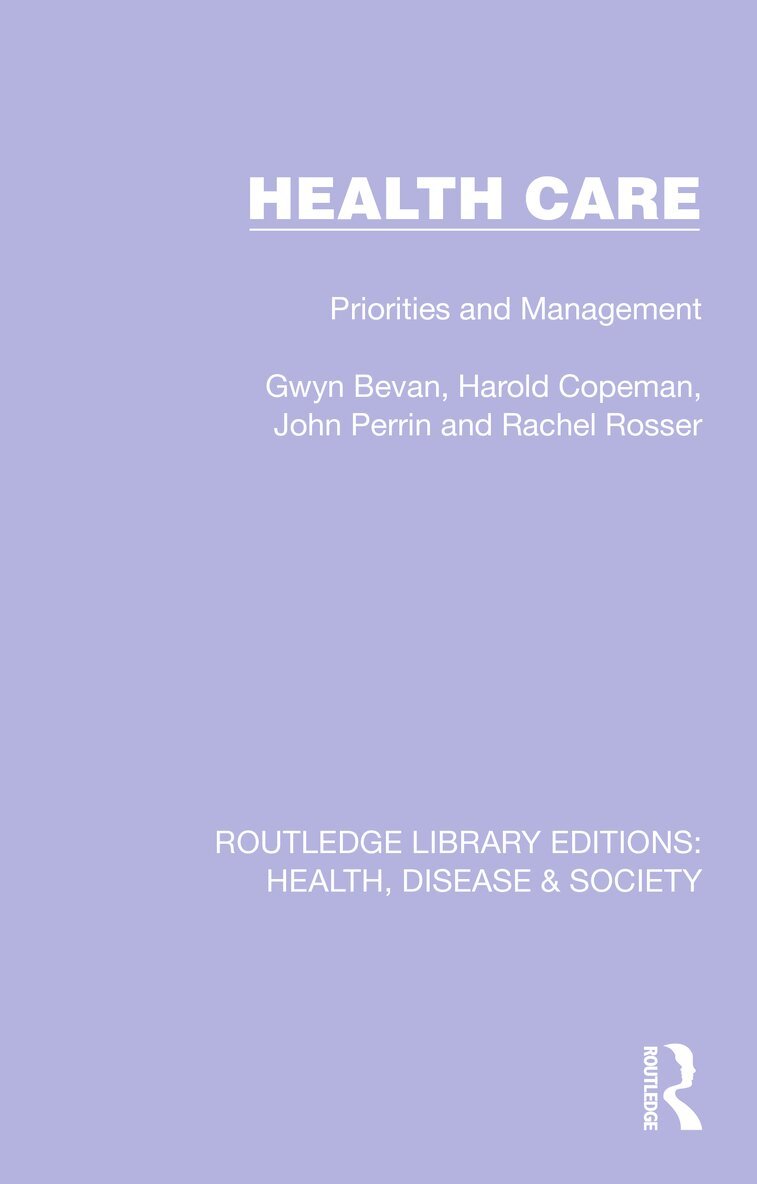
Originally published in 1980, this book explores how the NHS confronts perennial stresses and problems, considering in particular the allocation of the scarce resources within the health service. Written by distinguished academics, three of whom previously undertook research work for the Royal Commission on the NHS, the discussion centres on whether more could not be spent, whether resources are being allocated equitably, how planning can work most effectively, whether there are feasible ways of financing the service and how organisation and management could be improved: in short, all issues which continue to be pertinent to the NHS today.

502 kr
Skickas inom 10-15 vardagar
Originally published in 1980, this book explores how the NHS confronts perennial stresses and problems, considering in particular the allocation of the scarce resources within the health service. Written by distinguished academics, three of whom previously undertook research work for the Royal Commission on the NHS, the discussion centres on whether more could not be spent, whether resources are being allocated equitably, how planning can work most effectively, whether there are feasible ways of financing the service and how organisation and management could be improved: in short, all issues which continue to be pertinent to the NHS today.
367 kr
Skickas inom 5-8 vardagar
If every system is perfectly designed to get the results it gets, what is wrong with the design of the systems that govern Britain? And how have they resulted in failures in housing, privatisation, outsourcing, education and healthcare? In How Did Britain Come to This? Gwyn Bevan examines a century of varieties of systemic failures in the British state. The book begins and ends by showing how systems of governance explain scandals in NHS hospitals, and the failures and successes of the UK and Germany in responding to Covid-19 before and after vaccines became available. The book compares geographical fault lines and inequalities in Britain with those that have developed in other European countries and argues that the causes of Britain’s entrenched inequalities are consequences of shifts in systems of governance over the past century. Clement Attlee’s postwar government aimed to remedy the failings of the prewar minimal state, while Margaret Thatcher’s governments in the 1980s in turn sought to remedy the failings of Attlee’s planned state by developing the marketised state, which morphed into the financialised state we see today. This analysis highlights the urgent need for a new political settlement of an enabling state that tackles current systemic weaknesses from market failures and over-centralisation. This book offers an accessible, analytic account of government failures of the past century, and is essential reading for anyone who wants to make an informed contribution to what an innovative, capable state might look like in a post-pandemic world.