HAMMER - Böcker
Visar alla böcker från författaren HAMMER. Handla med fri frakt och snabb leverans.
2 produkter
2 produkter
1 760 kr
Skickas inom 5-8 vardagar
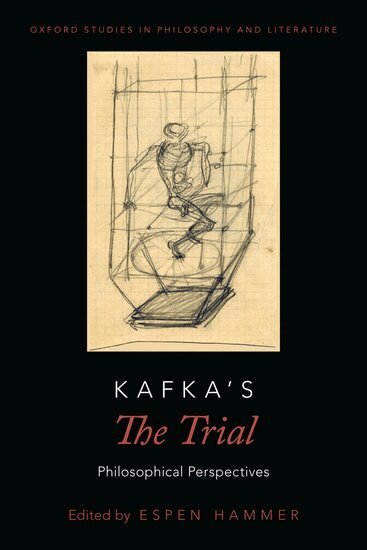
Kafka's novel The Trial, written from 1914 to 1915 and published in 1925, is a multi-faceted, notoriously difficult manifestation of European literary modernism, and one of the most emblematic books of the 20th Century. It tells the story of Josef K., a man accused of a crime he has no recollection of committing and whose nature is never revealed to him. The novel is often interpreted theologically as an expression of radical nihilism and a world abandoned by God. It is also read as a parable of the cold, inhumane rationality of modern bureaucratization. Like many other novels of this turbulent period, it offers a tragic quest-narrative in which the hero searches for truth and clarity (whether about himself, or the anonymous system he is facing), only to fall into greater and greater confusion. This collection of nine new essays and an editor's introduction brings together Kafka experts, intellectual historians, literary scholars, and philosophers in order to explore the novel's philosophical and theological significance. Authors pursue the novel's central concerns of justice, law, resistance, ethics, alienation, and subjectivity. Few novels display human uncertainty and skepticism in the face of rapid modernization, or the metaphysical as it intersects with the most mundane aspects of everyday life, more insistently than The Trial. Ultimately, the essays in this collection focus on how Kafka's text is in fact philosophical in the ways in which it achieves its literary aims. Rather than considering ideas as externally related to the text, the text is considered philosophical at the very level of literary form and technique.
694 kr
Skickas inom 3-6 vardagar
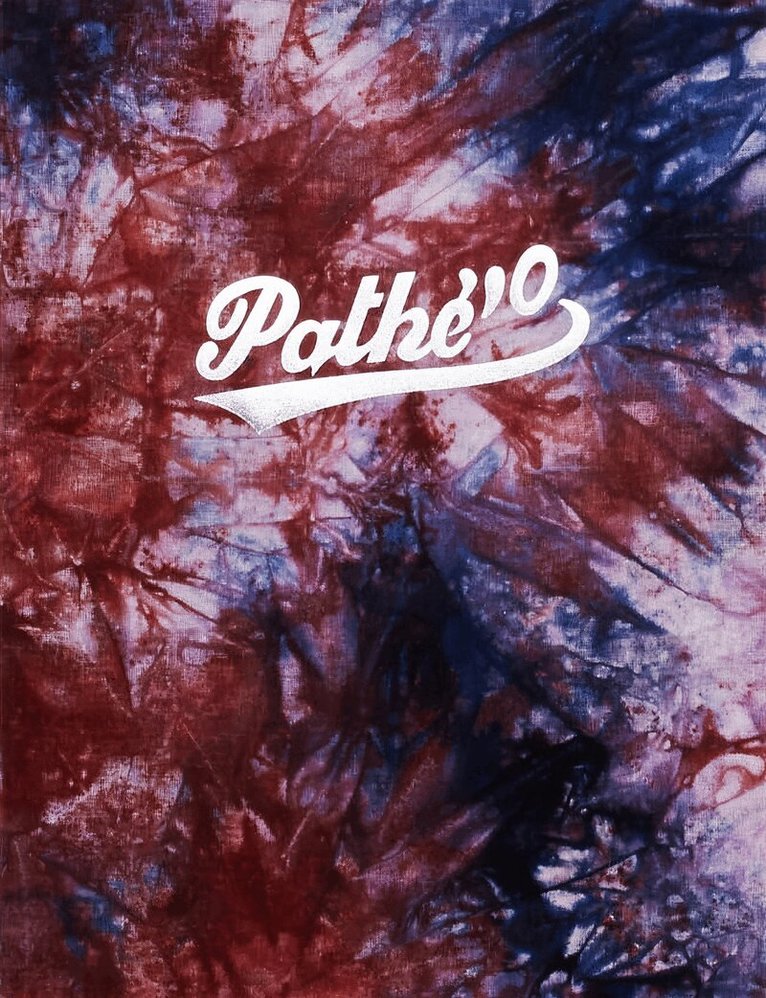
Pathé’O, originally from Burkina Faso, is an African fashion icon in every sense of the word. Known for his collections far beyond his chosen home Côte d'Ivoire, the designer’s visionary legacy has been influencing the aesthetic standards and experience of fashion on the African continent for over 30 years and has also led to a recent collaboration with the fashion house Dior. His distinct design aesthetics and cutting-edge approach to sustainability alongside a gift for combining cultural commitment with entrepreneurial creativity have inspired designers of all ages. For long it was common for politicians and showbiz celebrities in West African former French colonies to dress in a Western manner. In this context Pathé’O approached his work with the clear intention to raise appreciation amongst Africans for a local fashion style and industry. In the 80s, Pathé’O became friends with Thomas Sankara, president of Upper Volta, later Burkina Faso, and a proponent of Pan-Africanism. Pathé’O was heavily influenced by Sankara’s decisiveness to promote local pride and cultural heritage and from this point on he solely relied on using locally produced fabrics. His creations became a contemporary tribute to cultural heritage, history and identity. A further prominent encounter Pathé’O experienced was with Nelson Mandela, who was the first African president to chose his vibrant designs and light cotton fabrics over a Western business suit. And he was soon to be followed by other heads of states, as well as stars of the showbiz and sports, and of course Madame et Monsieur Tout-le-Monde. Pathé’O’s fabrics are his trademark and he has a lifelong experience of fusing global fashion trends with a wide range of African textiles and knowledge, hence keeping the local heritage alive and ever evolving. For the first time, this book traces the extraordinary journey of Pathé’O and his brand. The craftmanship and treasures of his creations provide a better understanding of the spectrum of fashion in West Africa, the mergers of a global present with a rich cultural heritage. The book explores topics ranging from the fashion and textile industry to labour migration, cultural heritage, politics and showbiz, and spans an arc from the past to the present. With an interview by Catherine Morand and texts by Chayet Chiénin, Denise Epoté, Anne Grosfilley, Genevieve Hill-Thomas, Pépita Kragbé-Coulibaly, Célestin Monga, Saidi Mamadou Ouédraogo, Flurina Rothenberger, Filippe Sawadogo and Victoria L. Rovine.