Hannah Cross - Böcker
Visar alla böcker från författaren Hannah Cross. Handla med fri frakt och snabb leverans.
4 produkter
4 produkter
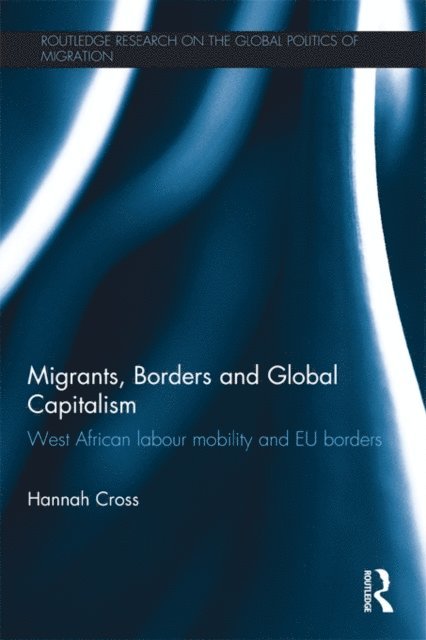
Migrants, Borders and Global Capitalism
West African Labour Mobility and EU Borders
Inbunden, Engelska, 2013
2 181 kr
Skickas inom 10-15 vardagar
People from West Africa are risking their lives and surrendering their citizenship rights to enter exploitative labour markets in Europe. This book offers an explanation for this phenomenon that is based on close analysis of the contradictory economic and political agendas that create and constrain labour migration. It shows how global capitalism regulates different stages of the process within an interconnected system of economic dispossession, the construction of an illegal status, border control, labour exploitation and processes of underdevelopment. This is summarised as a regime of ‘unfree labour mobility’.Combined with structural and historical approaches, this book is based on ethnographic research. It incorporates those who are left behind, those who decide to stay, migrants who fail and those who are on the move, alongside clustered migrant communities in Senegal, Mauritania and Spain. The book’s panoramic approach shows how West African ‘step-wise’ journeys to Europe by land and sea sees competing territorial and economic policies regulating an unstable and unpredictable trajectory, creating ‘illegal’ labour through dual logics of border security and selective labour mobility. This book demonstrates that the diverse channels through which people migrate in the modern era are mediated by European states and labour markets, which utilise border regimes to control labour and be globally competitive. The themes and patterns that emerge, in their context of inter-generational change, present a challenge to the accepted wisdom about the individual and household dynamics of labour migration. This book is of interest to students and scholars of migration, transnationalism, politics, security, development, economics, and sociology.
Migrants, Borders and Global Capitalism
West African Labour Mobility and EU Borders
Häftad, Engelska, 2016
673 kr
Skickas inom 10-15 vardagar
People from West Africa are risking their lives and surrendering their citizenship rights to enter exploitative labour markets in Europe. This book offers an explanation for this phenomenon that is based on close analysis of the contradictory economic and political agendas that create and constrain labour migration. It shows how global capitalism regulates different stages of the process within an interconnected system of economic dispossession, the construction of an illegal status, border control, labour exploitation and processes of underdevelopment. This is summarised as a regime of ‘unfree labour mobility’.Combined with structural and historical approaches, this book is based on ethnographic research. It incorporates those who are left behind, those who decide to stay, migrants who fail and those who are on the move, alongside clustered migrant communities in Senegal, Mauritania and Spain. The book’s panoramic approach shows how West African ‘step-wise’ journeys to Europe by land and sea sees competing territorial and economic policies regulating an unstable and unpredictable trajectory, creating ‘illegal’ labour through dual logics of border security and selective labour mobility. This book demonstrates that the diverse channels through which people migrate in the modern era are mediated by European states and labour markets, which utilise border regimes to control labour and be globally competitive. The themes and patterns that emerge, in their context of inter-generational change, present a challenge to the accepted wisdom about the individual and household dynamics of labour migration. This book is of interest to students and scholars of migration, transnationalism, politics, security, development, economics, and sociology.
692 kr
Skickas inom 7-10 vardagar
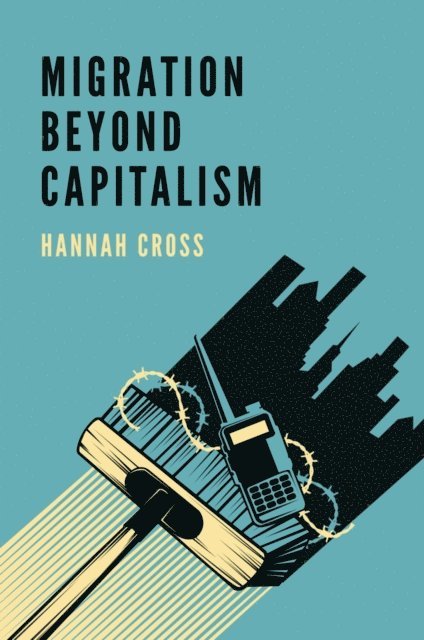
Harshly exploited migrant labour plays a fundamental role in the political economy of contemporary capitalism. The abstract and utopian theorising of many liberals and leftists on the migration question often ignores or downplays patterns of displacement and brutal class dynamics, which divide and weaken working people while empowering the ruling class. In this important new book, Hannah Cross provides a sober analysis of the class antagonisms of migration in the context of the nation, social democracy, and the racialized ordering of the world. Bringing Marxist methodology and strategy to a careful analysis of existing emancipatory movements, she sets out the programmes and approaches that are needed to promote global worker solidarity and create a future in which cheap labour is no longer a mainstay of wealthy economies. This focus on the labouring classes allows her to identify some important new directions for migration in a world beyond capitalism, exploitation and injustice. This book will be essential reading for students, scholars and general readers interested in the politics and political economy of migration in a world unhelpfully caught between racist authoritarian capitalism and the wishful-thinking of contemporary left-liberalism.
244 kr
Skickas inom 7-10 vardagar
Harshly exploited migrant labour plays a fundamental role in the political economy of contemporary capitalism. The abstract and utopian theorising of many liberals and leftists on the migration question often ignores or downplays patterns of displacement and brutal class dynamics, which divide and weaken working people while empowering the ruling class. In this important new book, Hannah Cross provides a sober analysis of the class antagonisms of migration in the context of the nation, social democracy, and the racialized ordering of the world. Bringing Marxist methodology and strategy to a careful analysis of existing emancipatory movements, she sets out the programmes and approaches that are needed to promote global worker solidarity and create a future in which cheap labour is no longer a mainstay of wealthy economies. This focus on the labouring classes allows her to identify some important new directions for migration in a world beyond capitalism, exploitation and injustice. This book will be essential reading for students, scholars and general readers interested in the politics and political economy of migration in a world unhelpfully caught between racist authoritarian capitalism and the wishful-thinking of contemporary left-liberalism.