Hannah Ryley - Böcker
Visar alla böcker från författaren Hannah Ryley. Handla med fri frakt och snabb leverans.
4 produkter
4 produkter
1 708 kr
Skickas inom 7-10 vardagar
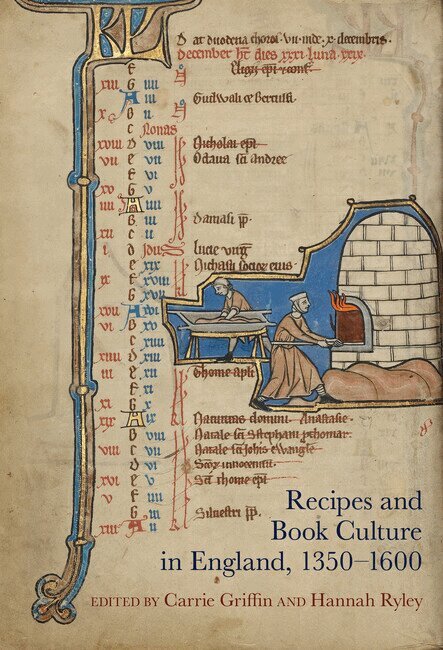
Recipes are not just instructions. They also embody culture, class, belief, linguistic and literary form, and even include celebrity endorsement. Medieval and early modern recipes can be short and simple but sometimes are not – sometimes they work, and sometimes they do not. They can also be remarkably performative, imaginative, and playful. These essays explore recipes 1350-1600 from a range of perspectives and are unified by an interest in the complexity and richness of these texts.This volume is the first of its kind. It presents new critical perspectives on medieval and early modern recipes, moving beyond concerns with utility to reframe recipes as part of a dynamic textual and intellectual culture. Contributors build on the sustained scholarly interest in recipes and bring fresh approaches to them. The thirteen essays explore topics including medical, culinary and domestic recipes and charms, as well as how they relate more generally to, for instance, book history, art, astrology and social practices.Collectively, the essays reveal a distinctive book culture by exploring the material forms, literary and scribal practices of recipe books. This book is a significant contribution to these areas of study, increasingly central to scholarship in recent years.Open Access versions of the following chapters will be available on publication on the Liverpool University Press website: Hannah Bower, The Brickmaker, the Tavern Keeper, and the Knight: The Role of Obscurity and Imagination in Medieval Medical Recipes and Katherine Storm Hindley, Bodies in the Recipe Collection: Interacting with Manuscript Charms in Late Medieval England
445 kr
Skickas inom 7-10 vardagar
Recipes are not just instructions. They also embody culture, class, belief, linguistic and literary form, and even include celebrity endorsement. Medieval and early modern recipes can be short and simple but sometimes are not – sometimes they work, and sometimes they do not. They can also be remarkably performative, imaginative, and playful. These essays explore recipes 1350-1600 from a range of perspectives and are unified by an interest in the complexity and richness of these texts.This volume is the first of its kind. It presents new critical perspectives on medieval and early modern recipes, moving beyond concerns with utility to reframe recipes as part of a dynamic textual and intellectual culture. Contributors build on the sustained scholarly interest in recipes and bring fresh approaches to them. The thirteen essays explore topics including medical, culinary and domestic recipes and charms, as well as how they relate more generally to, for instance, book history, art, astrology and social practices.Collectively, the essays reveal a distinctive book culture by exploring the material forms, literary and scribal practices of recipe books. This book is a significant contribution to these areas of study, increasingly central to scholarship in recent years.Open Access versions of the following chapters will be available on publication on the Liverpool University Press website: Hannah Bower, The Brickmaker, the Tavern Keeper, and the Knight: The Role of Obscurity and Imagination in Medieval Medical Recipes and Katherine Storm Hindley, Bodies in the Recipe Collection: Interacting with Manuscript Charms in Late Medieval England
Del 4 - York Manuscript and Early Print Studies
Re-using Manuscripts in Late Medieval England
Repairing, Recycling, Sharing
Inbunden, Engelska, 2022
1 200 kr
Skickas inom 7-10 vardagar
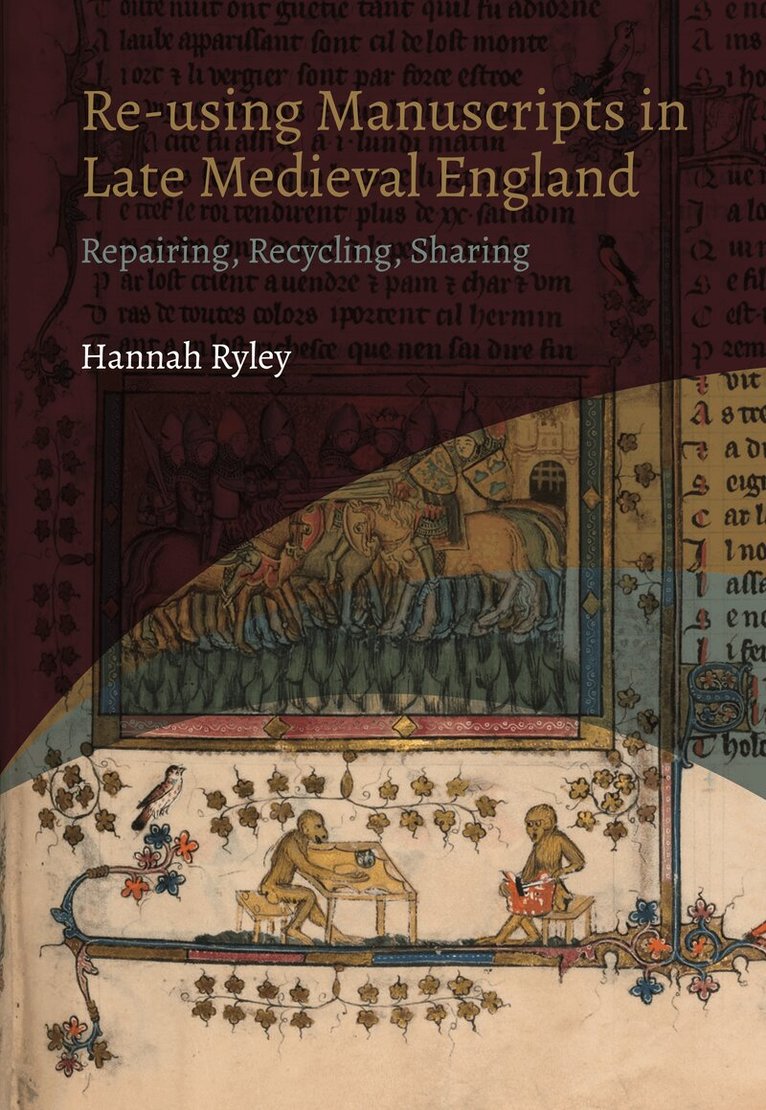
A fresh appraisal of late medieval manuscript culture in England, examining the ways in which people sustained older books, exploring the practices and processes by which manuscripts were crafted, mended, protected, marked, gifted and shared.During the "long fifteenth century" (here, 1375-1530), the demand for books in England flourished. The fast-developing book trade produced them in great quantity. Fragments of manuscripts were often repurposed, as flyleaves and other components such as palimpsests; and alongside the creation of new books, medieval manuscripts were also repaired, recycled and re-used. This monograph examines the ways in which people sustained older books, exploring the practices and processes by which manuscripts were crafted, mended, protected, marked, gifted and shared. Drawing on the codicological evidence gathered from an extensive survey of extant manuscript collections, in conjunction with historical accounts, recipes and literary texts, it presents detailed case studies exploring parchment production and recycling, the re-use of margins, and second-hand exchanges of books. Its engagement with the evidence in - and inscribed on - surviving books enables a fresh appraisal of late medieval manuscript culture in England, looking at how people went about re-using books, and arguing that over the course of this period, books were made, used and re-used in a myriad of sustainable ways.
Del 4 - York Manuscript and Early Print Studies
Re-using Manuscripts in Late Medieval England
Repairing, Recycling, Sharing
Häftad, Engelska, 2024
320 kr
Skickas inom 7-10 vardagar
Explores the practices and processes by which manuscripts were crafted, mended, protected, marked, gifted and shared.During the "long fifteenth century" (here, 1375-1530), the demand for books in England flourished. The fast-developing book trade produced them in great quantity. Fragments of manuscripts were often repurposed, as flyleaves and other components such as palimpsests; and alongside the creation of new books, medieval manuscripts were also repaired, recycled and re-used. This monograph examines the ways in which people sustained older books, exploring the practices and processes by which manuscripts were crafted, mended, protected, marked, gifted and shared. Drawing on the codicological evidence gathered from an extensive survey of extant manuscript collections, in conjunction with historical accounts, recipes and literary texts, it presents detailed case studies exploring parchment production and recycling, the re-use of margins, and second-hand exchanges of books. Its engagement with the evidence in - and inscribed on - surviving books enables a fresh appraisal of late medieval manuscript culture in England, looking at how people went about re-using books, and arguing that over the course of this period, books were made, used and re-used in a myriad of sustainable ways.