Hanneke Grootenboer – författare
Visar alla böcker från författaren Hanneke Grootenboer. Handla med fri frakt och snabb leverans.
6 produkter
6 produkter
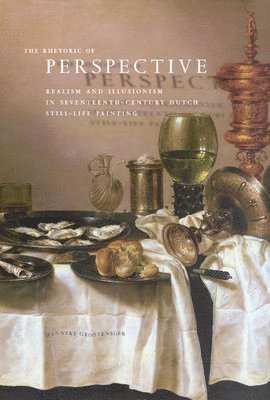
Rhetoric of Perspective
Realism and Illusionism in Seventeenth-Century Dutch Still-Life Painting
Inbunden, Engelska, 2005
1 574 kr
Skickas inom 3-6 vardagar
Perspective determines how we, as viewers, perceive painting. We can convince ourselves that a painting of a bowl of fruit or a man in a room appears to be real by the way these objects are rendered. Likewise, the trick of perspective can prevent us from being absorbed in a scene. Connecting contemporary critical theory with close readings of seventeenth-century Dutch visual culture, The Rhetoric of Perspective puts forth the claim that painting is a form of thinking and that perspective functions as the language of the image. Aided by a stunning full-color gallery, Hanneke Grootenboer proposes a new theory of perspective based on the phenomenological aspects of non-narrative still-life, trompe l'oeil, and anamorphic imagery. Drawing on playful and mesmerizing baroque images, Grootenboer characterizes what she calls their "sophisticated deceit," asserting that painting is more about visual representation than about its supposed objects.Offering an original theory of perspective's impact on pictorial representation, the act of looking, and the understanding of truth in painting, Grootenboer, shows how these paintings both question the status of representation and explore the limits and credibility of perception.
Rhetoric of Perspective
Realism and Illusionism in Seventeenth-Century Dutch Still-Life Painting
Häftad, Engelska, 2006
292 kr
Skickas inom 7-10 vardagar
Perspective determines how we, as viewers, perceive painting. We can convince ourselves that a painting of a bowl of fruit or a man in a room appears to be real by the way these objects are rendered. Likewise, the trick of perspective can prevent us from being absorbed in a scene. Connecting contemporary critical theory with close readings of seventeenth-century Dutch visual culture, The Rhetoric of Perspective puts forth the claim that painting is a form of thinking and that perspective functions as the language of the image.Aided by a stunning full-color gallery, Hanneke Grootenboer proposes a new theory of perspective based on the phenomenological aspects of non-narrative still-life, trompe l'oeil, and anamorphic imagery. Drawing on playful and mesmerizing baroque images, Grootenboer characterizes what she calls their "sophisticated deceit," asserting that painting is more about visual representation than about its supposed objects. Offering an original theory of perspective's impact on pictorial representation, the act of looking, and the understanding of truth in painting, Grootenboer shows how these paintings both question the status of representation and explore the limits and credibility of perception. “An elegant and honourable synthesis.”—Keith Miller, Times Literary Supplement
273 kr
Skickas inom 7-10 vardagar
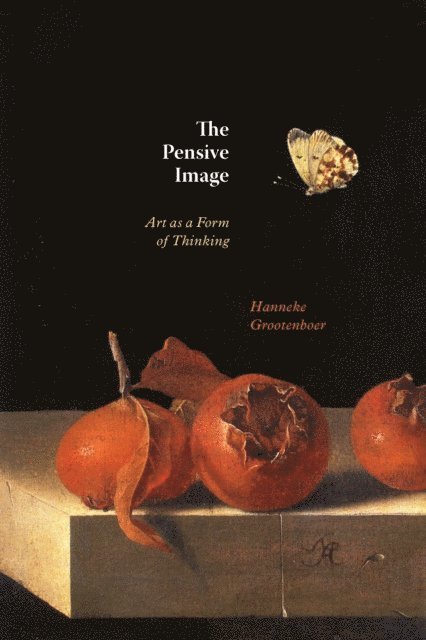
Grootenboer considers painting as a form of thinking in itself, rather than a subject of philosophical and interpretive thought. While the philosophical dimension of painting has long been discussed, a clear case for painting as a form of visual thinking has yet to be made. Traditionally, vanitas still life paintings are considered to raise ontological issues while landscapes direct the mind toward introspection. Grootenboer moves beyond these considerations to focus on what remains unspoken in painting, the implicit and inexpressible that manifests in a quality she calls pensiveness. Different from self-aware or actively desiring images, pensive images are speculative, pointing beyond interpretation. An alternative pictorial category, pensive images stir us away from interpretation and toward a state of suspension where thinking through and with the image can start.In fluid prose, Grootenboer explores various modalities of visual thinking— as the location where thought should be found, as a refuge enabling reflection, and as an encounter that provokes thought. Through these considerations, she demonstrates that artworks serve as models for thought as much as they act as instruments through which thinking can take place. Starting from the premise that painting is itself a type of thinking, The Pensive Image argues that art is capable of forming thoughts and shaping concepts in visual terms.
480 kr
Skickas inom 7-10 vardagar
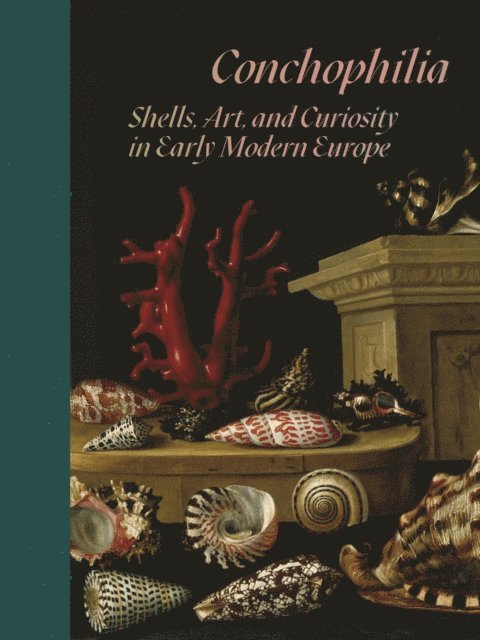
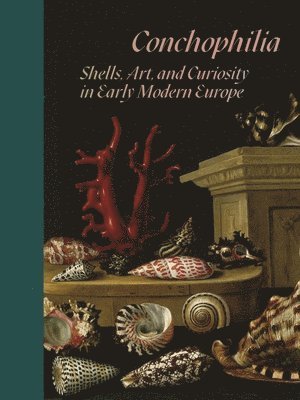
A captivating historical look at the cultural and artistic significance of shells in early modern EuropeAmong nature’s most artful creations, shells have long inspired the curiosity and passion of artisans, artists, collectors, and thinkers. Conchophilia delves into the intimate relationship between shells and people, offering an unprecedented account of the early modern era, when the influx of exotic shells to Europe fueled their study and representation as never before. From elaborate nautilus cups and shell-encrusted grottoes to delicate miniatures, this richly illustrated book reveals how the love of shells intersected not only with the rise of natural history and global trade but also with philosophical inquiry, issues of race and gender, and the ascent of art-historical connoisseurship.Shells circulated at the nexus of commerce and intellectual pursuit, suggesting new ways of thinking about relationships between Europe and the rest of the world. The authors focus on northern Europe, where the interest and trade in shells had its greatest impact on the visual arts. They consider how shells were perceived as exotic objects, the role of shells in courtly collections, their place in still-life tableaus, and the connections between their forms and those of the human body. They examine how artists gilded, carved, etched, and inked shells to evoke the permeable boundary between art and nature. These interactions with shells shaped the ways that early modern individuals perceived their relation to the natural world, and their endeavors in art and the acquisition of knowledge.Spanning painting and print to architecture and the decorative arts, Conchophilia uncovers the fascinating ways that shells were circulated, depicted, collected, and valued during a time of remarkable global change.
333 kr
Skickas inom 7-10 vardagar
A captivating historical look at the cultural and artistic significance of shells in early modern EuropeAmong nature’s most artful creations, shells have long inspired the curiosity and passion of artisans, artists, collectors, and thinkers. Conchophilia delves into the intimate relationship between shells and people, offering an unprecedented account of the early modern era, when the influx of exotic shells to Europe fueled their study and representation as never before. From elaborate nautilus cups and shell-encrusted grottoes to delicate miniatures, this richly illustrated book reveals how the love of shells intersected not only with the rise of natural history and global trade but also with philosophical inquiry, issues of race and gender, and the ascent of art-historical connoisseurship.Shells circulated at the nexus of commerce and intellectual pursuit, suggesting new ways of thinking about relationships between Europe and the rest of the world. The authors focus on northern Europe, where the interest and trade in shells had its greatest impact on the visual arts. They consider how shells were perceived as exotic objects, the role of shells in courtly collections, their place in still-life tableaus, and the connections between their forms and those of the human body. They examine how artists gilded, carved, etched, and inked shells to evoke the permeable boundary between art and nature. These interactions with shells shaped the ways that early modern individuals perceived their relation to the natural world, and their endeavors in art and the acquisition of knowledge.Spanning painting and print to architecture and the decorative arts, Conchophilia uncovers the fascinating ways that shells were circulated, depicted, collected, and valued during a time of remarkable global change.
410 kr
Tillfälligt slut
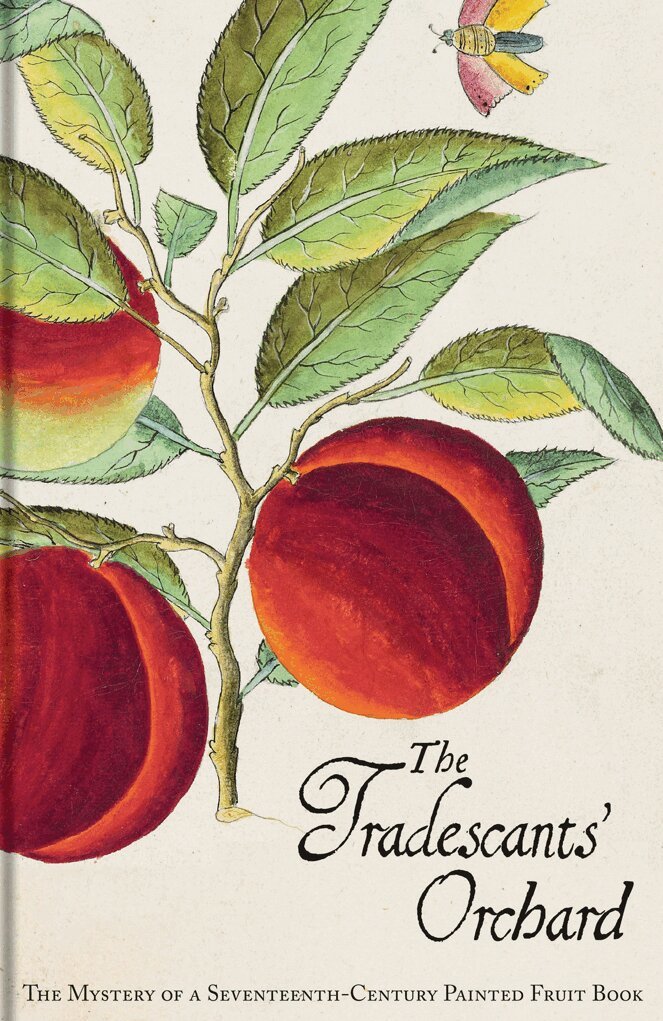
In the early seventeenth century there was eager interest, among the leisured classes, in fruits from the Mediterranean and beyond, not least for the kitchen gardens and orchards of England’s grand houses. The volume of charming, vibrant, almost primitif watercolour paintings of orchard fruits on the branch, popularly known as ‘Tradescants’ Orchard’, is a precious and fragile relic of this era of broadening horticultural horizons. This manuscript, traditionally associated with the renowned plantsmen, the John Tradescants, was among the eclectic collections of Elias Ashmole (1617-1692), which came to form the basis of the Ashmolean Museum in Oxford. Then, in 1860 it was transferred to the Bodleian Library. It has been quietly recognized as a mysterious treasure, yet the paintings raise many unanswered questions. Who painted them, and for whom? What was their purpose? Only one apple is represented – were there once others, now missing? Whose handwriting appears in the manuscript? Why did the artist paint wildlife such as birds, frogs and butterflies on many of the folios? All sixty-six of the original illustrations are reproduced here in facsimile for the first time, following a general introduction which maps out the mystery of why and how these beguiling watercolours came to be commissioned and made.