Harold J. Morowitz – författare
Visar alla böcker från författaren Harold J. Morowitz. Handla med fri frakt och snabb leverans.
16 produkter
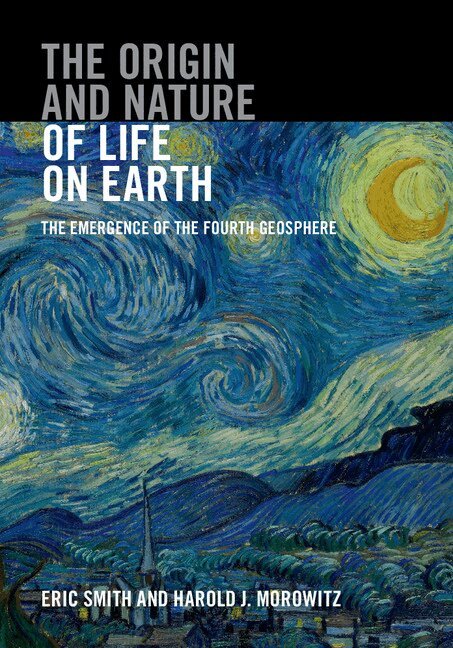
The Origin and Nature of Life on Earth
The Emergence of the Fourth Geosphere
Av Eric Smith, Harold J. Morowitz
Inbunden, 2016
667 kr
Lägg i varukorg
Uniting the conceptual foundations of the physical sciences and biology, this groundbreaking multidisciplinary book explores the origin of life as a planetary process. Combining geology, geochemistry, biochemistry, microbiology, evolution and statistical physics to create an inclusive picture of …
The Facts of Life
Science and the Abortion Controversy
Av Harold J. Morowitz, James Trefil
Inbunden, 1993
918 kr
Lägg i varukorg
The question of whether abortion should or should not be permitted, and under what circumstances, is among the most difficult and sometimes anguished decisions for contemporary men and women. How we feel about this issue, and what actions we take, help to define our image of who we are as social …
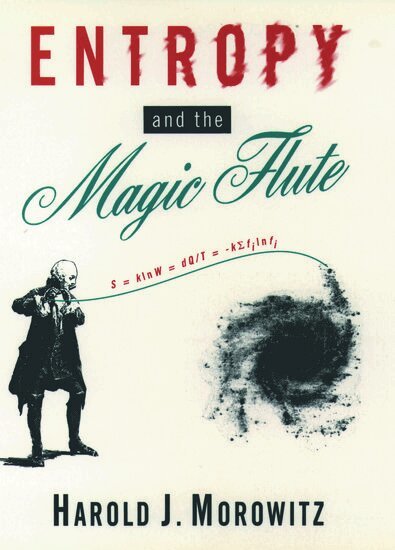
Entropy and the Magic Flute
Inbunden, 1993
585 kr
Lägg i varukorg
Harold Morowitz has long been regarded highly both as an eminent scientist and as an accomplished science writer. The essays in The Wine of Life, his first collection, were hailed by C.P. Snow as "some of the wisest, wittiest and best informed that I have read," and Carl Sagan called them "a …
The Facts of Life
Science and the Abortion Controversy
Av Harold J. Morowitz, James S. Trefil
Häftad, 1994
205 kr
Lägg i varukorg
In this novel examination of the issue of abortion, the authors offer a primer in the biological aspects of fetal development and its impact on the abortion controversy. Although purely scientific study cannot offer a universal solution to the issue of abortion, nor can a purely political or moral …
Entropy and the Magic Flute
Häftad, 1997
357 kr
Lägg i varukorg
Harold Morowitz has long been regarded highly both as an eminent scientist and as an accomplished science writer. The essays in The Wine of Life, his first collection, were hailed by C.P. Snow as "some of the wisest, wittiest and best informed that I have read," and Carl Sagan called them "a …
Entropy and the Magic Flute
E-bok, 1993
131 kr
Lägg i varukorg
Harold Morowitz has long been regarded highly both as an eminent scientist and as an accomplished science writer. The essays in The Wine of Life , his first collection, were hailed by C.P. Snow as "some of the wisest, wittiest and best informed that I have read," and Carl Sagan called them "a …
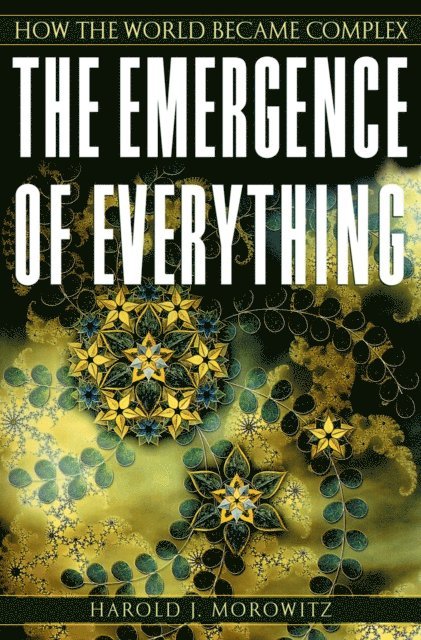
Emergence of Everything
How the World Became Complex
E-bok, 2002
135 kr
Lägg i varukorg
When the whole is greater than the sum of the parts--indeed, so great that the sum far transcends the parts and represents something utterly new and different--we call that phenomenon emergence. When the chemicals diffusing in the primordial waters came together to form the first living cell, that …
Emergence of Everything
How the World Became Complex
E-bok, 2002
135 kr
Lägg i varukorg
When the whole is greater than the sum of the parts--indeed, so great that the sum far transcends the parts and represents something utterly new and different--we call that phenomenon emergence. When the chemicals diffusing in the primordial waters came together to form the first living cell, that …
Beginnings of Cellular Life
Metabolism Recapitulates Biogenesis
Häftad, 1993
400 kr
Lägg i varukorg
In this book an internationally renowned scientist presents a radically new theory of the origin of life on Earth 4 billion years ago.Harold J. Morowitz postulates that the first step toward the origin of life was the spontaneous condensation of amphiphilic molecules to form vesicles (or …
Mind, The Brain And Complex Adaptive Systems
Inbunden, 2019
2439 kr
Lägg i varukorg
Based upon a conference held in May 1993, this book discusses the intersection of neurobiology, cognitive psychology and computational approaches to cognition.
Mind, The Brain And Complex Adaptive Systems
E-bok, 2018
1091 kr
Lägg i varukorg
Based upon a conference held in May 1993, this book discusses the intersection of neurobiology, cognitive psychology and computational approaches to cognition.
Mind, The Brain And Complex Adaptive Systems
E-bok, 2018
1091 kr
Lägg i varukorg
Based upon a conference held in May 1993, this book discusses the intersection of neurobiology, cognitive psychology and computational approaches to cognition.
Origin and Nature of Life on Earth
The Emergence of the Fourth Geosphere
Av Eric Smith, Harold J. Morowitz
Häftad, 2025
924 kr
Lägg i varukorg
Uniting the conceptual foundations of the physical sciences and biology, this groundbreaking multidisciplinary book explores the origin of life as a planetary process. Combining geology, geochemistry, biochemistry, microbiology, evolution and statistical physics to create an inclusive picture of …
Origin and Nature of Life on Earth
The Emergence of the Fourth Geosphere
Av Harold J. Morowitz, Eric Smith
E-bok, 2025
957 kr
Lägg i varukorg
Uniting the conceptual foundations of the physical sciences and biology, this groundbreaking multidisciplinary book explores the origin of life as a planetary process. Combining geology, geochemistry, biochemistry, microbiology, evolution and statistical physics to create an inclusive picture of …
Origin and Nature of Life on Earth
The Emergence of the Fourth Geosphere
Av Harold J. Morowitz, Eric Smith
E-bok, 2025
957 kr
Lägg i varukorg
Uniting the conceptual foundations of the physical sciences and biology, this groundbreaking multidisciplinary book explores the origin of life as a planetary process. Combining geology, geochemistry, biochemistry, microbiology, evolution and statistical physics to create an inclusive picture of …
Entropy for Biologists
An Introduction to Thermodynamics
E-bok, 2013
807 kr
Lägg i varukorg
Entropy for Biologists: An Introduction to Thermodynamics is an introductory book for people in the life sciences who wish to master the concepts of thermal physics without being forced to a degree and rate of symbol manipulation which is foreign to their patterns of thought. The book opens with a …