Harold W. Noonan - Böcker
Visar alla böcker från författaren Harold W. Noonan. Handla med fri frakt och snabb leverans.
4 produkter
4 produkter
669 kr
Tillfälligt slut
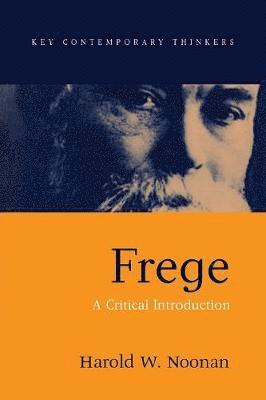
This new book offers a comprehensive and accessible introduction to Frege's remarkable philosophical work, examining the main areas of his writings and demonstrating the connections between them. Frege's main contribution to philosophy spans philosophical logic, the theory of meaning, mathematical logic and the philosophy of mathematics. The book clearly explains and assesses Frege's work in these areas, systematically examining his major concepts, and revealing the links between them. The emphasis is on Frege's highly influential work in philosophical logic and the theory of meaning, including the features of his logic, his conceptions of object, concept and function, and his seminal distinction between sense and reference.Frege will be invaluable for students of the philosophy of language, philosophical logic, and analytic philosophy.
294 kr
Skickas inom 5-8 vardagar
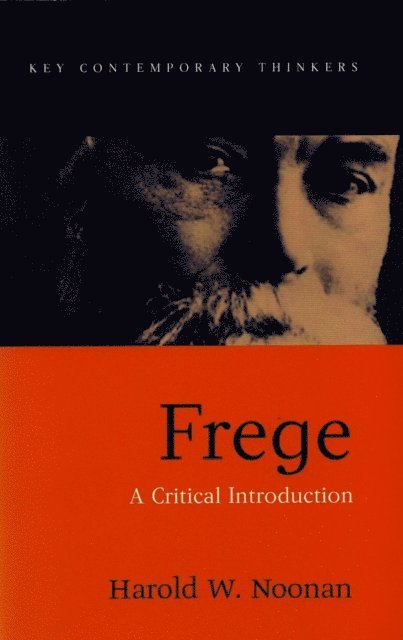
This new book offers a comprehensive and accessible introduction to Frege's remarkable philosophical work, examining the main areas of his writings and demonstrating the connections between them. Frege's main contribution to philosophy spans philosophical logic, the theory of meaning, mathematical logic and the philosophy of mathematics. The book clearly explains and assesses Frege's work in these areas, systematically examining his major concepts, and revealing the links between them. The emphasis is on Frege's highly influential work in philosophical logic and the theory of meaning, including the features of his logic, his conceptions of object, concept and function, and his seminal distinction between sense and reference.Frege will be invaluable for students of the philosophy of language, philosophical logic, and analytic philosophy.
Objects and Identity
An Examination of the Relative Identity Thesis and Its Consequences
Inbunden, Engelska, 1980
1 064 kr
Skickas inom 10-15 vardagar
Identity has for long been an important concept in philosophy and logic. Plato in his Sophist puts same among those fonns which "run through" all others. The scholastics inherited the idea (and the tenninology), classifying same as one of the "transcendentals", i.e. as running through all the categories. The work of Locke and l.eibniz made the concept a problematic one. But it is rather recently, i.e. since the importance of Frege has been generally recognized, that there has been a keen interest in the notion, fonnulated by him, of a criterion of identity. This, at first sight harmless as well as useful, has proved to be like a charge of dynamite. The seed had indeed been sown long ago, by Euclid. In Book V of his Elements he first gives a useless defmition of a ratio: "A ratio is a sort of relation between two magnitudes in respect of muchness". But then, in definition 5 he answers, not the question "What is a ratio?" but rather ''What is it for magnitudes to be in the same ratio?" and this is the definition that does the work.
Objects and Identity
An Examination of the Relative Identity Thesis and Its Consequences
Häftad, Engelska, 2010
1 064 kr
Skickas inom 10-15 vardagar
Identity has for long been an important concept in philosophy and logic. Plato in his Sophist puts same among those fonns which "run through" all others. The scholastics inherited the idea (and the tenninology), classifying same as one of the "transcendentals", i.e. as running through all the categories. The work of Locke and l.eibniz made the concept a problematic one. But it is rather recently, i.e. since the importance of Frege has been generally recognized, that there has been a keen interest in the notion, fonnulated by him, of a criterion of identity. This, at first sight harmless as well as useful, has proved to be like a charge of dynamite. The seed had indeed been sown long ago, by Euclid. In Book V of his Elements he first gives a useless defmition of a ratio: "A ratio is a sort of relation between two magnitudes in respect of muchness". But then, in definition 5 he answers, not the question "What is a ratio?" but rather ''What is it for magnitudes to be in the same ratio?" and this is the definition that does the work.