Harrison Hayford – författare
Visar alla böcker från författaren Harrison Hayford. Handla med fri frakt och snabb leverans.
21 produkter
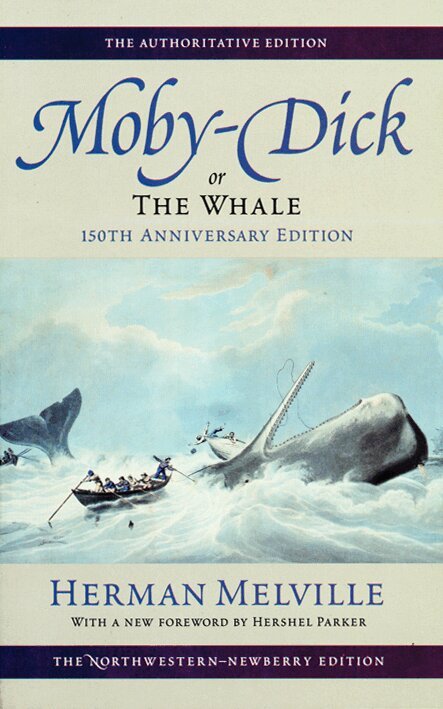
Moby-dick, or the Whale
Av Herman Melville, G. Thomas Tanselle m. fl.
Häftad, 2001
249 kr
Lägg i varukorg
This edition of ""Moby-Dick"", released in honour of the book's 150th anniversary, is the authoritative text of one of the world's great adventure stories. A crew of whalers set out in pursuit of a fierce white whale. Their names ring through the canon of American literature: Ishmael, the narrator; …
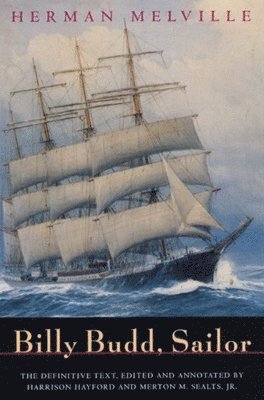
Billy Budd, Sailor
Av Herman Melville, Harrison Hayford m. fl.
Häftad, 2001
195 kr
Lägg i varukorg
Hayford and Sealts's text was the first accurate version of Melville's final novel. Based on a close analysis of the manuscript, thoroughly annotated, and packaged with a history of the text and perspectives for its criticism, this edition will remain the definitive version of a profoundly …
1838–1842
Av Ralph Waldo Emerson, A. W. Plumstead m. fl.
Inbunden, 1969
1637 kr
Lägg i varukorg
When Ralph Waldo Emerson began these journals in June of 1838, he “had achieved initial success in each of his main forms of public utterance. The days of finding his proper role and public voice were now behind him…and his…personal life had healed from earlier wounds.” Now he was married to Lydia …
1854–1861
Av Ralph Waldo Emerson, Susan Sutton Smith m. fl.
Inbunden, 1978
1773 kr
Lägg i varukorg
The journals from 1854 to 1861 show the ripeness of Ralph Waldo Emerson’s thought overshadowed by the gravest problem of his time—slavery. In addition to completing English Traits (1856) and Conduct of Life (1860), Emerson wrote many of the lectures and articles that made up his next book, Society …
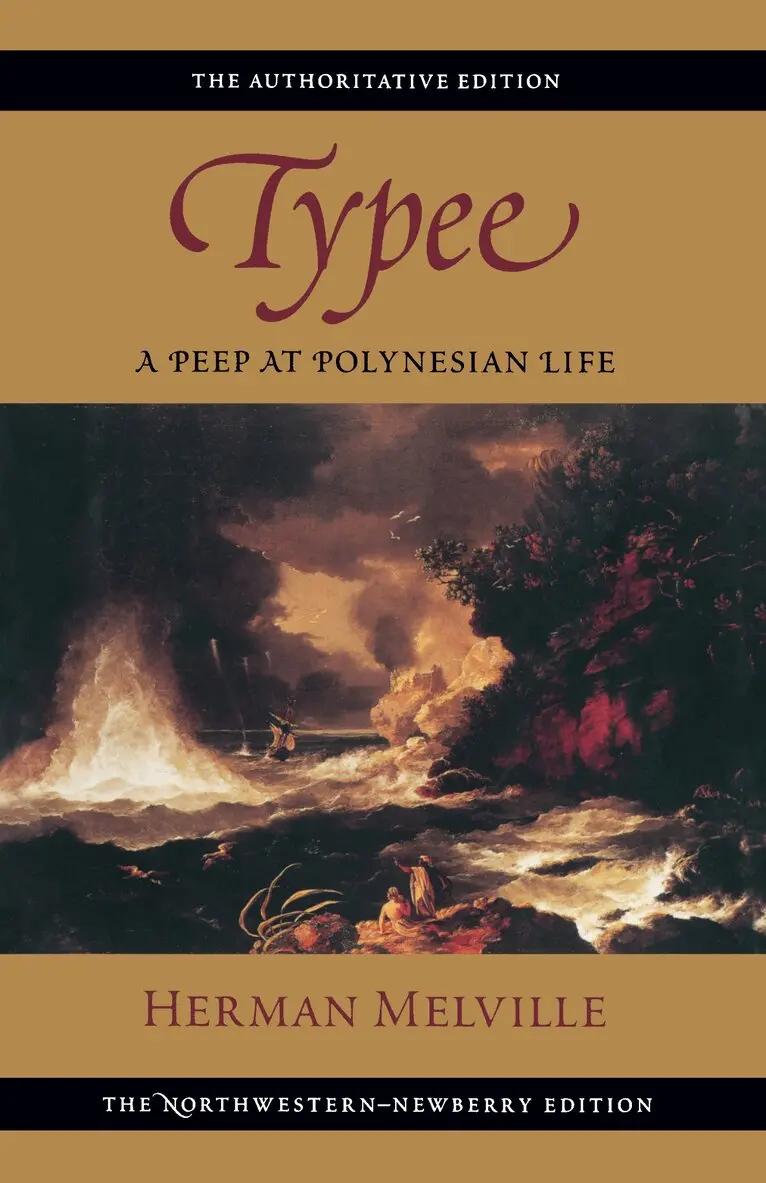
Typee
Av Herman Melville, G. Thomas Tanselle m. fl.
Häftad, 2003
233 kr
Lägg i varukorg
Almost from the time of its publication in 1846, Melville's first book, based on his own travels in the South Seas, has been recognized as a classic in the literature of travel and adventure. Although initially rejected as too fantastic to be true, ""Typee"" was immensely popular and regarded in …
Redburn
Works of Herman Melville Volume Four
Av Herman Melville, Harrison Hayford m. fl.
Häftad, 1969
682 kr
Tillfälligt slut
Journals
Volume Fifteen, Scholarly Edition
Av Herman Melville, Harrison Hayford m. fl.
Inbunden, 1989
1548 kr
Tillfälligt slut
Writings of Herman Melville, Vol. 15
Journals
Av Herman Melville, Harrison Hayford
Häftad, 1989
629 kr
Tillfälligt slut
This volume presents Melville's three known journals. Unlike his contemporaries Emerson, Thoreau, and Hawthorne, Melville kept no habitual record of his days and thoughts; each of his three journals records his actions and observations on trips far from home. In this edition's Historical Note, …
Correspondence
Volume Fourteen, Scholarly Edition
Av Herman Melville, Harrison Hayford m. fl.
Inbunden, 1993
1548 kr
Tillfälligt slut
Published Poems
Battle-pieces, John Marr, Timoleon
Av Herman Melville, Robert C. Ryan m. fl.
Häftad, 2009
682 kr
Tillfälligt slut
Although he surprised the world in 1866 with his first published book of poetry, ""Battle-Pieces and Aspects of the War"", Herman Melville had long been steeped in poetry. This new offering in the authoritative ""Northwestern-Newberry"" series, ""The Writings of Herman Melville"", with a historical …
Published Poems
Battle-Pieces, John Marr, Timoleon
Av Herman Melville, Robert C. Ryan m. fl.
Inbunden, 2009
1548 kr
Tillfälligt slut
Although he surprised the world in 1866 with his first published book of poetry, ""Battle-Pieces and Aspects of the War"", Herman Melville had long been steeped in poetry. This new offering in the authoritative ""Northwestern-Newberry"" series, ""The Writings of Herman Melville"", with a historical …