Heba Gowayed – Författare
Visar alla böcker från författaren Heba Gowayed. Handla med fri frakt och snabb leverans.
3 produkter
3 produkter
260 kr
Skickas inom 7-10 vardagar
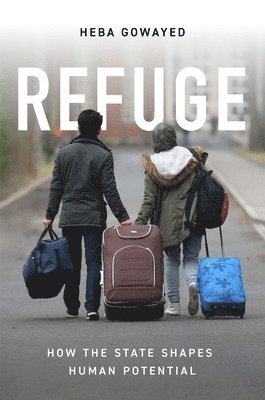
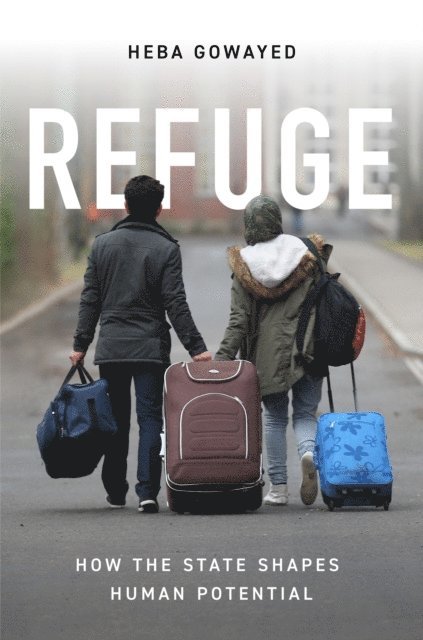
How states deny the full potential of refugees as people and perpetuate social inequalityAs the world confronts the largest refugee crisis since World War II, wealthy countries are being called upon to open their doors to the displaced, with the assumption that this will restore their prospects for a bright future. Refuge follows Syrians who fled a brutal war in their homeland as they attempt to rebuild in countries of resettlement and asylum. Their experiences reveal that these destination countries are not saviors; they can deny newcomers’ potential by failing to recognize their abilities and invest in the tools they need to prosper.Heba Gowayed spent three years documenting the strikingly divergent journeys of Syrian families from similar economic and social backgrounds during their crucial first years of resettlement in the United States and Canada and asylum in Germany. All three countries offer a legal solution to displacement, while simultaneously minoritizing newcomers through policies that fail to recognize their histories, aspirations, and personhood. The United States stands out for its emphasis on “self-sufficiency” that integrates refugees into American poverty, which, by design, is populated by people of color and marked by stagnation. Gowayed argues that refugee human capital is less an attribute of newcomers than a product of the same racist welfare systems that have long shaped the contours of national belonging.Centering the human experience of displacement, Refuge shines needed light on how countries structure the potential of people, new arrivals or otherwise, within their borders.
877 kr
Skickas inom 7-10 vardagar
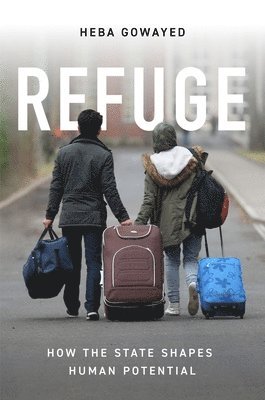
How states deny the full potential of refugees as people and perpetuate social inequalityAs the world confronts the largest refugee crisis since World War II, wealthy countries are being called upon to open their doors to the displaced, with the assumption that this will restore their prospects for a bright future. Refuge follows Syrians who fled a brutal war in their homeland as they attempt to rebuild in countries of resettlement and asylum. Their experiences reveal that these destination countries are not saviors; they can deny newcomers’ potential by failing to recognize their abilities and invest in the tools they need to prosper.Heba Gowayed spent three years documenting the strikingly divergent journeys of Syrian families from similar economic and social backgrounds during their crucial first years of resettlement in the United States and Canada and asylum in Germany. All three countries offer a legal solution to displacement, while simultaneously minoritizing newcomers through policies that fail to recognize their histories, aspirations, and personhood. The United States stands out for its emphasis on “self-sufficiency” that integrates refugees into American poverty, which, by design, is populated by people of color and marked by stagnation. Gowayed argues that refugee human capital is less an attribute of newcomers than a product of the same racist welfare systems that have long shaped the contours of national belonging.Centering the human experience of displacement, Refuge shines needed light on how countries structure the potential of people, new arrivals or otherwise, within their borders.
1 977 kr
Skickas inom 10-15 vardagar
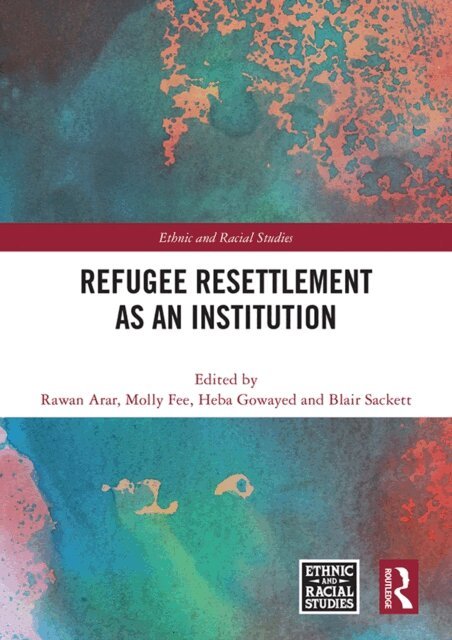
This book examines how scholars and policymakers primarily characterize refugee resettlement as a humanitarian solution or a migration pathway. While these descriptions may be accurate, they are not comprehensive. This book examines how such framing influences understandings of resettlement's scope and impact, generating conceptual blind spots that limit critical inquiry.By reframing resettlement as an institution embedded in a complex network of actors, relations, and practices, the chapters in this book reveal how resettlement is not a passive process. They explore historical and contemporary questions about how resettlement influences refugee hosting countries in the Global South and its political dimensions as a "humanitarian" program offered by countries in the Global North. By including the experiences of refugees at various points along the resettlement trajectory, such as those who may never be resettled, the book's chapters demonstrate how refugees actively strategize to become resettle-able, advocate for others within their networks, or even reject resettlement altogether. Contributions centering perspectives from the Global South expand the discourse around resettlement by examining how it operates from Southern host countries. These dynamics underscore how the specter of resettlement shapes refugee experiences in enduring ways, even when the prospect of being resettled is unattainable.This book is invaluable for students, scholars, researchers, and practitioners in refugee studies, migration studies, human rights, development studies, international relations, humanitarian affairs, political science, and sociology.The chapters in this book were originally published as a special issue of Ethnic & Racial Studies.