Heide Fehrenbach - Böcker
Visar alla böcker från författaren Heide Fehrenbach. Handla med fri frakt och snabb leverans.
7 produkter
7 produkter
374 kr
Skickas inom 7-10 vardagar
"After the Nazi Racial State offers a comprehensive, persuasive, and ambitious argument in favor of making 'race' a more central analytical category for the writing of post-1945 history. This is an extremely important project, and the volume indeed has the potential to reshape the field of post-1945 German history."---Frank Biess, University of California, San DiegoWhat happened to "race," race thinking, and racial distinctions in Germany, and Europe more broadly, after the demise of the Nazi racial state? This book investigates the afterlife of "race" since 1945 and challenges the long-dominant assumption among historians that it disappeared from public discourse and policy-making with the defeat of the Third Reich and its genocidal European empire. Drawing on case studies of Afro-Germans, Jews, and Turks---arguably the three most important minority communities in postwar Germany---the authors detail continuities and change across the 1945 divide and offer the beginnings of a history of race and racialization after Hitler. A final chapter moves beyond the German context to consider the postwar engagement with "race" in France, Britain, Sweden, and the Netherlands, where waves of postwar, postcolonial, and labor migration troubled nativist notions of national and European identity. After the Nazi Racial State poses interpretative questions for the historical understanding of postwar societies and democratic transformation, both in Germany and throughout Europe. It elucidates key analytical categories, historicizes current discourse, and demonstrates how contemporary debates about immigration and integration---and about just how much "difference" a democracy can accommodate---are implicated in a longer history of "race." This book explores why the concept of "race" became taboo as a tool for understanding German society after 1945. Most crucially, it suggests the social and epistemic consequences of this determined retreat from "race" for Germany and Europe as a whole.Rita Chin is Associate Professor of History at the University of Michigan. Heide Fehrenbach is Presidential Research Professor at Northern Illinois University. Geoff Eley is Karl Pohrt Distinguished University Professor of Contemporary History at the University of Michigan. Atina Grossmann is Professor of History at Cooper Union.Cover illustration: Human eye, © Stockexpert.com.
394 kr
Skickas inom 7-10 vardagar
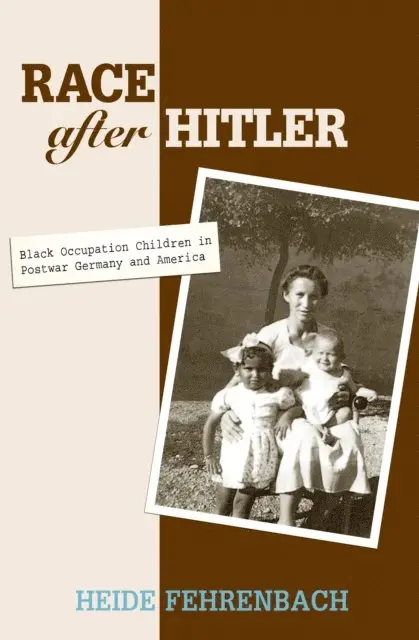
When American victors entered Germany in the spring of 1945, they came armed not only with a commitment to democracy but also to Jim Crow practices. Race after Hitler tells the story of how troubled race relations among American occupation soldiers, and black-white mixing within Germany, unexpectedly shaped German notions of race after 1945. Biracial occupation children became objects of intense scrutiny and politicking by postwar Germans into the 1960s, resulting in a shift away from official antisemitism to a focus on color and blackness. Beginning with black GIs' unexpected feelings of liberation in postfascist Germany, Fehrenbach investigates reactions to their relations with white German women and to the few thousand babies born of these unions. Drawing on social welfare and other official reports, scientific studies, and media portrayals from both sides of the Atlantic, Fehrenbach reconstructs social policy debates regarding black occupation children, such as whether they should be integrated into German society or adopted to African American or other families abroad.Ultimately, a consciously liberal discourse of race emerged in response to the children among Germans who prided themselves on--and were lauded by the black American press for--rejecting the hateful practices of National Socialism and the segregationist United States. Fehrenbach charts her story against a longer history of German racism extending from nineteenth-century colonialism through National Socialism to contemporary debates about multiculturalism. An important and provocative work, Race after Hitler explores how racial ideologies are altered through transnational contact accompanying war and regime change, even and especially in the most intimate areas of sex and reproduction.
606 kr
Skickas inom 10-15 vardagar
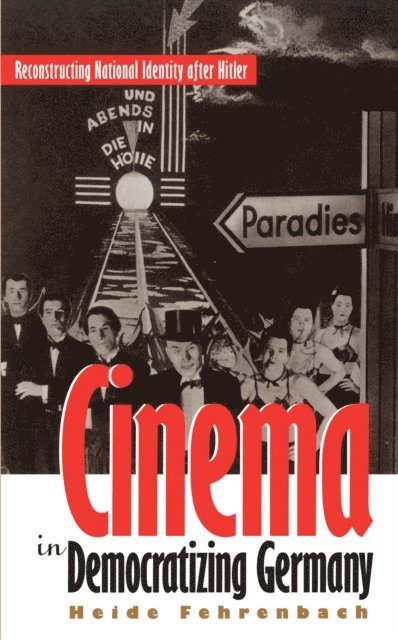
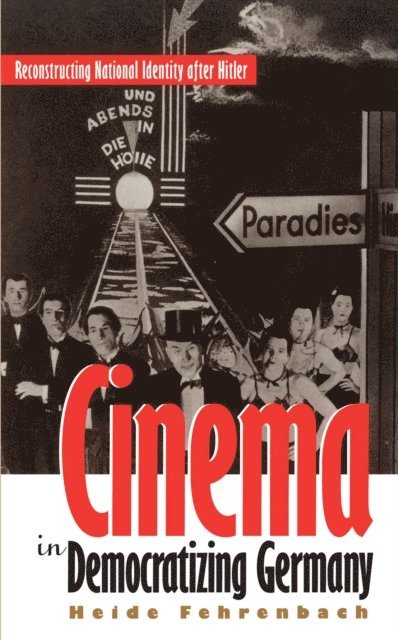
Heide Fehrenbach analyzes the important role cinema played in the reconstruction of German cultural and political identity between 1945 and 1962. Concentrating on the former West Germany, she explores the complex political uses of film--and the meanings attributed to film representation and spectatorship--during a period of abrupt transition to democracy. According to Fehrenbach, the process of national redefinition made cinema and cinematic control a focus of heated ideological debate. Moving beyond a narrow political examination of Allied-German negotiations, she investigates the broader social nexus of popular moviegoing, public demonstrations, film clubs, and municipal festivals. She also draws on work in gender and film studies to probe the ways filmmakers, students, church leaders, local politicians, and the general public articulated national identity in relation to the challenges posed by military occupation, American commercial culture, and redefined gender roles. Thus highlighting the links between national identity and cultural practice, this book provides a richer picture of what German reconstruction entailed for both women and men.
1 485 kr
Skickas inom 7-10 vardagar
For well over a century, humanitarians and their organizations have used photographic imagery and the latest media technologies to raise public awareness and funds to alleviate human suffering. This volume examines the historical evolution of what we today call 'humanitarian photography' - the mobilization of photography in the service of humanitarian initiatives across state boundaries - and asks how we can account for the shift from the fitful and debated use of photography for humanitarian purposes in the late nineteenth century to our current situation in which photographers market themselves as 'humanitarian photographers'. This book investigates how humanitarian photography emerged and how it operated in diverse political, institutional, and social contexts, bringing together more than a dozen scholars working on the history of humanitarianism, international organizations and nongovernmental organizations, and visual culture in Africa, Asia, the Middle East, Europe, and the United States.
523 kr
Skickas inom 7-10 vardagar
For well over a century, humanitarians and their organizations have used photographic imagery and the latest media technologies to raise public awareness and funds to alleviate human suffering. This volume examines the historical evolution of what we today call 'humanitarian photography' - the mobilization of photography in the service of humanitarian initiatives across state boundaries - and asks how we can account for the shift from the fitful and debated use of photography for humanitarian purposes in the late nineteenth century to our current situation in which photographers market themselves as 'humanitarian photographers'. This book investigates how humanitarian photography emerged and how it operated in diverse political, institutional, and social contexts, bringing together more than a dozen scholars working on the history of humanitarianism, international organizations and nongovernmental organizations, and visual culture in Africa, Asia, the Middle East, Europe, and the United States.
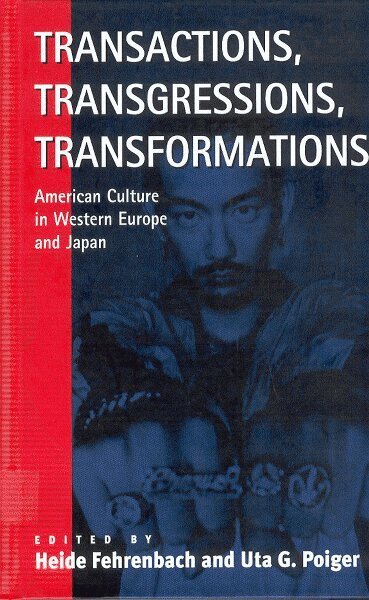
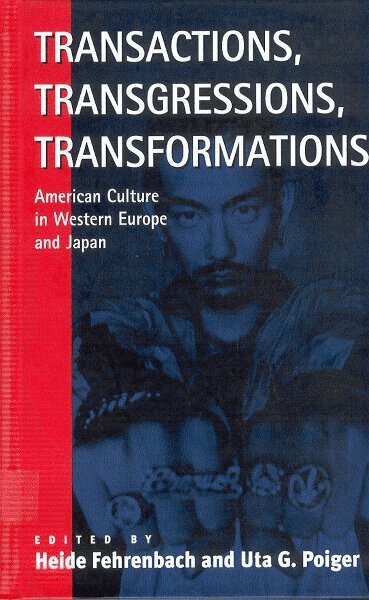
Transactions, Transgressions, Transformation
American Culture in Western Europe and Japan
Inbunden, Engelska, 1999
2 014 kr
Skickas inom 3-6 vardagar
American culture has been one of the most controversial exports of the United States: greeted with enthusiasm by some, with hostility by others. Yet, few societies escape its influence. However, not all changes should be interpreted simply as "Americanization." The shaping of the postwar world has been much more complex than this term implies as is shown in this volume that explores the links between Americanization and modernity in Western Europe and Japan. In considering the impact of products and images ranging from movies and music to fashion and architecture, a multi-disciplinary group of contributors asks how American culture has been employed internationally in the articulation of postwar identities - be they national or subnational,socially sanctioned or socially transgressive. Their essays on France, Italy, Germany and Japan move beyond the simple paradigms of colonization and democratic modernization, yet retain a sensitivity to the asymmetries in the postwar power relationships between these countries and the United States. An extensive introduction historically locates changing interpretations of American influences abroad and suggests the problems and promises of "Americanization" as an analytical tool. Its comparative focus and interdisciplinary scope will appeal to a wide range of students and scholars of cold war and post-cold war history.
Transactions, Transgressions, Transformation
American Culture in Western Europe and Japan
Häftad, Engelska, 2000
583 kr
Skickas inom 3-6 vardagar
American culture has been one of the most controversial exports of the United States: greeted with enthusiasm by some, with hostility by others. Yet, few societies escape its influence. However, not all changes should be interpreted simply as "Americanization." The shaping of the postwar world has been much more complex than this term implies as is shown in this volume that explores the links between Americanization and modernity in Western Europe and Japan. In considering the impact of products and images ranging from movies and music to fashion and architecture, a multi-disciplinary group of contributors asks how American culture has been employed internationally in the articulation of postwar identities - be they national or subnational,socially sanctioned or socially transgressive. Their essays on France, Italy, Germany and Japan move beyond the simple paradigms of colonization and democratic modernization, yet retain a sensitivity to the asymmetries in the postwar power relationships between these countries and the United States. An extensive introduction historically locates changing interpretations of American influences abroad and suggests the problems and promises of "Americanization" as an analytical tool. Its comparative focus and interdisciplinary scope will appeal to a wide range of students and scholars of cold war and post-cold war history.