Heiner Flassbeck – författare
Visar alla böcker från författaren Heiner Flassbeck. Handla med fri frakt och snabb leverans.
25 produkter
Against the Troika
Crisis and Austerity in the Eurozone
Av Heiner Flassbeck, Costas Lapavitsas
Häftad, 2015
276 kr
Lägg i varukorg
On the 25th January 2015 the Greek people voted in an election of historic importance-not just for Greece but potentially all of Europe. The radical party Syriza was elected and austerity and the neoliberal agenda is being challenged. Suddenly it seems as if there is an alternative. But what?The …
Against the Troika
Crisis and Austerity in the Eurozone
Av Heiner Flassbeck, Costas Lapavitsas
E-bok, 2015
130 kr
Lägg i varukorg
On the 25th January 2015 the Greek people voted in an election of historic importance-not just for Greece but potentially all of Europe. The radical party Syriza was elected and austerity and the neoliberal agenda is being challenged. Suddenly it seems as if there is an alternative. But what? The …
Rigide Preise, Flexible Mengen.: Ansätze Zu Einer Dynamischen Analyse Von Angebots- Und Nachfrageschocks.
Av Heiner Flassbeck, Gustav Adolf Horn
Häftad, 1992
738 kr
Lägg i varukorg
Kazakstan 1993 - 2000
Independent Advisors and the IMF
Av Alfred Steinherr, Heiner Flassbeck m. fl.
E-bok, 2012
755 kr
Lägg i varukorg
By introducing a new national currency in November 1993, the Republic of Kazakstan took a decisive step towards establishing its political and economic independence. In the following years, Kazakstan made great efforts to lay the institutional foundation for econonmic policy in line with a free …
Kazakstan 1993 – 2000
Independent Advisors and the IMF
Av Lutz Hoffmann, Peter Bofinger m. fl.
Häftad, 2000
566 kr
Lägg i varukorg
By introducing a new national currency in November 1993, the Republic of Kazakstan took a decisive step towards establishing its political and economic independence. In the following years, Kazakstan made great efforts to lay the institutional foundation for econonmic policy in line with a free …
Die extreme Mitte
Wer die westliche Welt beherrscht. Eine Warnung
Av Peter Wahl, Wolfgang Streeck m. fl.
E-bok, 2020
179 kr
Lägg i varukorg
Nach dem Fall des Eisernen Vorhangs im Jahr 1989 fegte ein kapitalistischer Sturm über die Welt. Was mit Ronald Reagan und Margaret Thatcher begonnen hatte, erfasste schließlich ganz Europa: das Ende des Sozialstaats, eine umfassende Privatisierungswelle und die weitgehende Selbstausschaltung …
Irrweg Grundeinkommen
Die große Umverteilung von unten nach oben muss beendet werden
Av Dieter Vesper, Volker Meinhardt m. fl.
E-bok, 2012
179 kr
Lägg i varukorg
Freiheit, Gleichheit, Grundeinkommen?Ist das bedingungslose Grundeinkommen das Tor zur "schönen neuen Welt", in der alle nach ihren Bedürfnissen, Vorstellungen und Fähigkeiten sorgenlos leben können? Oder ist es nicht vielmehr eine gigantische potemkinsche Fassade, die die bittere Realität …
Atlas der Weltwirtschaft 2022/23
Av Heiner Flassbeck, Friederike Spiecker m. fl.
Häftad, 2022
234 kr
Lägg i varukorg
Handelt jetzt!
Das globale Manifest zur Rettung der Wirtschaft
Av Jayati Ghosh, Richard Koo m. fl.
E-bok, 2013
118 kr
Lägg i varukorg
Die internationale Wirtschaftspolitik kann man mit Fug und Recht als Debakel bezeichnen. Nur eine wirklich radikale Änderung in der nationalen und in der internationalen wirtschaftspolitischen Ausrichtung kann ein globales Desaster noch verhindern und das Aufkommen extremistischer Parteien stoppen …
66 starke Thesen zum Euro, zur Wirtschaftspolitik und zum deutschen Wesen
E-bok, 2014
141 kr
Lägg i varukorg
"Heiner Flassbeck bringt die Dinge auf den Punkt." Prof. Dr. Peter BofingerWas hat Deutschlands Wettbewerbsfähigkeit mit unseren Einkommen zu tun? Wieso kann ein Staat nicht einfach sparen wie die berühmte "schwäbische Hausfrau"?Egal ob Rente, Steuern, Gesundheit, Arbeitsmarkt oder Finanzpolitik - …
Nur Deutschland kann den Euro retten
Der letzte Akt beginnt
Av Costas Lapavitsas, Heiner Flassbeck
E-bok, 2015
173 kr
Lägg i varukorg
Nur Deutschland kann die Eurozone retten, weil nur über Lohnerhöhungen hier die Lücke in der Wettbewerbsfähigkeit geschlossen werden kann, ohne Europa noch tiefer in Depression und Deflation zu treiben. Begreift Deutschland nicht, dass es sich selbst ändern muss, ist das Schicksal des gemeinsamen …
Gescheitert
Warum die Politik vor der Wirtschaft kapituliert
E-bok, 2015
208 kr
Lägg i varukorg
Neue Konzepte braucht das LandNie war es so deutlich wie in der internationalen Finanzkrise: Die Politik versagt vor der Wirtschaft. Dies hat System in Deutschland. Statt überzeugende Konzepte anzubieten, biedern sich alle Parteien ausschließlich der Logik von Unternehmen an. Die Politiker …
Das Ende der Massenarbeitslosigkeit
Mit richtiger Wirtschaftspolitik die Zukunft gewinnen
Av Friederike Spiecker, Heiner Flassbeck
E-bok, 2016
216 kr
Lägg i varukorg
Acht zentrale FragenGlauben Sie, dass - der technische Fortschritt Arbeitsplätze vernichtet? - die Höhe der Löhne die Beschäftigung bestimmt? - die Struktur der Löhne den Abbau der Arbeitslosigkeit behindert? - die Globalisierung per saldo deutsche Arbeitsplätze kostet? - Ludwig Erhard für das …
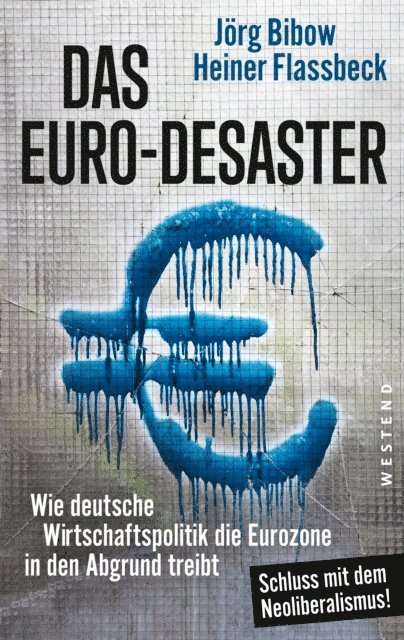
Das Euro-Desaster
Wie deutsche Wirtschaftspolitik die Eurozone in den Abgrund treibt
Av Jorg Bibow, Heiner Flassbeck
E-bok, 2018
214 kr
Lägg i varukorg
EUROPA OHNE KRISE IST MÖGLICHARGUMENTE FÜR EINE ABKEHR VOM NEOLIBERALISMUSDer Euro steckt seit 2008 in einer tiefen Krise, die nicht enden will und den Fortbestand der Währungsunion gefährdet. Doch Deutschland verweigert sich der Einsicht, dass es selbst eine entscheidende Schuld an der Misere hat. …
Preise, Zins und Wechselkurse
Warum offene Volkswirtschaften untrennbar miteinander verbunden sind
E-bok, 2019
229 kr
Lägg i varukorg
Die Ökonomen rätseln seit Jahrzehnten über die Frage, ob und wie Volkswirtschaften, obwohl sie miteinander Handel treiben, in ihrer monetären Politik möglichst unabhängig bleiben können. Heiner Flassbeck zeigt in dieser grundlegenden Arbeit, die er für diese Neuauflage ausführlich kommentiert hat, …
Der begrenzte Planet und die unbegrenzte Wirtschaft
Lassen sich Ökonomie und Ökologie versöhnen
E-bok, 2020
184 kr
Lägg i varukorg
Mit einer Brutalität ohnegleichen hat sich der Mensch die Natur untertan gemacht. Die Folgen bekommen wir gerade heftig zu spüren.Vieles steht auf dem Spiel. Manche sagen, es gehe um alles. Die Erkenntnisse der Wissenschaft sind klar und nicht zu widerlegen: Auf einem Planeten mit begrenzten …
Grundlagen einer relevanten Ökonomik
E-bok, 2024
680 kr
Lägg i varukorg
Eine neue und relevante Ökonomik ist dringend erforderlich. In den acht Kapiteln dieses Buches werden deren Grundprinzipien erklärt:"Kapitel 1: Die Große Depression ist auch nach hundert Jahren noch unverstanden,"Kapitel 2: Schumpeter ist wichtiger als Keynes,"Kapitel 3: Es gibt keine durch den …
Contra la Troika
Av Costas Lapavitsas, Heiner Flassbeck
E-bok, 2015
68 kr
Lägg i varukorg
Basándose en el análisis económico de dos de los principales pensadores de Europa, Heiner Flassbeck y Costas Lapavitsas (quien concurrió a las recientes elecciones en la lista de Syriza), Contra la troika es el primer libro que plantea desde la izquierda un plan estratégico de salida del euro para …
Pengarnas frihet : om finanskrisens politiska ekonomi
Av Wolfgang Schmidt, Elmar Altvater m. fl.
Häftad, 2009
203 kr
Lägg i varukorg
Avregleringar och liberaliseringar skulle frigöra kapitalets skapande kraft. Istället sveper den djupaste ekonomiska krisen sedan 30-talet fram över världen. Euforin över de fria marknadskrafternas självreglerande förmåga har lagt sig, men vad är det som händer? Pengarnas frihet innehåller texter …
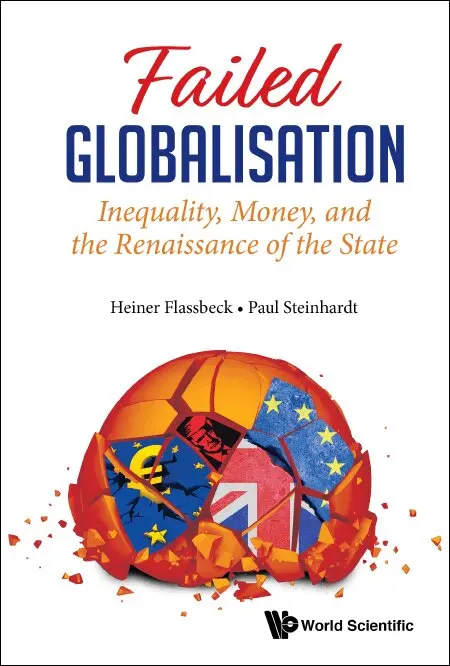
FAILED GLOBALISATION: INEQUALITY, MONEY, AND THE RENAISSANCE OF THE STATE
Av Heiner Flassbeck, Paul Steinhardt
Inbunden, 2020
1475 kr
Lägg i varukorg
Globalisation is considered a success story. Following the fall of the Berlin Wall and the dissolution of the political divides between East and West Germany, nothing seemed to stand in the way of peaceful cooperation between people everywhere. Under the precepts of economic liberalism, by removing …